Things to Do in Fredrikstad — Gamlebyen Fortress Town & River Saunas
Explore Fredrikstad: Gamlebyen, the largest and best-preserved fortress town in Northern Europe, its star-shaped moat and ramparts, Kongsten Fort, and two saunas on the Glomma river.
Fredrikstad sits where the Glomma — Norway’s longest river — meets the outer Oslofjord, and its defining feature is one of the country’s most remarkable pieces of living history: Gamlebyen, a fully fortified seventeenth-century town that people still call home. Add a free river ferry, a freestanding hilltop fort, a naval island with its own centuries of history, and two saunas that make good use of the Glomma’s cold, clean water, and Fredrikstad is one of the more rewarding under-the-radar day trips within easy reach of Oslo.
Gamlebyen — The Old Town Fortress
Fredrikstad’s Old Town was built from 1567, after the original settlement upriver burned down twice, and what stands today is widely regarded as the largest and best-preserved fortress town in Northern Europe. A star-shaped moat and broad grass ramparts still encircle the entire district, and — unusually for a fortification this intact — Gamlebyen isn’t a museum piece frozen behind glass. People actually live inside the walls, and the cobbled streets are lined with ochre, red, and white wooden houses that now mix private homes with small galleries, cafes, and artisan shops.
Walking the ramparts themselves is free and takes you along the top of the grass-covered fortifications with sweeping views back over the moat and out to the river — one of the better short walks available in any Norwegian town of this size. Inside the walls, the old commandant’s residence, the armoury, and the fortress’s original gates are all still standing and worth seeking out as you wander. At Bastion 5, one of the fortification’s original defensive points, an arts and crafts centre now occupies the old buildings, with potters, painters, goldsmiths and glassblowers working in open studios — a nice contrast to the military history everywhere else inside the walls.
Kongsten Fort
Southeast of Gamlebyen, standing apart from the main fortifications, Kongsten Fort was built in 1685 specifically to shore up the town’s most exposed eastern approach — the direction from which an attacking force was most likely to come during Fredrikstad’s long history of conflict with Sweden. The fort is open to visitors, with stone walls, mounted cannons, old military buildings, and underground rooms to explore, plus some of the best elevated views of the Old Town and the Glomma below. It’s a short walk or drive from Gamlebyen and a natural pairing with a visit to the main fortress.
Isegran — Fredrikstad’s Naval Island
A short walk or ferry hop from Gamlebyen, the small island of Isegran is the oldest recorded place in Fredrikstad, with a fortress dating back to the Earl of Borgarsyssel at the end of the 13th century — long before the current fortress town was built. In the 1670s it was fortified with an artillery platform and the Isegran Tower, and until 1680 it served as Norway’s only naval harbour; later, during the Great Northern War, it operated as a base for the celebrated naval officer Peter Wessel Tordenskiold. Today Isegran has a quieter, more maritime character: a boatbuilding and restoration centre, Norway’s only traditional wooden boatbuilding school, and a museum harbour lined with historic vessels. It’s an easy, atmospheric add-on to a Gamlebyen visit for anyone interested in the town’s naval past.
The Fredrikstad Museum, housed in the historic Tøihuset armoury building inside Gamlebyen, brings together more than 450 years of the town’s history in one stop — a useful complement to simply walking the ramparts, and a good wet-weather option if the day doesn’t cooperate.
Fredrikstad Domkirke
Across the river from Gamlebyen, on the western bank in what locals call the New Town, Fredrikstad Domkirke (Cathedral) is worth the short walk from the ferry landing. Built in 1860 in a flamboyant Gothic Revival style, its best-known feature is a set of stained-glass windows by Emanuel Vigeland — the younger, lesser-known brother of the sculptor Gustav Vigeland — and the church opens onto a small riverside park that makes a pleasant spot to sit before or after exploring the fortress town across the water.
Crossing the Glomma
The Glomma splits Fredrikstad’s Old Town in two, and a small free passenger ferry — one of the town’s most charming everyday details — shuttles pedestrians and cyclists back and forth across the river between the two halves of Gamlebyen. It’s worth timing a crossing purely for the view of the fortress walls from the water, and it links neatly with a visit to either of the town’s two saunas, both of which sit close to the river.
Sauna Experiences in Fredrikstad
Fredrikstad’s sauna scene is small but well matched to its setting on the water.
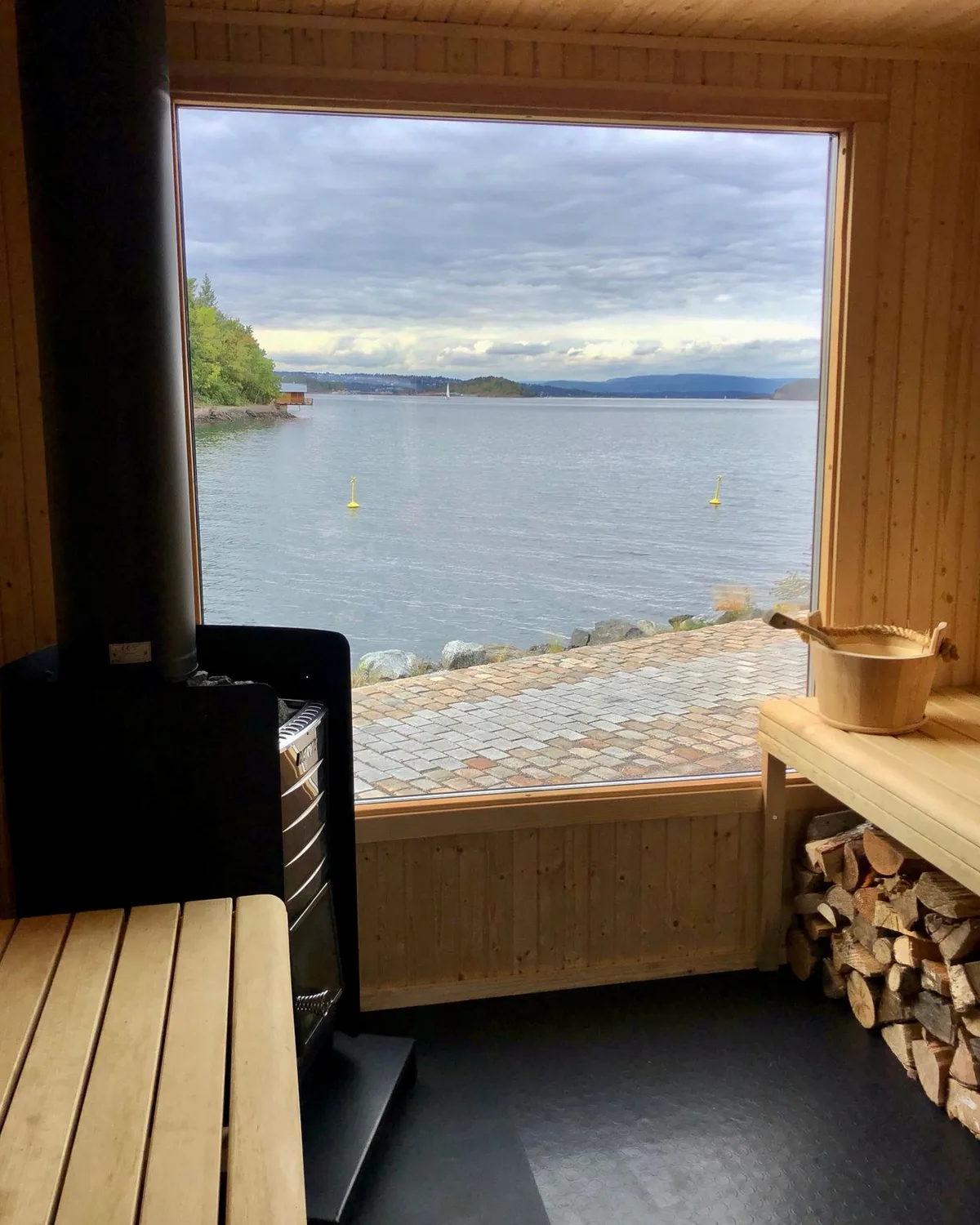
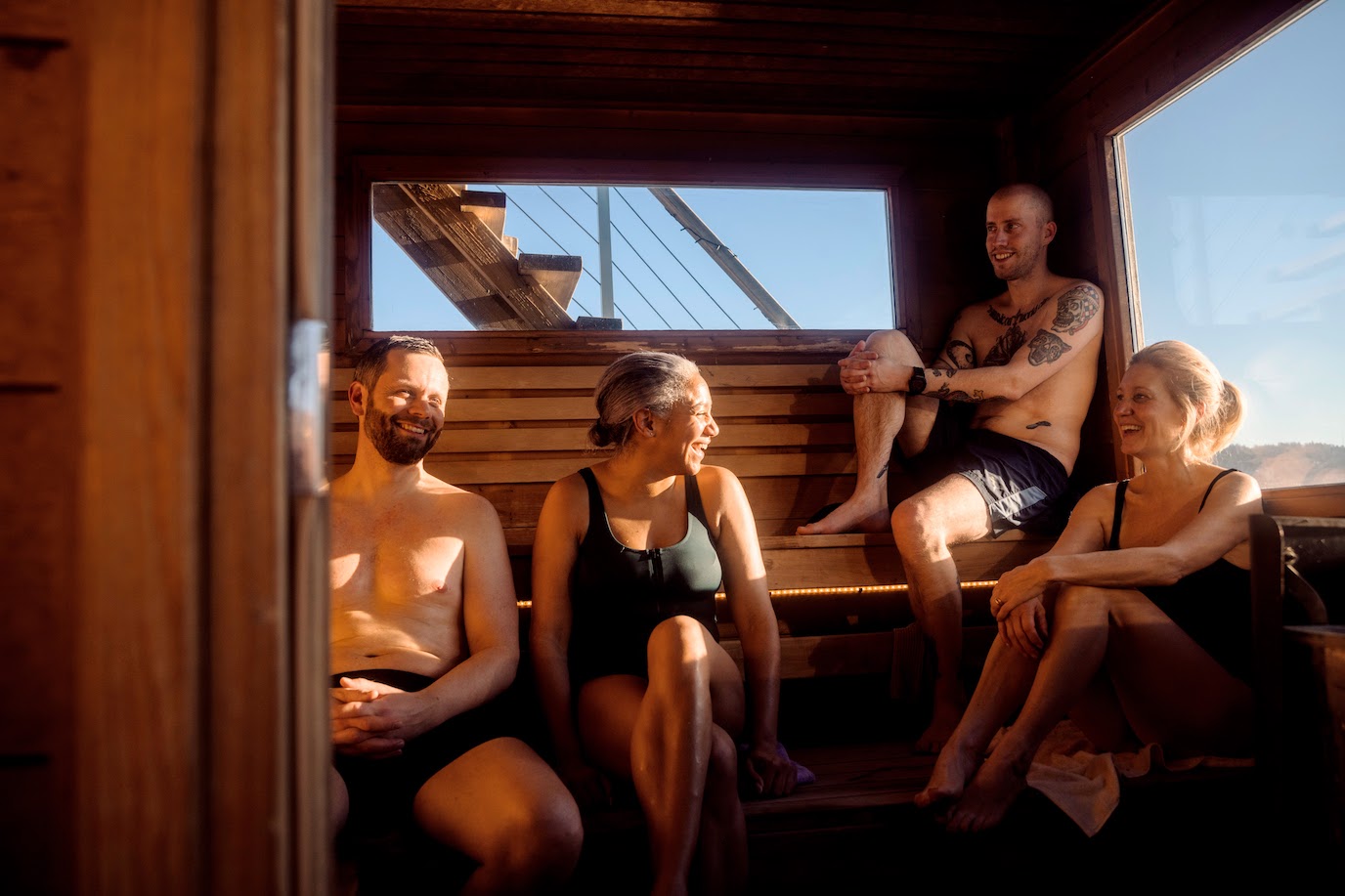
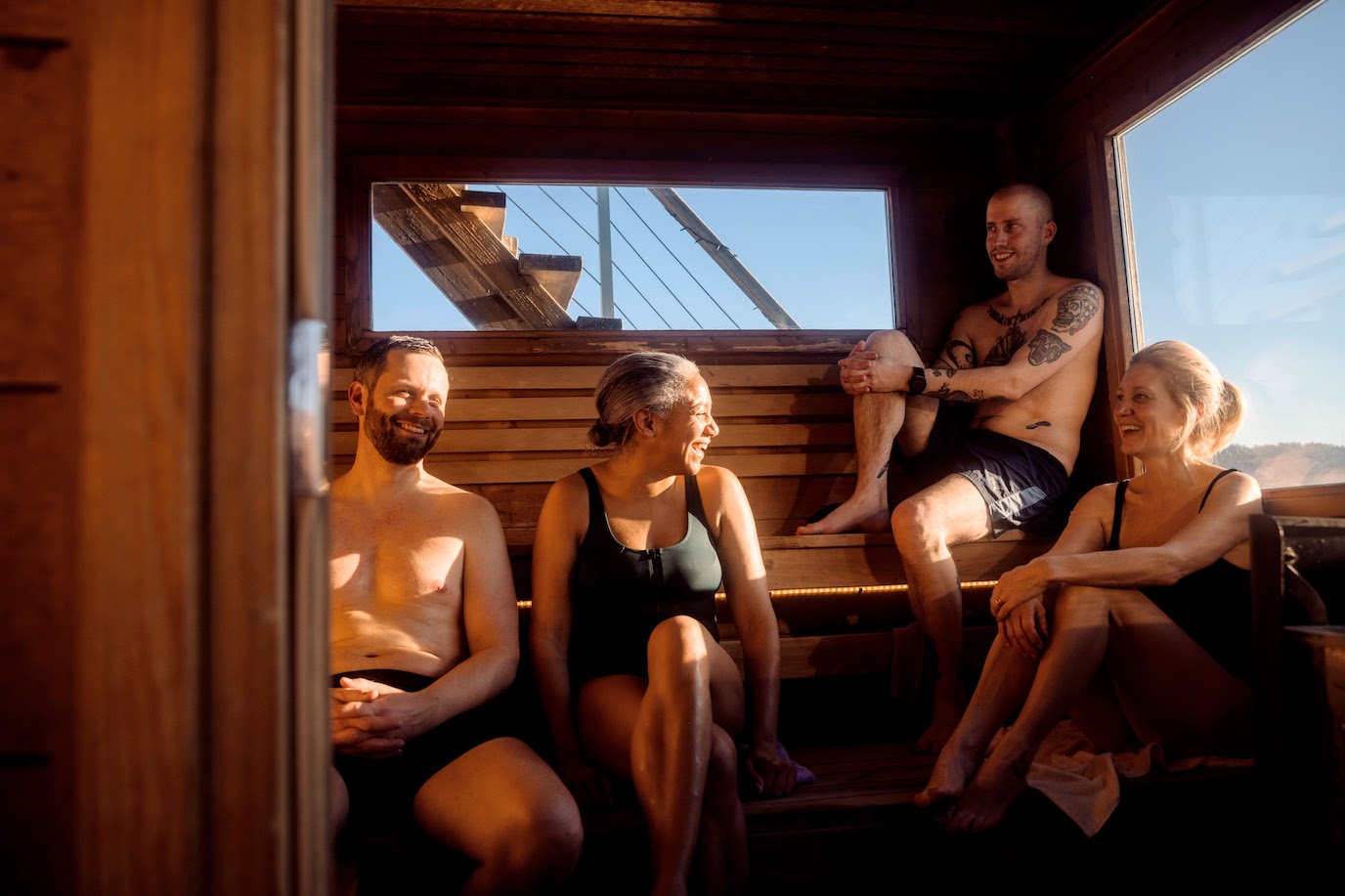
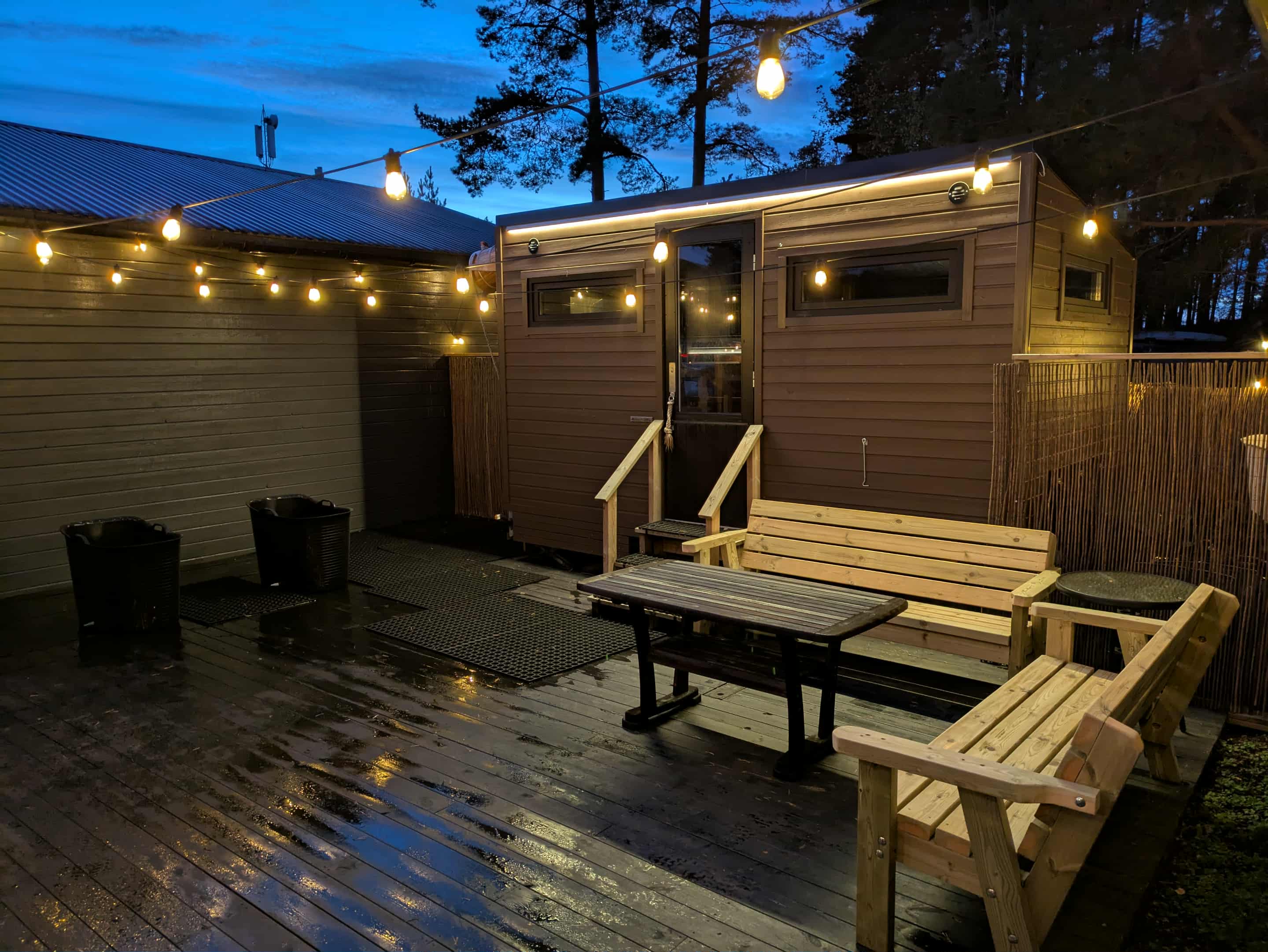
GFBB Fredrikstad — short for Gamle Fredrikstad Badstue- og Badeforening — is a community-run, volunteer-operated wood-fired sauna permanently based at Bevø Camping, right on the Glomma estuary in Gamlebyen. Founded in 2020 and officially opened in July 2023, the sauna itself was transported directly from Finland, a detail that says a lot about the founders’ commitment to doing this properly. Drop-in sessions run from NOK 50 per person on a set weekly schedule, with private hire also available, and the location gives direct access to a cold plunge in the river right outside — a proper contrast experience within sight of the fortress ramparts.
Kur Sauna Fredrikstad offers a more private, designer-led alternative on the waterfront, part of the wider Kur Sauna network that also operates in Sandefjord and Larvik. It’s the better choice if you want a small group to have a cabin to themselves rather than joining a shared drop-in session.
For the full local picture — including nearby Sarpsborg and Son — our dedicated sauna guide to Fredrikstad covers both venues with current prices, ratings, and booking details, and is the better starting point if booking logistics matter more to you than the surrounding history.
Getting There and When to Visit
Fredrikstad is just under an hour by train from Oslo S on the Østfold Line, or around 75 minutes by car via the E6 — an easy day trip in either direction, and a genuinely pleasant one given how compact Gamlebyen is to explore on foot. The Old Town works in any season: cobbled streets and stone ramparts don’t need good weather to be atmospheric, though the river saunas are naturally at their best from late spring through autumn, when a Glomma plunge is less of a shock to the system.
Autumn in particular tends to deliver long, still evenings on the Oslofjord side of town — a good combination with a late-afternoon sauna session before the walk back across the free ferry as the light fades over the ramparts. Given how compact the whole area is — Gamlebyen, Isegran, Kongsten Fort, and both saunas all sit within a couple of kilometres of each other — Fredrikstad rewards visitors who arrive without a rigid schedule and simply let the ferry crossings set the pace of the day.
Fredrikstad pairs naturally with the rest of the eastern Oslofjord’s sauna scene — the best saunas in Eastern Norway and the best saunas near Oslo both place it in that wider context. If you’re building a longer coastal circuit around the Oslofjord, our guide to Sandefjord covers another historic Vestfold sauna town on the opposite shore worth combining on the same trip.
Frequently Asked Questions
What is Gamlebyen in Fredrikstad?
Gamlebyen (the Old Town) is Fredrikstad's fortified seventeenth-century centre, built from 1567 onward and generally regarded as the largest and best-preserved fortress town in Northern Europe — a star-shaped moat and grass ramparts wrapped around cobbled streets, low wooden houses, and a still-active military garrison.
Is Gamlebyen still inhabited?
Yes. Unlike most preserved fortress towns, Gamlebyen is a living neighbourhood — people live inside the ramparts, and the cobbled streets are lined with galleries, cafes, and artisan shops alongside private homes.
What is Kongsten Fort?
Kongsten Fort, built in 1685, is a freestanding fortification southeast of Gamlebyen that was constructed to defend the town's more vulnerable eastern approach. It's open to visitors, with stone walls, cannons, and underground rooms to explore, plus views back over the Old Town.
How do I get to Fredrikstad from Oslo?
Fredrikstad is just under an hour by train from Oslo S on the Østfold Line, or around 75 minutes by car via the E6. A free passenger ferry connects the two halves of Gamlebyen across the Glomma.
How many saunas are there in Fredrikstad?
Two that we track: GFBB, a community-run outdoor sauna on the Glomma at Gamlebyen with river-plunge access, and Kur Sauna Fredrikstad, a more private riverside cabin. Both sit within a short walk or ferry ride of the fortress town.
Is Fredrikstad worth a day trip from Oslo?
Yes. It combines easily into a single day: the train from Oslo, a walk around the Gamlebyen ramparts and Kongsten Fort, and a sauna session on the Glomma to finish, all achievable without an overnight stay — though the town rewards a slower, overnight visit too.