Things to Do in Sandefjord — Norway's Whaling Capital & Coastal Saunas
Explore Sandefjord: the world's only dedicated Whaling Museum, the historic whale-catcher Southern Actor, Bugårdsparken, and floating and wood-fired saunas on the Vestfold coast.
Sandefjord sits on the Vestfold coast at the mouth of the Oslofjord, and for the better part of a century it was, quite literally, the whaling capital of the world — a status that shaped its architecture, its wealth, and its museums, and still shapes how the town presents itself to visitors today: a genuinely unique museum, a preserved whale-catcher ship, and a harbour that once financed entire Antarctic expeditions. Alongside all of that, it pairs with an international airport, a Sweden ferry, and a growing cluster of coastal saunas that make good use of the sheltered Vestfold shoreline.
The Whaling Museum and Sandefjord’s Industrial Past
Sandefjord’s Hvalfangstmuseet (Whaling Museum) opened in 1917, while commercial whaling was still very much a going concern, and it remains the only museum in the world dedicated entirely to the industry. The collection spans everything from early hand-harpoon hunts off the Norwegian coast to the vast industrial expeditions that Sandefjord shipowners sent south to Antarctic waters in the 20th century — logbooks, scrimshaw, and a full-size recreation of a 21-metre blue whale suspended from the gallery ceiling. It’s a serious, unflinching museum, and it doesn’t shy away from the complicated legacy of an industry that made this small Norwegian town extraordinarily wealthy. Walking the harbour afterwards, now lined with pleasure boats and waterside cafes, it’s worth remembering that this same waterfront once serviced entire fleets bound for Antarctic waters — the shipowning fortunes those voyages generated are still visible in the grander buildings around the town centre.
Moored at the museum’s own wharf, the Southern Actor is the only surviving whale-catcher from the era of modern industrial whaling still kept in its original working order — a genuinely rare piece of maritime history you can walk right up to.
Sandefjord’s Forgotten Spa Era
Before the whaling boom, Sandefjord had already built an international reputation on an unlikelier foundation: mineral water. Sandefjord Bad (Sandefjord Spa), founded in 1837 by Heinrich Arnold Thaulow as a treatment centre for rheumatic conditions, grew into one of the most visited spa resorts in Europe by the late 19th century, drawing royalty and prime ministers from across the continent alongside the usual mix of Norwegian, German, British, and American guests. The main spa building, completed in 1899, is one of the largest wooden buildings in the Nordic countries and still stands today, a striking reminder that Sandefjord was a genuine international health destination decades before it became famous for whaling. The spa closed in 1939, but the surrounding Badeparken green space remains a pleasant, quiet corner of town.
Bugårdsparken and the Town Centre
Between museum visits, Bugårdsparken offers a proper green break: a roughly 60-acre park built around a duck pond, with walking paths, picnic spots, and enough sports facilities (ice skating, swimming, football, and more) to double as the town’s main recreation ground. It’s an easy walk from the centre and a good way to see a quieter, more residential side of Sandefjord than the harbour and museum district.
The town centre itself rewards an unhurried wander — Sandefjord’s whaling-era wealth left behind some handsome architecture around the harbour, and the walk from the railway station to the Whaling Museum takes only a few minutes.
Beyond the Harbour: Vesterøya and Østerøya
South of the town centre, two long, narrow peninsulas — Vesterøya and Østerøya — stretch out into the outer Oslofjord and give Sandefjord a genuine archipelago feel, entirely separate from the museum-and-harbour district most day-trippers stick to. They’re the local go-to for coastal walking and summer swimming. Both offer waymarked coastal hiking paths and a scattering of beaches; Langeby, on Vesterøya, is regularly rated the municipality’s best beach, with around 150 metres of sand, a campsite, and kayak and boat rental, while Skjellvika, a sheltered lagoon on Østerøya, is one of the most visited swimming spots in the area. Either peninsula makes a good half-day out if the museums start to feel like enough history for one visit. Sandar Church, the parish church in the town itself, dates back to the 1100s and was reconsecrated in 1792 — a quieter historical counterpoint to the whaling-era buildings around the harbour.
Sauna Experiences in Sandefjord
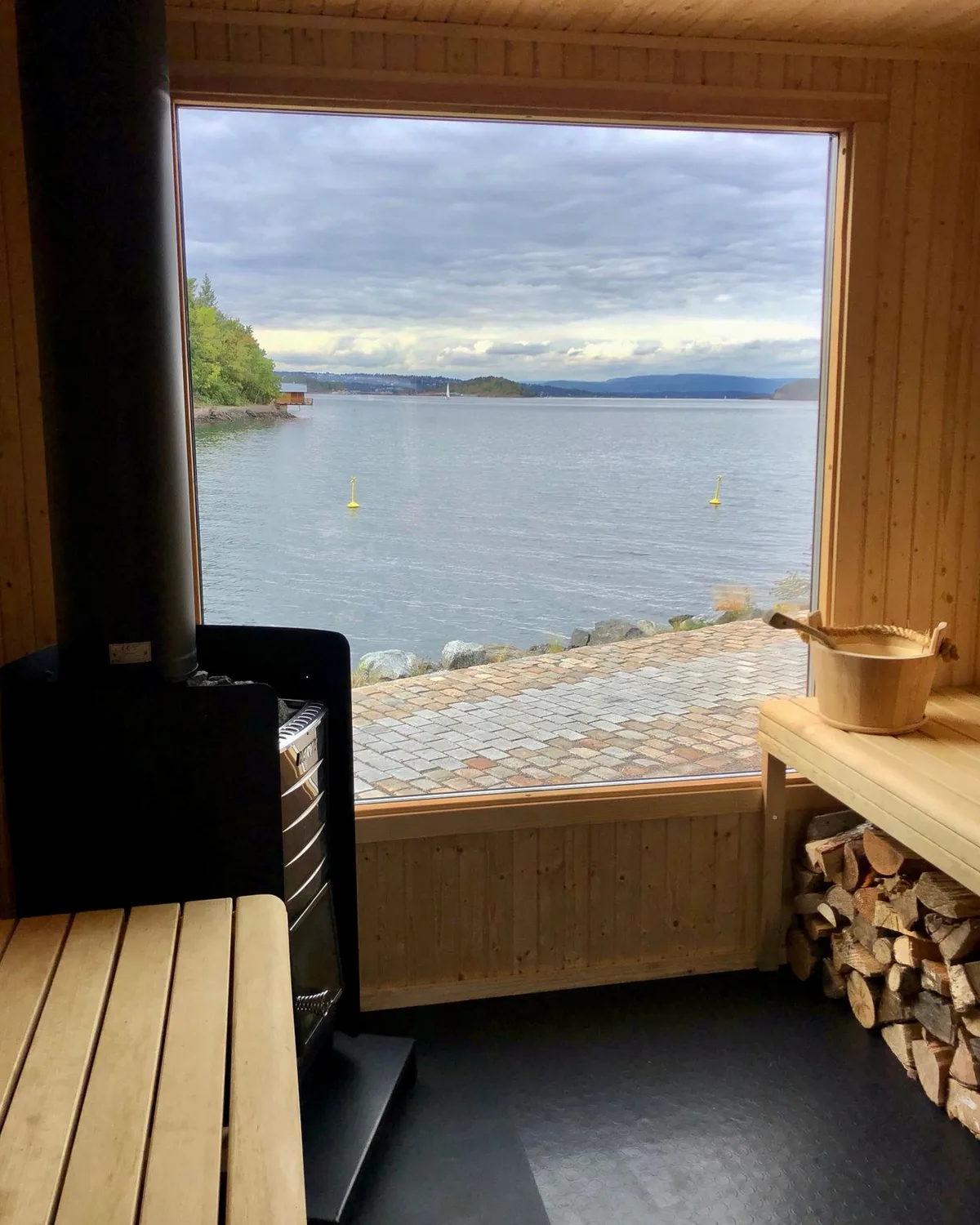
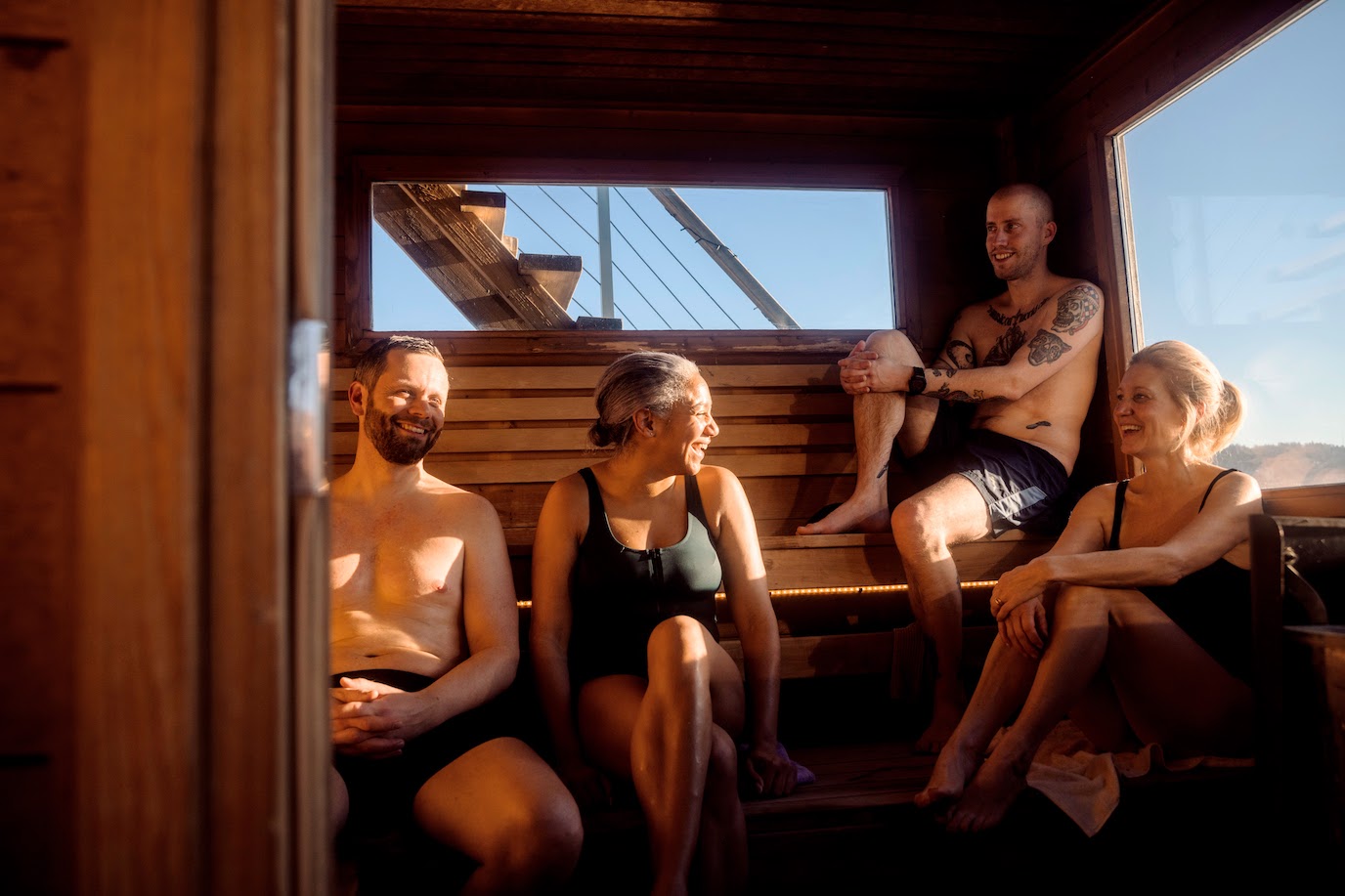
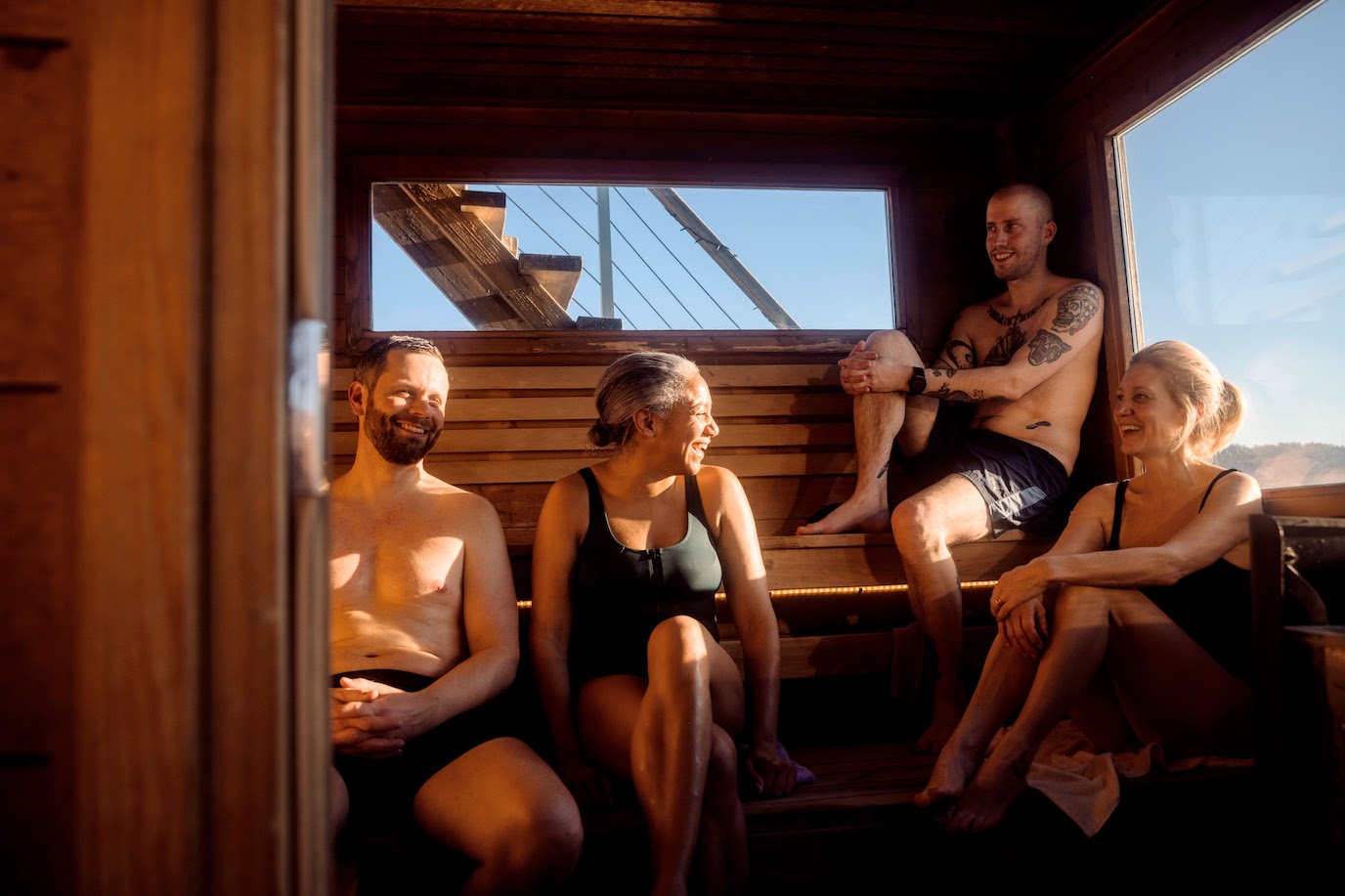
Sandefjord’s coastline lends itself naturally to sauna bathing, and the three options here cover a good spread of styles.
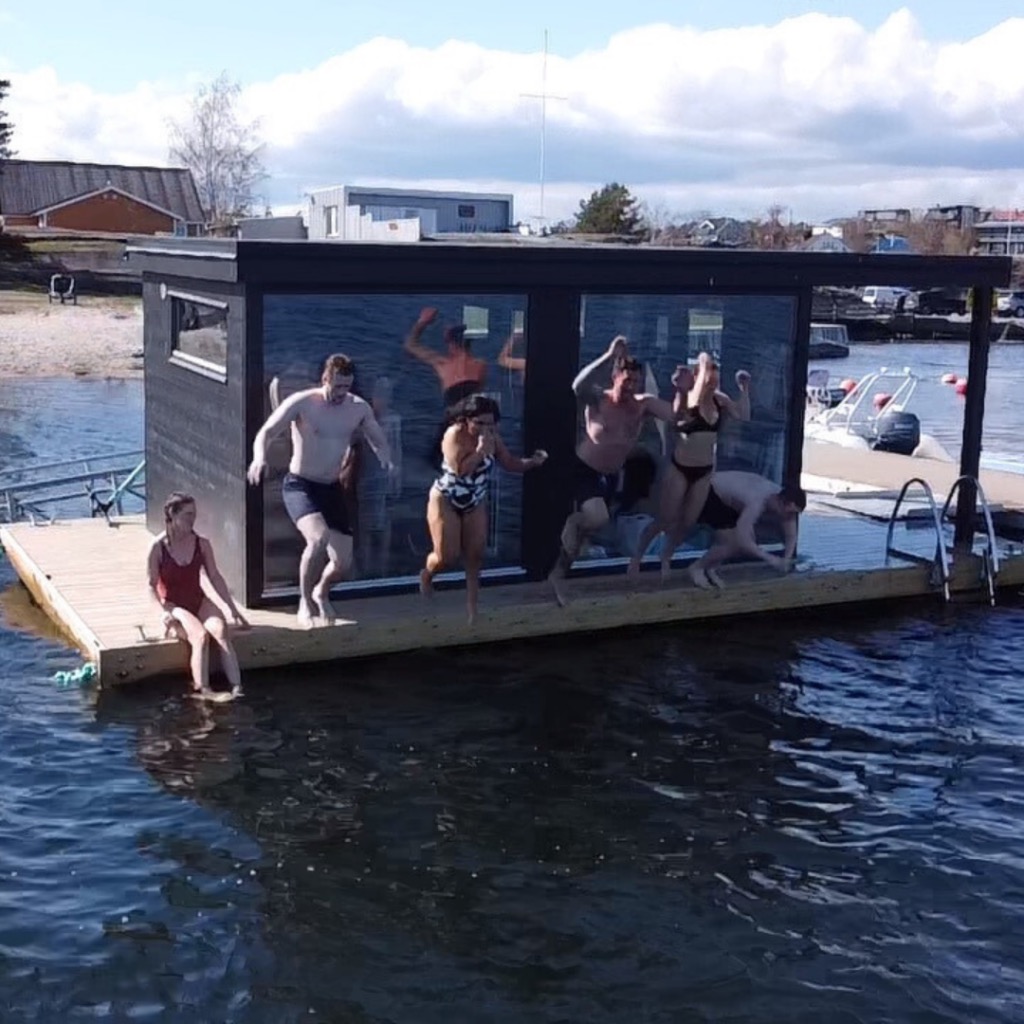
Float Sauna Sandefjord sits on Granholmen, part of the wider FLOAT sauna network. The floating cabin holds 10–12 people, runs on 2-hour sessions bookable either privately or communally, and comes with a Bluetooth stereo system — cool off between rounds with a direct plunge into the coastal water surrounding the island.
Kur Sauna Sandefjord takes a more rustic approach: a self-service, wood-fired sauna near Lahellefjorden with capacity for 10, part of the Kur Sauna network that also operates in nearby Larvik and Fredrikstad. One of its locations looks out over the Viksfjord, with a cold-water dip available right outside the door.
For a simpler hotel option, Scandic Park Sandefjord offers a sauna, steam bath, and pool as part of its Swan Spa facilities — a reliable choice if you’d rather combine your sauna session with a hotel stay than book a standalone slot.
Between the three, Sandefjord covers most of what visitors typically want from a coastal Norwegian sauna trip: a floating cabin for a social evening on the water, a wood-fired self-service option for a more independent session, and a no-fuss hotel spa for anyone prioritising convenience over atmosphere.
Getting There and When to Visit
Sandefjord Airport Torp handles domestic routes and a range of European low-cost connections, sitting only a short drive from the town centre, and the train and bus station is within easy walking distance of both the airport terminal and the ferry quay. Color Line and Fjord Line run regular sailings across to Strömstad in Sweden, a roughly two-and-a-half-hour crossing that makes Sandefjord a genuine international gateway despite its modest size. By road or rail from Oslo, the trip takes about 90 minutes on the E18, and Sandefjord’s position at this junction of airport, ferry, motorway, and rail line makes it a natural staging point for the wider Vestfold coast — whether you’re continuing on to Tønsberg and Oslo to the north, Larvik and the Skagerrak coast to the south, or straight over to Sweden by sea.
Summer is the natural season for the floating and wood-fired saunas, when the Vestfold coast is at its warmest and the harbour is at its liveliest, but Sandefjord works well as a shoulder-season or winter day trip too — the Whaling Museum is an indoor draw whatever the weather, and a wood-fired sauna followed by a cold plunge into the fjord is arguably even more satisfying on a grey January afternoon than in July.
Sandefjord sits within easy reach of the rest of the Vestfold coast — things to do in Tønsberg, Norway’s oldest city, is about 20 minutes north, while things to do in Larvik covers the Brunlanes coast and Farris Bad a short drive south. For the wider regional context, the best saunas in Eastern Norway places Sandefjord’s coastal sauna scene alongside the rest of the Oslofjord and Vestfold circuit.
Frequently Asked Questions
Why is Sandefjord called the whaling capital of Norway?
For much of the 19th and early 20th centuries, Sandefjord was the commercial and financial centre of the Norwegian whaling industry, sending expeditions as far as Antarctica. The Whaling Museum in the town centre, opened in 1917 while commercial whaling was still active, remains the only museum in the world dedicated entirely to the subject.
What is the Southern Actor?
The Southern Actor is a preserved whale-catcher ship moored at the Whaling Museum's own wharf, and the only vessel from the era of modern industrial whaling still kept in its original working condition.
How do I get to Sandefjord?
Sandefjord Airport Torp has domestic and low-cost international flights and sits a short drive from town, while a Color Line or Fjord Line ferry connects Sandefjord directly with Strömstad in Sweden. By car or train, it's roughly 90 minutes south of Oslo on the E18.
How many saunas are there in Sandefjord?
Three that we track: Float Sauna Sandefjord, a floating sauna on Granholmen; Kur Sauna Sandefjord, a self-service wood-fired sauna near Lahellefjorden; and the hotel sauna and spa at Scandic Park Sandefjord.
What is Bugårdsparken?
Bugårdsparken is Sandefjord's main park and sports centre, a roughly 60-acre green space with a duck pond, walking paths, and facilities for 18 different sports — a good stop for a quiet walk between the Whaling Museum and the harbour.
Is Sandefjord worth visiting as a day trip from Oslo?
Yes. It's an easy 90-minute drive or train ride, compact enough to see the Whaling Museum and harbour in a few hours, and the floating and wood-fired saunas make a satisfying reason to stay into the evening rather than rushing back.