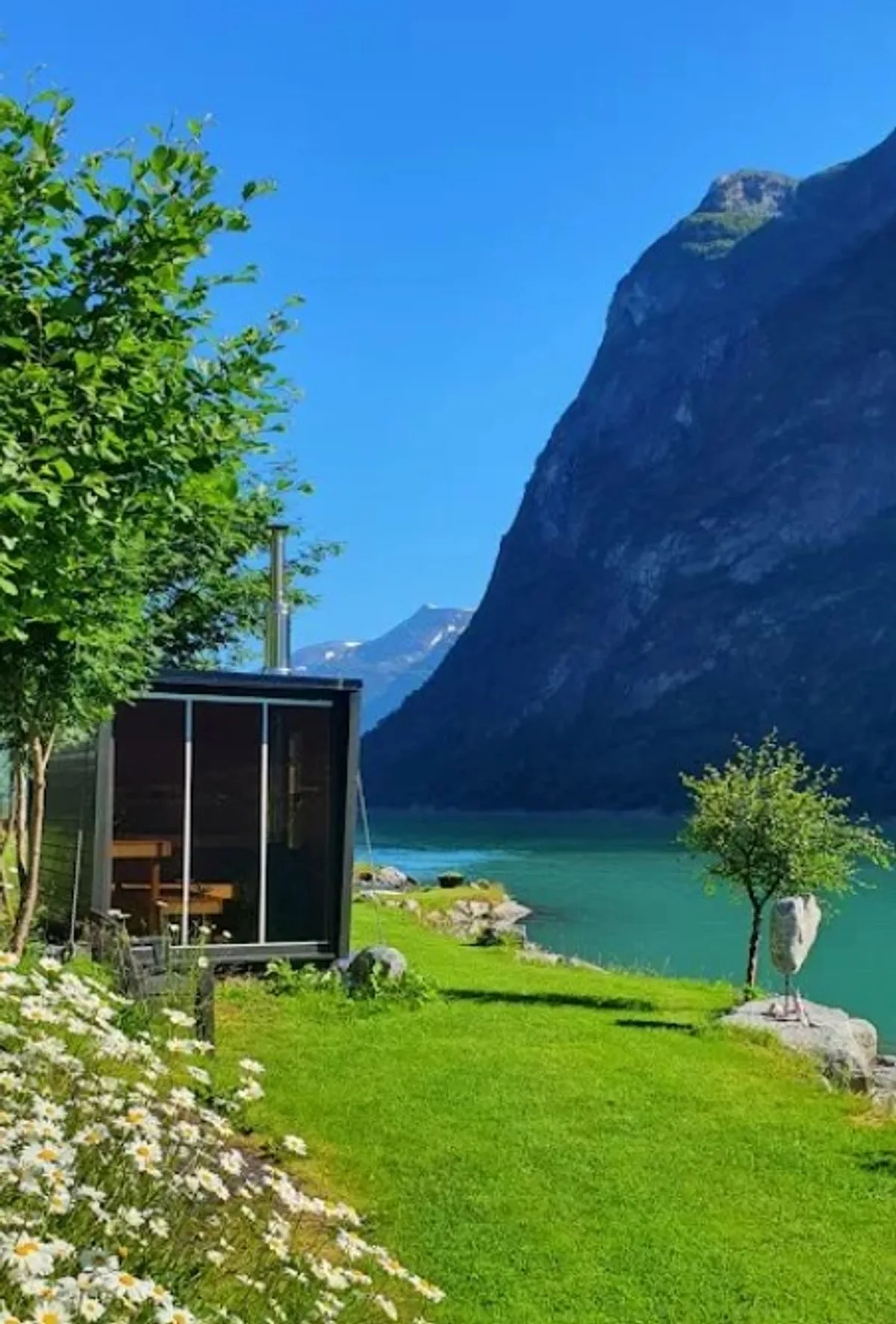
How Long Should a Sauna Session Be? Temperature, Timing & Rounds Explained
How hot is a sauna, how long should you stay in, and how many rounds should you do? A practical, safety-conscious guide to sauna temperature and timing.
“How hot is a sauna, really?” and “how long am I supposed to stay in?” are two of the most common questions first-time visitors ask before their first Norwegian sauna session — and they rarely get a straight answer. Booking pages tend to describe the venue, not the physiology, and etiquette guides focus on what to wear and how to behave rather than the actual mechanics of heat and time. This guide fills that gap. It sets out the real temperature ranges you will encounter, how long a session should realistically last for a beginner versus a regular, how the round structure that defines Nordic sauna culture actually works, and the safety guidance worth knowing before you sit down on a hot bench for the first time.
Typical sauna temperatures explained
Traditional Finnish and Norwegian saunas run considerably hotter than most people expect. The typical range is 70-100°C (158-212°F), and most public saunas in Norway sit in a narrower band around 80-90°C (176-194°F) — hot enough to make you sweat within a couple of minutes, but not so extreme that a healthy adult cannot sit through a full round.
A few things affect how hot a given sauna feels in practice:
- Height matters more than the thermometer. Heat rises, so the top bench in a sauna can be 10-20°C hotter than the lower bench in the same room at the same time. If you are new to sauna, sit low — you get a gentler, more forgiving version of the same heat.
- Humidity is usually low, except for the löyly spike. Most of the time, a dry Finnish-style sauna sits at roughly 10-20% humidity. When water is thrown on the hot stones — the ritual known as löyly in Finnish, sometimes called aufguss when it is a guided, scented version — humidity spikes briefly and the air feels noticeably hotter for a few minutes, even though the thermometer reading barely moves. This is why a sauna can feel mild one moment and intense the next: it is the steam, not the temperature, doing the work.
- Wood-fired saunas run less evenly than electric ones. A vedfyrt (wood-fired) sauna typically has more temperature variation across the room and over the course of a session than an electrically heated one, which tends to hold a steadier number.
For context, home and infrared saunas often run cooler — infrared cabins are typically used at 45-60°C, a fundamentally different (and much milder) experience than a traditional Finnish or Norwegian heat room. This guide is about the traditional hot-air sauna you will find at Norwegian public baths, floating saunas, and hotel spas, not infrared cabins.
How long should a session last? Beginner vs. experienced
There is no single correct duration — it depends entirely on experience, tolerance, and how your body responds on a given day — but there are sensible starting points.
First-timers: Start with 5 to 10 minutes per round, seated on a lower bench. This is short enough that almost nobody has a bad reaction, and it gives you a real sense of the heat without any risk of overdoing it. If 10 minutes feels easy, you can extend slightly on your next round; if it feels like a lot, get out sooner. There is no reward for gritting your teeth through discomfort.
Regular sauna-goers: Most experienced visitors settle into 8 to 15 minutes per round, occasionally pushing to 15-20 minutes on a lower bench or in a milder sauna. Twenty minutes is a practical ceiling for a single stretch in the heat, even for people who sauna often — beyond that, the benefits plateau and the physical strain keeps climbing.
Total session length: The whole visit — not one continuous sit, but the full experience of heat, cooling, rest, and repeat — commonly runs 45 minutes to 2 hours in Nordic sauna culture. This is the number that surprises visitors who assume a “sauna session” means one long sit in a hot room. In practice, it means several shorter rounds spread across an hour or more, with real breaks in between.
The round structure: heat, cool, rest, repeat
The defining feature of Nordic sauna practice is that it is not one long sit — it is a cycle, usually repeated two to four times per visit:
- Heat. 8-15 minutes in the sauna (5-10 minutes for beginners), seated on whichever bench height matches your tolerance.
- Cool down. A cold plunge into the sea, a fjord, or a cold-water tub; a cold shower; or simply stepping outside into fresh air. This is not optional for comfort — it is what allows your body to reset before the next round, and it is a core part of why the practice feels so good afterward.
- Rest. A genuine pause — sitting, standing, or lying down away from the heat — for roughly 10-15 minutes before deciding whether to go back in. This is the step people skip when they are in a hurry, and it is arguably the most important one for both comfort and safety.
- Repeat. Most sauna-goers do two to four rounds total. Beginners often feel satisfied after one or two; experienced regulars sometimes do four. There is no minimum — a single round is a complete, legitimate sauna visit, and stopping after one is never a failure.
The cold plunge in particular gets asked about a lot, and the honest answer is that it is beloved rather than mandatory. A cool shower does the same essential job of bringing your body temperature back down between rounds, and plenty of regular sauna-goers skip full immersion on any given visit. If you are new to cold water, easing in with a shower before working up to a plunge is a perfectly normal way to start — for the fuller picture on norms around clothing, conversation, and the cold plunge itself, see our Norwegian sauna etiquette guide.
Safety guidance
None of this is medical advice, and it is not a substitute for it — but the practical guidance that applies to nearly everyone is worth stating plainly:
- Listen to your body over the clock. Dizziness, nausea, an uncomfortably pounding heartbeat, or a sudden stop in sweating are all signs to leave immediately, regardless of how many minutes you have logged.
- Hydrate before, and rehydrate after. Dehydration is the most common reason a sauna session goes from pleasant to unpleasant. Drink water before you start and again once you are done — plan on it, don’t wait until you’re thirsty.
- Skip the alcohol. Alcohol before or during a sauna session significantly raises the risk of dizziness, dehydration, and fainting, and is one of the more common causes of sauna-related accidents. Save the drink for afterward, once you have cooled down and rehydrated.
- Sit low, start short. As covered above, the top bench runs noticeably hotter than the bottom one. First-timers should combine a lower seat with a shorter first round rather than testing both variables at once.
- Get medical advice first if it applies to you. If you are pregnant, have a heart condition, take medication that affects blood pressure or heart rate, or have any condition where a rapid rise in core temperature is a concern, talk to your doctor before your visit rather than relying on general guidance like this one. This is standard practice everywhere sauna is offered commercially, not a Norway-specific caution.
How this compares across different sauna types
Not every “sauna” delivers the same heat, and it is worth knowing the differences before you book:
- Traditional wood-fired (vedfyrt) and electric saunas — the classic Finnish-style hot room, 70-100°C, low humidity except during löyly. This guide’s numbers apply directly.
- Steam saunas / hammams (dampbadstu) — much lower temperature (often 40-50°C) but very high humidity, so they feel intensely hot despite the lower reading. Sessions are typically shorter as a result.
- Aufguss sessions — a guided, choreographed version of the löyly ritual, usually 10-15 minutes long and often noticeably hotter than a standard sit, since the host is actively working to intensify the heat throughout.
- Infrared cabins — a fundamentally different, milder technology at 45-60°C, often used for longer single sessions of 20-30 minutes since the heat is gentler.
For a full breakdown of the vocabulary you’ll encounter on Norwegian booking pages — löyly, aufguss, vedfyrt, dampkast, and more — see our Norwegian sauna glossary.
Putting it together
A sensible first Norwegian sauna visit looks something like this: arrive hydrated, sit low, do 5-10 minutes, step out and cool down with a shower or a cautious dip, rest for ten minutes, and decide from there whether a second round appeals. An experienced visitor’s session looks similar in shape but longer in each phase — 10-15 minute rounds, a proper cold plunge, and three or four cycles across an hour or more. Neither version is more “correct” than the other; the round structure scales to your own tolerance rather than demanding a fixed performance.
Once you have the timing down, the remaining questions are practical ones — what to wear, how to behave, and where to book. Our Norwegian sauna etiquette guide covers the social side, and how to book a sauna in Norway walks through finding and reserving a session.
Frequently Asked Questions
How long should a beginner stay in a sauna?
Start with 5 to 10 minutes on a lower bench, then get out, cool down, and see how you feel. Most first-timers find that one or two short rounds is plenty for an initial visit. There is nothing to prove by pushing further — tolerance builds naturally over repeated visits, and a short, comfortable session beats a long, unpleasant one every time.
How hot is too hot for a sauna?
Most traditional Finnish and Norwegian saunas run between 70°C and 100°C (158-212°F), with public saunas typically sitting around 80-90°C. There is no single 'too hot' number that applies to everyone — it depends on your tolerance, health, and how long you plan to stay. The practical warning signs matter more than the thermometer: if you feel light-headed, nauseous, or your heart is pounding uncomfortably, the room is too hot for you right now, regardless of what the dial says.
How many rounds should I do in a sauna session?
Two to four rounds is the norm in Nordic sauna culture, with each round lasting roughly 8-15 minutes in the heat followed by a cooling break and a short rest. Beginners often feel a full effect after just one or two rounds, while experienced sauna-goers may do three or four. There is no requirement to do more than one — a single round is a complete, valid sauna visit.
Should I go straight from the sauna to a cold plunge?
Many Nordic sauna-goers do, but it is not mandatory. A cold plunge, a cold shower, or simply standing in fresh air are all accepted ways to cool down between rounds. If you are new to cold exposure, ease in with a shower or a brief dip rather than a full plunge, and always listen to your body — gasping, chest tightness, or panic are signs to get out and warm up gradually instead.
Can I stay in the sauna for a full hour?
Not in one continuous sitting. A single stretch of more than 20 minutes in a hot sauna raises the risk of dehydration and overheating even for experienced users. The way Nordic sauna culture reaches longer total sessions — 45 minutes to 2 hours — is through multiple shorter rounds separated by cooling breaks and rest, not one long uninterrupted sit.
Is it safe to sauna if I'm pregnant or have a heart condition?
This is a question for your doctor, not a generic guide. Sauna use raises heart rate and core temperature, which is a meaningful consideration during pregnancy or with cardiovascular conditions, blood pressure medication, or other conditions affecting circulation. Get personal medical advice before you book, rather than relying on general guidance like this one.