Things to Do in Longyearbyen — Svalbard's Arctic Capital, Museums & Saunas
Discover Longyearbyen itself: the Svalbard Museum, the North Pole Expedition Museum, the world's northernmost brewery, polar bear safety rules within the town, and five Arctic saunas.
Longyearbyen is the world’s northernmost town of any real size — a settlement of around 2,400 people strung along a valley on the Svalbard archipelago at 78 degrees north. Our guide to Svalbard covers the archipelago-wide adventures: polar bear safaris by boat and snowmobile, multi-day glacier expeditions, the ghost towns of Pyramiden and Barentsburg. This guide stays inside the town itself — its museums, its brewery, the practical rules that govern simply walking down the street here, and the five saunas that let you warm up after a day in one of the coldest inhabited places on Earth.
From Coal Camp to Arctic Capital
Longyearbyen owes its name and its existence to an American businessman rather than a Norwegian one. John Munro Longyear visited Spitsbergen as a tourist in 1901, spotted the commercial potential in the coal seams being prospected there, and returned with his business partner Frederick Ayer to found the Arctic Coal Company in 1906. The settlement they built — with American management and largely Norwegian labour — became known as Longyear City, later Norwegianised to Longyearbyen. That “American era” lasted until 1916, when the company and its properties were sold to Norwegian interests and Store Norske Spitsbergen Kulkompani took over the mines that, in one form or another, shaped the town for the rest of the century. Traces of that mining history are impossible to miss walking around town today: the wooden cableway towers that once carried coal buckets from the mountainside mines down to the harbour still march through the settlement, and the Taubanesentralen (Cableway Central) — the building that operated the system from 1957 until the whole network was abandoned in 1987 — still towers over the town centre as one of Longyearbyen’s most recognisable landmarks. The old Mine 2 buildings, clinging to the slope just outside town, are visible from most vantage points and are a genuinely striking reminder of what built this place.
Sauna Experiences in Longyearbyen
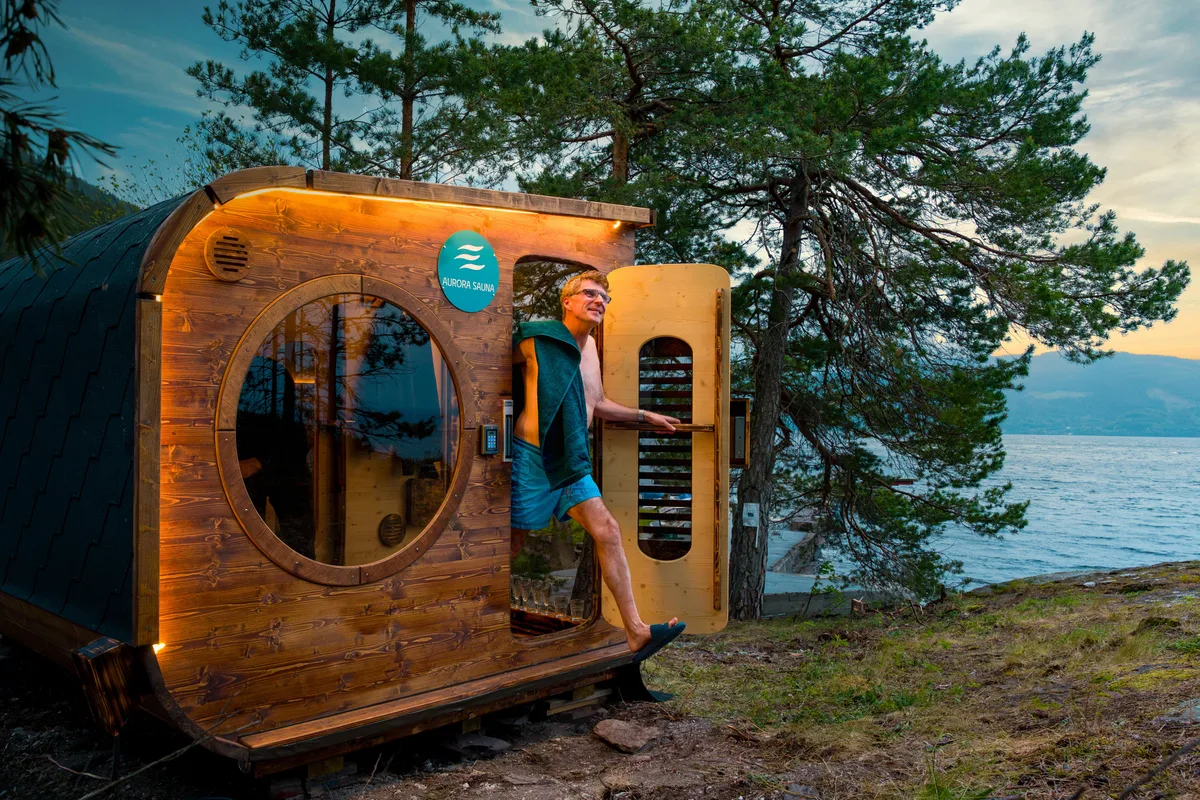
Longyearbyen has the densest concentration of genuinely Arctic saunas anywhere in Norway, ranging from a floating harbour sauna to a wood-fired cabin accessible only by snowmobile or boat.
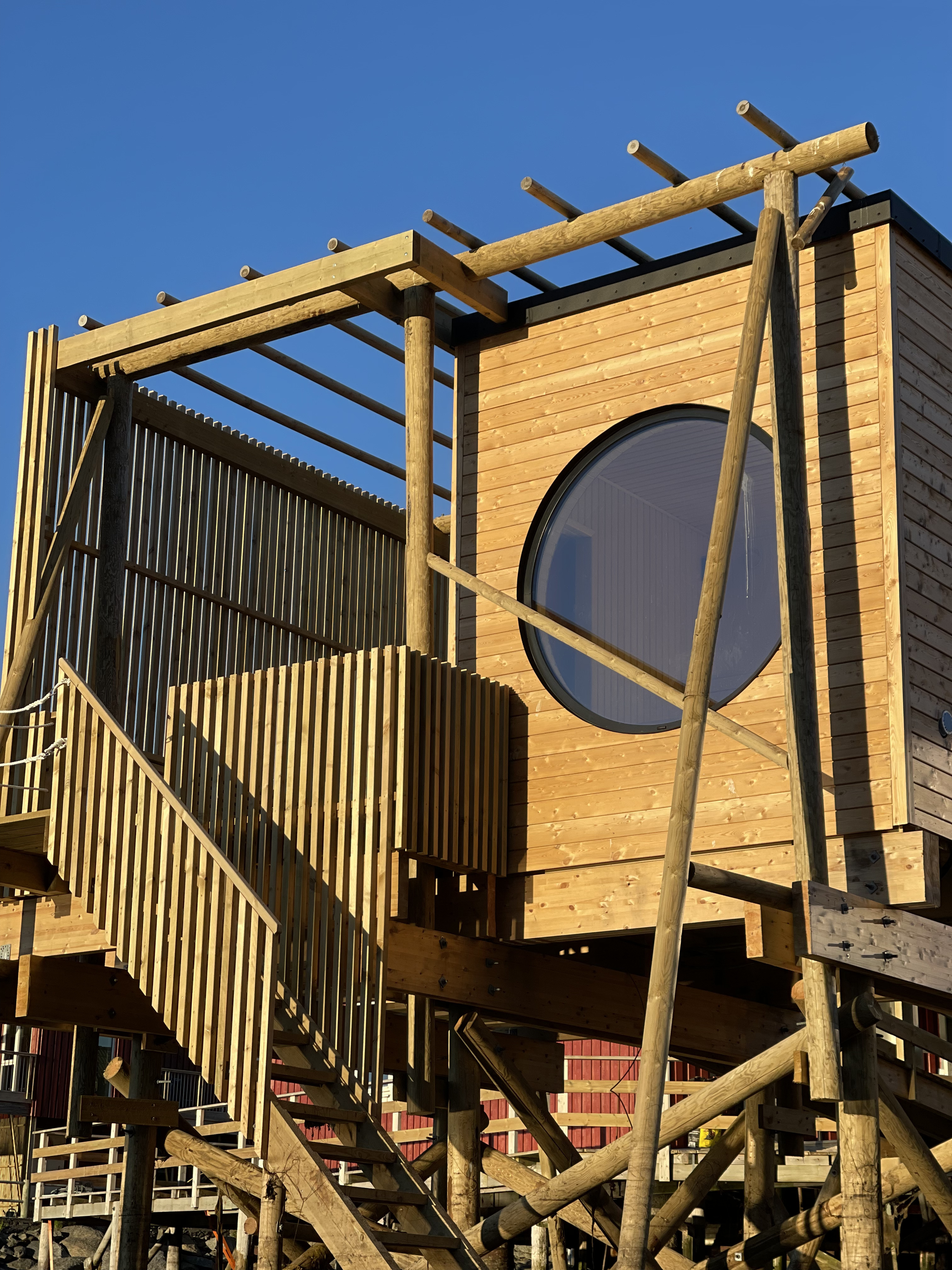
SvalBad Svalbard, moored in the port right in town, holds the distinction of being the world’s northernmost floating sauna. Built from reclaimed local materials, the wood-fired cabin seats up to 14 for a private session, with a cold dip into water that sits close to freezing year-round — and on a clear winter evening, the Northern Lights overhead.
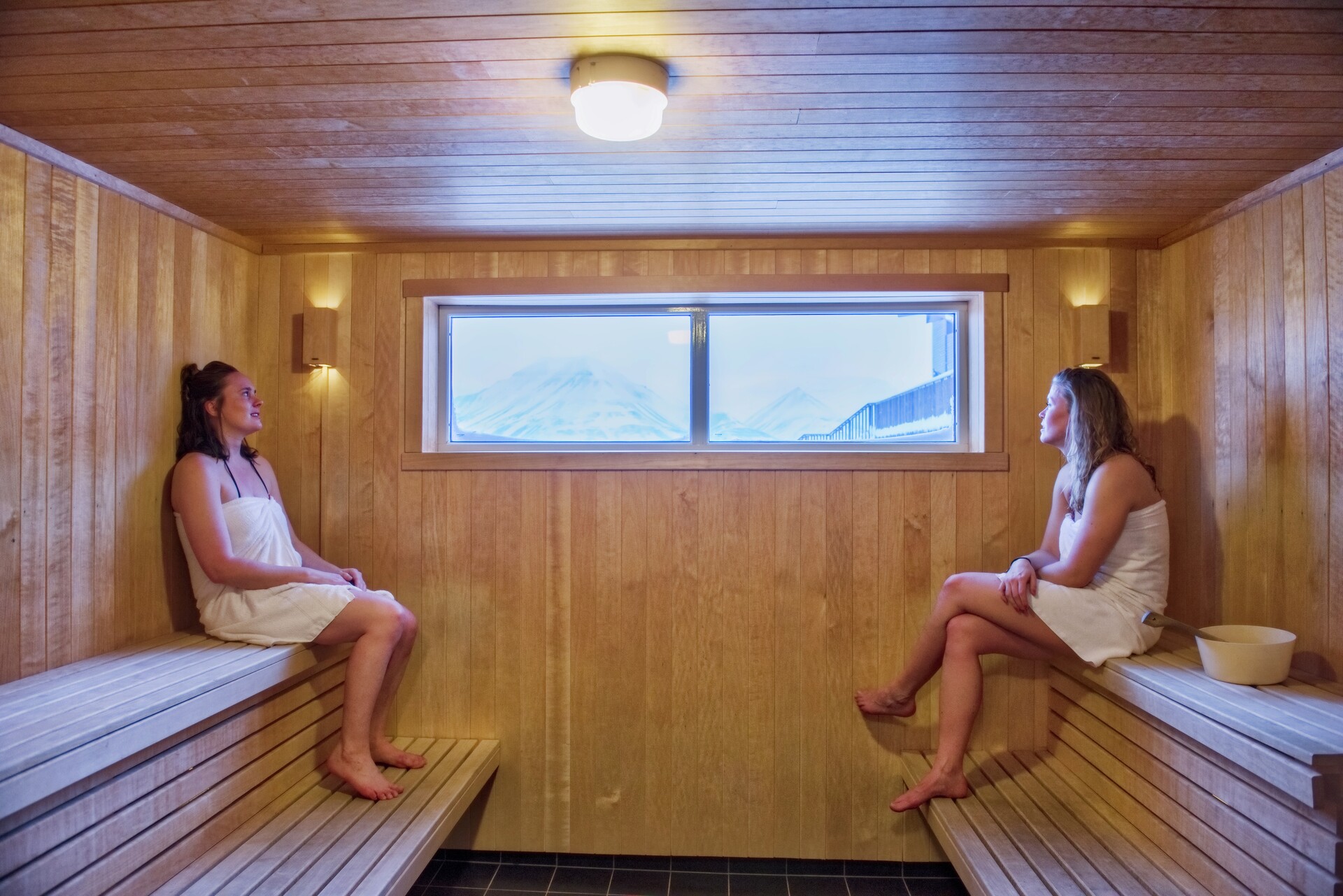
For a hotel-based option in the town centre, the Radisson Blu Polar Hotel pairs a traditional sauna with outdoor hot tubs set into the Arctic landscape, available to guests for a small fee. Funken Lodge, a restored historic property from the mining era, offers an indoor sauna and gym with panoramic mountain views — a favourite after a day of snowmobiling or dog sledding. Basecamp Hotel takes a more expedition-minded approach with its Polar Spa, designed specifically around the recovery rhythms of Arctic travel.
For something genuinely extreme, Nordenskiöld Lodge sits deep in the Svalbard wilderness, reachable only by guided snowmobile in winter or boat in summer. The wood-fired sauna there, followed by a plunge into snow, ice, or the Arctic sea depending on the season, is about as far from a conventional spa day as sauna bathing gets — and it is one of the most memorable things you can book anywhere in Norway.
Polar Bear Safety Within the Town
This is the detail every first-time visitor to Longyearbyen needs to understand before setting out on foot: Svalbard has more polar bears than people, and the town’s roads are marked accordingly. Signs reading “Gjelder hele Svalbard” (“applies to all of Svalbard”) stand at the points where four of Longyearbyen’s roads — plus a fifth near the airport — cross the settlement’s boundary. Within those markers, walking around town unarmed and unguided is normal and safe. Step past one of those signs into the surrounding tundra without a rifle, a trained guide, or both, and you are breaking the law as well as taking a real risk. The polar bear sign at the edge of town has become something of a landmark in its own right — reputedly one of the most photographed street signs in the world.
Museums in the Town Centre
Longyearbyen’s museum offering is unusually good for a town this size, and both of its main museums sit within easy walking distance of the centre.
The Svalbard Museum, which won the Council of Europe Museum Prize in 2008, tells the story of 400 years of human presence on the archipelago — Pomor hunters, whaling stations, coal mining, and the scientific research that continues today. It is the natural starting point for understanding why this town exists at all.
A short walk away, near the university centre (UNIS) by the fjord, the North Pole Expedition Museum covers a narrower and stranger slice of history: the early-20th-century attempts to reach the North Pole by airship and balloon that used Svalbard as a launching point. Original film footage, telegrams, and expedition artefacts across two floors make this one of the more atmospheric small museums in Norway.
Svalbard Bryggeri — The World’s Northernmost Brewery
Getting a commercial brewery licensed on Svalbard required an actual change to Norwegian law, which had prohibited alcohol production on the archipelago. Since 2015, Svalbard Bryggeri has brewed with water sourced from a 2,000-year-old glacier, and its taproom — usually open to the public on Friday evenings — has become a genuine local gathering spot as much as a tourist stop. A flight typically runs through several styles, from light lagers to the Spitsbergen Stout and a whisky-barrel-aged imperial stout matured inside a former coal mine. It is a small, distinctly Longyearbyen way to spend an evening.
Where to Eat and the World’s Northernmost Church
Longyearbyen punches well above its weight for a town of 2,400 people, and its food scene is a genuine surprise to most first-time visitors. Kroa, in the upper part of the main street with its recognisable street-facing pavilion, is close to a local institution — a menu built around seasonal produce that most residents and visitors pass through at some point during a stay. Barentz Gastropub, inside the Radisson Blu Polar Hotel, has developed a reputation for some of the best pizza on the archipelago in a relaxed setting, and Huset, Gruvelageret, and Funktionærmessen round out a dining scene that takes its ingredients — much of it fish and game sourced from Norwegian waters — seriously.
Svalbard Church (Svalbard kirke), the world’s northernmost church, sits on a rise above the town and is open around the clock, every day of the year. It functions as much as a community living room as a place of worship — locals and visitors alike drop in for coffee, a quiet moment, or simply to warm up, and it hosts a genuinely wide range of cultural gatherings through the week. It costs nothing to visit and is one of the more understated, welcoming stops in town.
Dog Sledding and Arctic Days Out
While full multi-day expeditions belong in the wider Svalbard picture, several operators run day trips directly out of Longyearbyen that fit neatly around a short town stay. Green Dog Svalbard, based in Bolterdalen just outside town, runs guided dog sledding on snow through the winter and dogcart tours once the snow melts in June — both suited to a half-day booking without committing to a longer expedition. Combined with a museum visit and a sauna session, it is entirely possible to build a satisfying one- or two-day Longyearbyen itinerary without ever leaving the immediate area on an overnight trip.
Getting There and Practicalities
Svalbard Airport Longyearbyen (LYR) has direct flights from Oslo (around three hours) and Tromsø (around 90 minutes), and there is no other way in — no roads connect Svalbard to the mainland, and none connect Longyearbyen to any other settlement on the archipelago. The town itself is compact and entirely walkable, with a supermarket, several restaurants, a sports centre, and the museums all within a few minutes of most accommodation.
Under the Svalbard Treaty, foreign nationals don’t need a visa to enter the archipelago — one of the only genuinely borderless corners of international travel — though most travellers still connect through mainland Norway, where standard Schengen document checks apply to that leg of the journey.
Seasons here are extreme in both directions. The polar night runs from late October to mid-February, when the sun never rises and the Northern Lights are the main event; the midnight sun runs from mid-April to late August, when the sun never sets and boat trips and hiking take over. Late winter (March–May) is often considered the sweet spot for first-time visitors: enough daylight to see the town and its surroundings properly, still enough snow and cold for dog sledding, snowmobiling, and a properly earned sauna at the end of the day.
For the archipelago-wide adventures — polar bear safaris, multi-day glacier hikes, the ghost town of Pyramiden — our Svalbard guide is the place to go next. For the full Arctic sauna picture across northern Norway, our guide to Arctic sauna experiences places Longyearbyen’s five saunas alongside Tromsø and Finnmark. Pairing a sauna session with a Northern Lights display is one of the best things you can do here — our Northern Lights sauna guide covers timing and technique. Most flights to Svalbard connect through Tromsø — things to do in Tromsø is a natural stop either side of your trip.
Frequently Asked Questions
Is Longyearbyen the same as Svalbard?
No. Svalbard is the entire Arctic archipelago; Longyearbyen is its main settlement and administrative centre, home to around 2,400 people. This guide covers the town itself — its museums, brewery, saunas, and practicalities — while our Svalbard guide covers the wider archipelago's expeditions and wildlife.
Can I walk around Longyearbyen without a rifle or guide?
Yes, within the town's marked boundaries. Roads leading out of Longyearbyen are marked with polar bear warning signs reading 'Gjelder hele Svalbard' (applies to all of Svalbard) — beyond those signs, armed protection or a guide is legally required. Inside town, normal walking is fine.
Do I need a passport to visit Longyearbyen?
Foreign nationals from Svalbard Treaty signatory countries can enter and stay in Svalbard without a visa under the 1920 treaty, though airlines will still check identity documents on flights routed via mainland Norway, since those legs cross the Schengen border.
How many saunas are there in Longyearbyen?
Five that we track: SvalBad Svalbard's floating sauna in the harbour, hotel saunas at the Radisson Blu Polar Hotel, Funken Lodge and Basecamp Hotel, and the remote wood-fired sauna at Nordenskiöld Lodge deep in the Svalbard wilderness.
What is the best time of year to visit Longyearbyen?
October to February brings the polar night and the best Northern Lights viewing; April to May combines snow, daylight and dog sledding; the midnight sun runs from mid-April to late August, when boat trips and hiking are at their best.
Is there a brewery in Longyearbyen?
Yes. Svalbard Bryggeri, established in 2015, is the world's northernmost commercial brewery, brewing with water sourced from a 2,000-year-old glacier. Its taproom typically opens to visitors on Friday evenings.