Things to Do in Telemark — Canals, Folk Culture & Forest Saunas
Telemark is the birthplace of skiing, home to Norway's greatest waterway journey, and one of the country's richest folk culture regions. Here's what to do.
Telemark has been giving things to the world for centuries. The telemark turn, the ski jump, the distinctive national costume that still appears at Norwegian weddings and folk festivals — all of them came from this region of forested valleys, mountain plateaus, and waterway towns in southeastern Norway. And yet Telemark remains one of the country’s quietest destinations for international visitors, overshadowed by the fjord drama of the west coast and the convenience of Oslo.
That oversight is an opportunity. The region’s canal system is one of the great slow-travel experiences in Europe. Hardangervidda, Europe’s largest mountain plateau, presses against its western edge. The folk music, woodcarving, and rosemaling traditions are more alive here than almost anywhere in Norway. And the sauna culture, woven into the forest lake landscape of the interior, is quiet, traditional, and extremely good.
The Telemark Canal
The Telemark Canal is the region’s most celebrated feature, and it earns that status. Running 105 kilometres from Skien on the coast to Dalen in the interior, the canal system was completed in 1892 and remains one of the great feats of Norwegian engineering — a series of 18 locks that lift boats nearly 72 metres through forests and valleys, connecting the coast to the Telemark highlands.
The classic experience is the full boat journey from Skien to Dalen, which takes about 11 hours one way and passes through the entire staircase of locks, including the spectacular Vrangfoss staircase — five locks in a row that raise boats 23 metres in a short stretch. It is a genuinely unhurried journey, the kind that most modern travel has made difficult to find: no agenda beyond watching the landscape pass and the boats rise through the chambers of each lock.
Day trips on shorter sections are available for visitors with less time. The stretch between Ulefoss and Kviteseid covers some of the most picturesque sections and is manageable in a single long day.
Morgedal — The Birthplace of Skiing
Telemark’s most extraordinary claim on world culture is the ski itself. In the small valley of Morgedal, in the 19th century, a farmer named Sondre Norheim developed and codified the techniques that became modern skiing — the telemark turn, the Christiania, the use of bindings that held the heel for turning. Without Morgedal, there is no alpine skiing, no ski jumping, no cross-country racing as we know them.
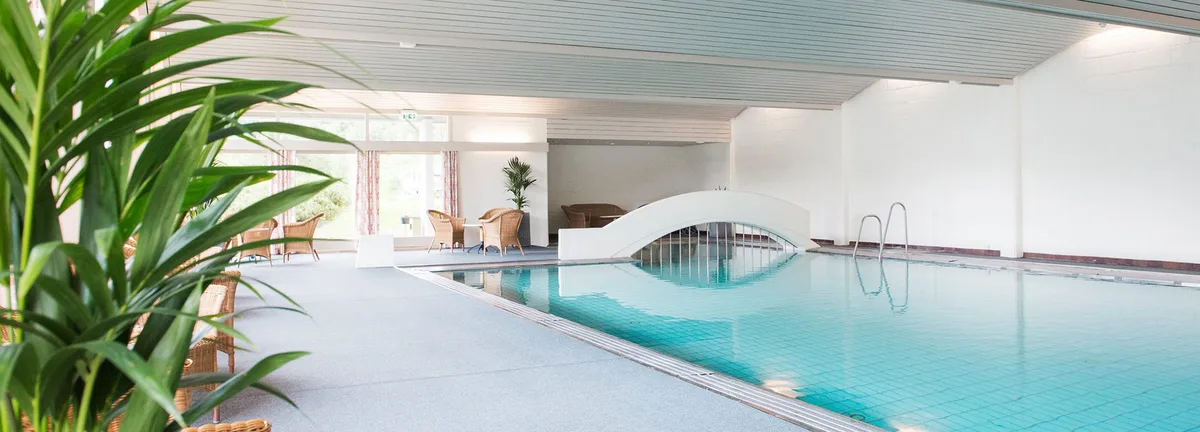
Morgedal Hotell carries this heritage with appropriate weight. The hotel’s sauna sits in the valley where it all began, and staying here combines genuine sauna culture with the deepest roots of a global sporting tradition. The Norwegian Ski Adventure Centre in Morgedal tells the full story of how skiing spread from this one valley to the world.
Sauna Experiences in Telemark
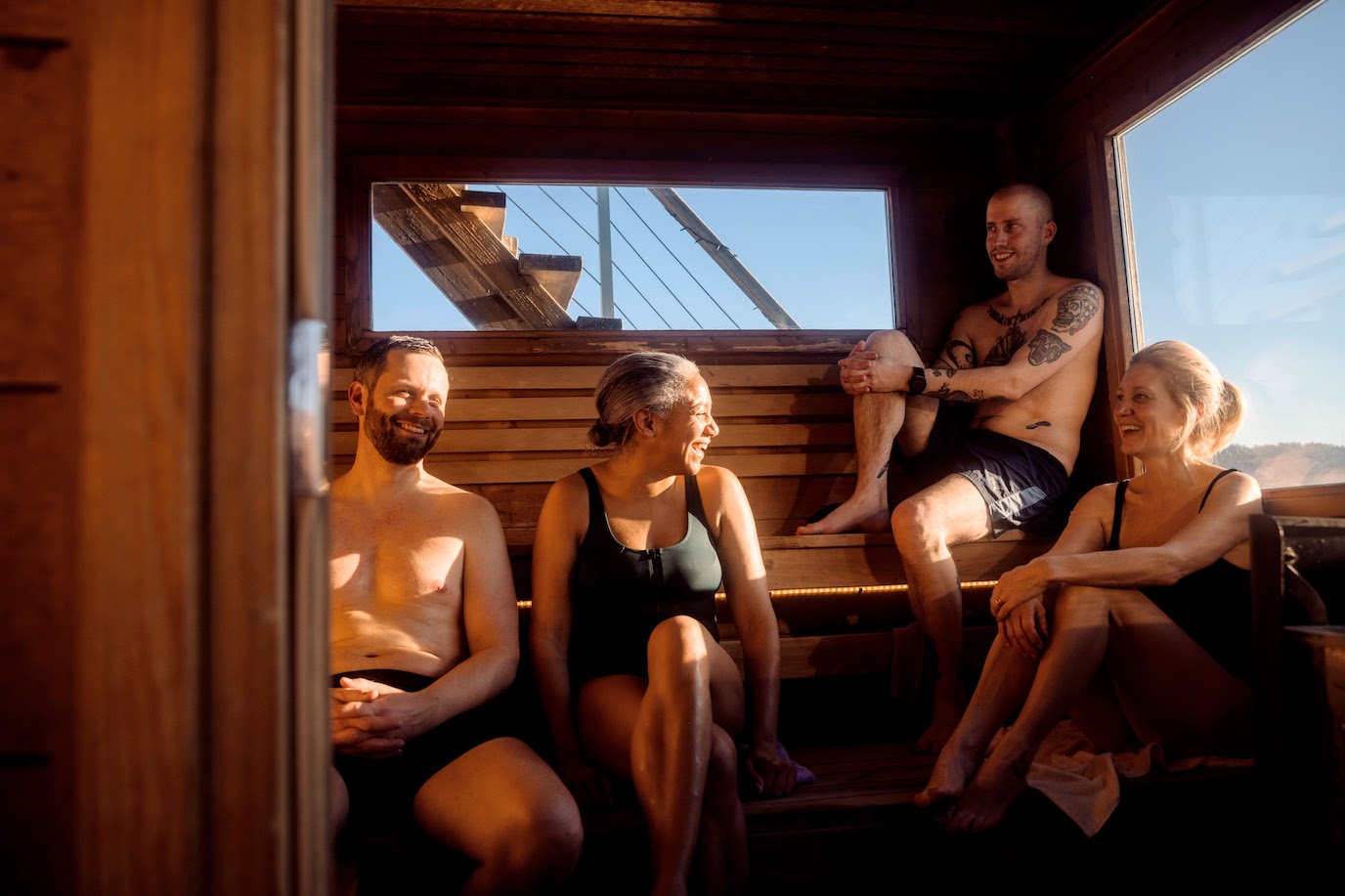
The sauna tradition in Telemark is forest and lake based — more private, more contemplative, and more deeply rooted in the landscape than the urban sauna scenes of Oslo or Bergen.
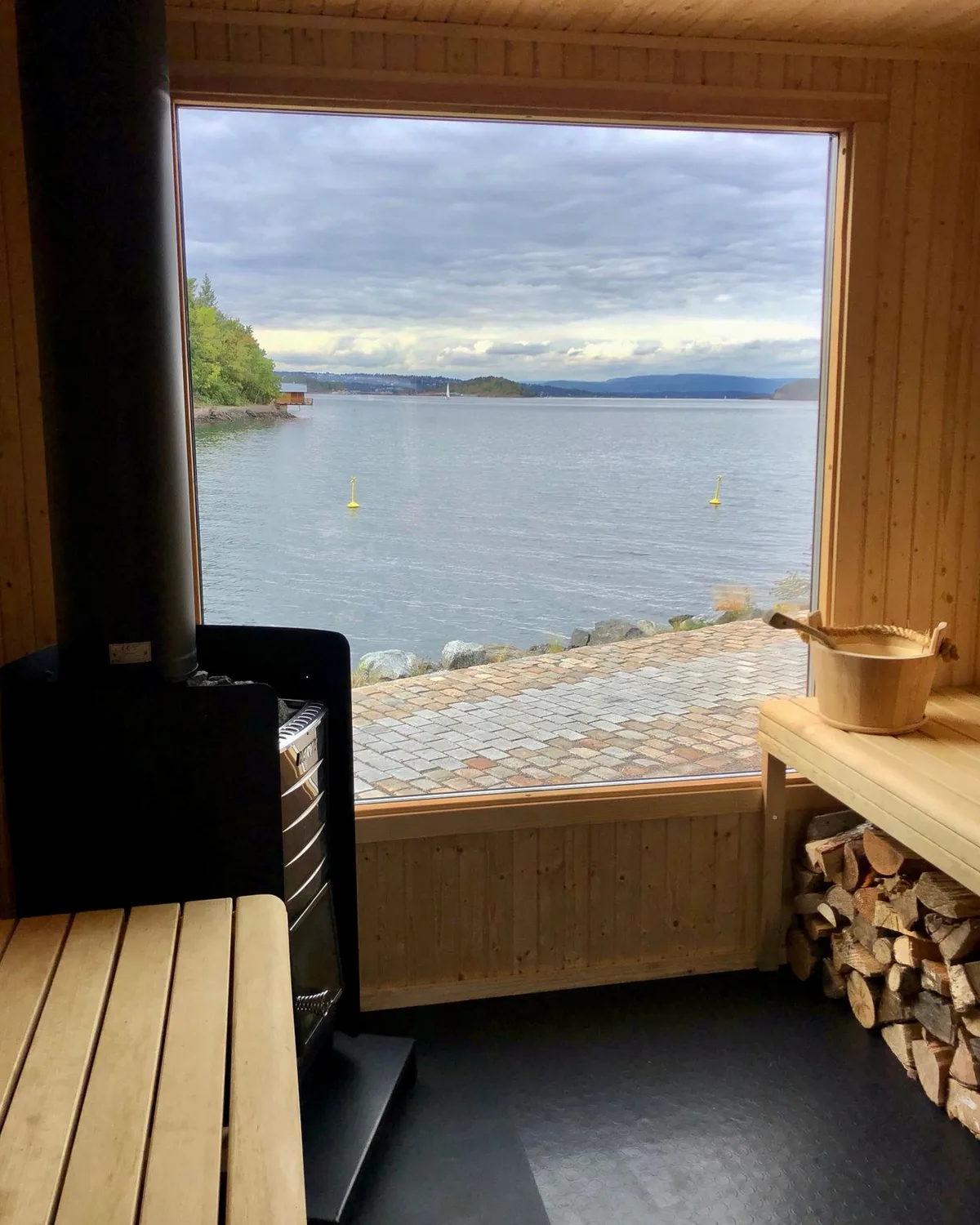
Saga Sauna Hjartdal sits in the upper Numedal valley, in the kind of deep forest and rocky lake country that defines Telemark’s interior. The sauna setup here is traditional and wood-fired, with a cold plunge in the lake and views across the water to forested hillsides. Vedfyrt Sauna Seljordsvatnet is positioned on the shore of Seljordsvatnet — the lake that is said, with entirely serious local conviction, to be home to a large aquatic creature known as Selma, making it Norway’s own Loch Ness. A wood-fired sauna session on a mythologically charged lake is a particular kind of Norwegian experience.
Badstuen i Lårdal is found in the upper Lårdal valley, one of Telemark’s quieter inland districts, where old farmsteads and traditional buildings survive in the kind of cultural landscape that is increasingly rare. Bolkesjø Gaard is a heritage farm complex with sauna facilities that manages to feel both authentically historical and genuinely comfortable.
The Hardangervidda Edge
Telemark’s western flank brushes against Hardangervidda, the vast mountain plateau that spans the border between Telemark and Vestland. At over 3,400 square kilometres, Hardangervidda is the largest mountain plateau in Europe and Norway’s largest national park, home to the largest population of wild reindeer on the continent.
Access from Telemark is relatively easy — the RV37 highway climbs from the valley towns up onto the plateau, where the landscape opens into a vast, rolling tundra that feels genuinely remote despite being accessible by car. In winter, the plateau is a cross-country skiing destination; in summer, it is a hiking and fishing paradise. The light on Hardangervidda — particularly in late summer, when the birch scrub turns gold and the sky is enormous — is unforgettable.
Dalen and the Stave Church Architecture
The village of Dalen at the western end of the canal is home to the extraordinary Dalen Hotel — a late 19th-century grand hotel built in a style that blends Norwegian stave church architecture with Victorian resort ambition. The result is a building that looks as though it grew out of a fairy tale, with dragon-head gables, carved timberwork, and a setting on the canal at the foot of steep forested hills.
Dalen is a natural base for exploring upper Telemark, and the combination of canal journey and hotel stay makes for one of the most distinctive accommodation experiences in Norway. The cultural heritage is thick here — the valley landscape is dotted with traditional farms, old mills, and the kind of vernacular architecture that the rest of Norway has mostly lost to modernity.
Folk Culture and the Telemark Tradition
Telemark has one of the strongest folk culture traditions in Norway. The distinctive Telemark bunad — the regional costume — is considered the mother of all Norwegian regional costumes, and its decorative motifs appear on carved woodwork, painted furniture, and embroidered textiles throughout the region.
Folk music is taken seriously here. The Hardanger fiddle — hardingfele — is the instrument of Telemark, and summer festivals bring together players from across Norway for competitions and concerts in farm settings. The Norwegian Folk Museum in Oslo has many of its finest exhibits from Telemark, but the tradition is more alive in Kviteseid, Rauland, and the valley communities than in any museum setting.
Getting There
Telemark is accessible by car from Oslo in under 2 hours to most parts of the region, and the E134 highway connects the region to the west coast. Regional trains serve Notodden and Skien. The canal trip itself, departing from Skien, is one of the great ways to arrive.