Things to Do Along the Sognefjord — Norway's Longest Fjord & Local Saunas
Explore the Sognefjord: Norway's longest fjord stretching 205 km inland. Stave churches, goat cheese villages, Jostedal glacier, and fjordside saunas await.
The Sognefjord stretches 205 kilometres inland from the coast — the longest fjord in Norway and the third longest in the world. At its deepest point it plunges 1,308 metres below sea level. The numbers alone are staggering, but what makes the Sognefjord extraordinary is the range of landscapes and experiences it holds within a single fjord system: glacier tongues descending to sea level, medieval stave churches, Norway’s most celebrated mountain railway, tiny car-free villages, and the gateway to Jotunheimen’s highest peaks. Travelling the length of the Sognefjord is one of the great journeys in European travel.
Key Stops Along the Sognefjord
Flåm & the Flåm Railway
At the innermost end of the Aurlandsfjord — a branch of the Sognefjord — Flåm is one of Norway’s most visited communities and the terminus of the Flåmsbana, the world’s steepest standard-gauge railway. The train climbs 865 metres in 20 kilometres, passing waterfalls and spiralling through mountain tunnels to reach the plateau station at Myrdal. It is dramatic in every season: green and thunderous in summer, buried in white silence in winter. From Flåm, the UNESCO-listed Nærøyfjord is accessible by boat — the narrowest fjord in Europe, barely 250 metres wide in places.
Balestrand — The Artistic Fjord Village
Balestrand occupies a sunny south-facing position mid-fjord and was a favourite summer retreat of Kaiser Wilhelm II, who visited repeatedly and funded a memorial church here. The village has attracted artists since the 19th century, and its combination of historic wooden architecture, orchard gardens, and unhurried fjord life rewards a slower visit than most Sognefjord stops receive.
Lærdal — Norway’s Oldest Preserved Wooden Town
Lærdalsøyri, the town centre of Lærdal, is one of the best-preserved collections of traditional Norwegian wooden architecture in existence — 160 historic buildings along quiet lanes, untouched by the fires that destroyed most comparable towns. The adjacent Borgund Stave Church, built around 1180, is among the most complete and best-preserved stave churches in Norway: entirely in dark wood, bristling with carved dragon heads, and standing in a landscape of mountain and forest that feels unchanged over centuries. Both are essential stops.
Undredal — The Goat Cheese Capital
Undredal has fewer than 40 permanent inhabitants, no through road, and a stave church barely four metres wide — the smallest in Norway. For most of its history it was reachable only by boat; today a tunnel brings occasional car traffic, but the village retains its complete isolation of character. It is famous across Norway for its brunost (brown goat cheese), produced in small quantities and sold directly from local farms. The combination of an extraordinary location, remarkable architecture, and genuinely excellent cheese makes it one of the most distinctive communities on the entire fjord.
Urnes Stave Church — UNESCO Heritage
At the innermost reach of the Lustrafjord (itself a branch of the Sognefjord), Urnes Stave Church is the oldest surviving stave church in Norway, dating from around 1130. It carries UNESCO World Heritage status and is reachable only by a short ferry crossing from Solvorn — the isolation intensifies the experience. The carved wooden portal, in a style known as the Urnes style, is considered one of the masterpieces of Norse art.
Jostedal Glacier
The Jostedalen valley leads north from the Lustrafjord to the Jostedalsbreen, the largest glacier on the European mainland. Multiple glacier arms are accessible for guided walks from the valley floor; the Nigardsbreen arm, accessible from Jostedal, is the most visited and one of the most photogenic. Glacier walks are led by qualified guides and operate throughout summer.
Sauna Experiences Along the Sognefjord
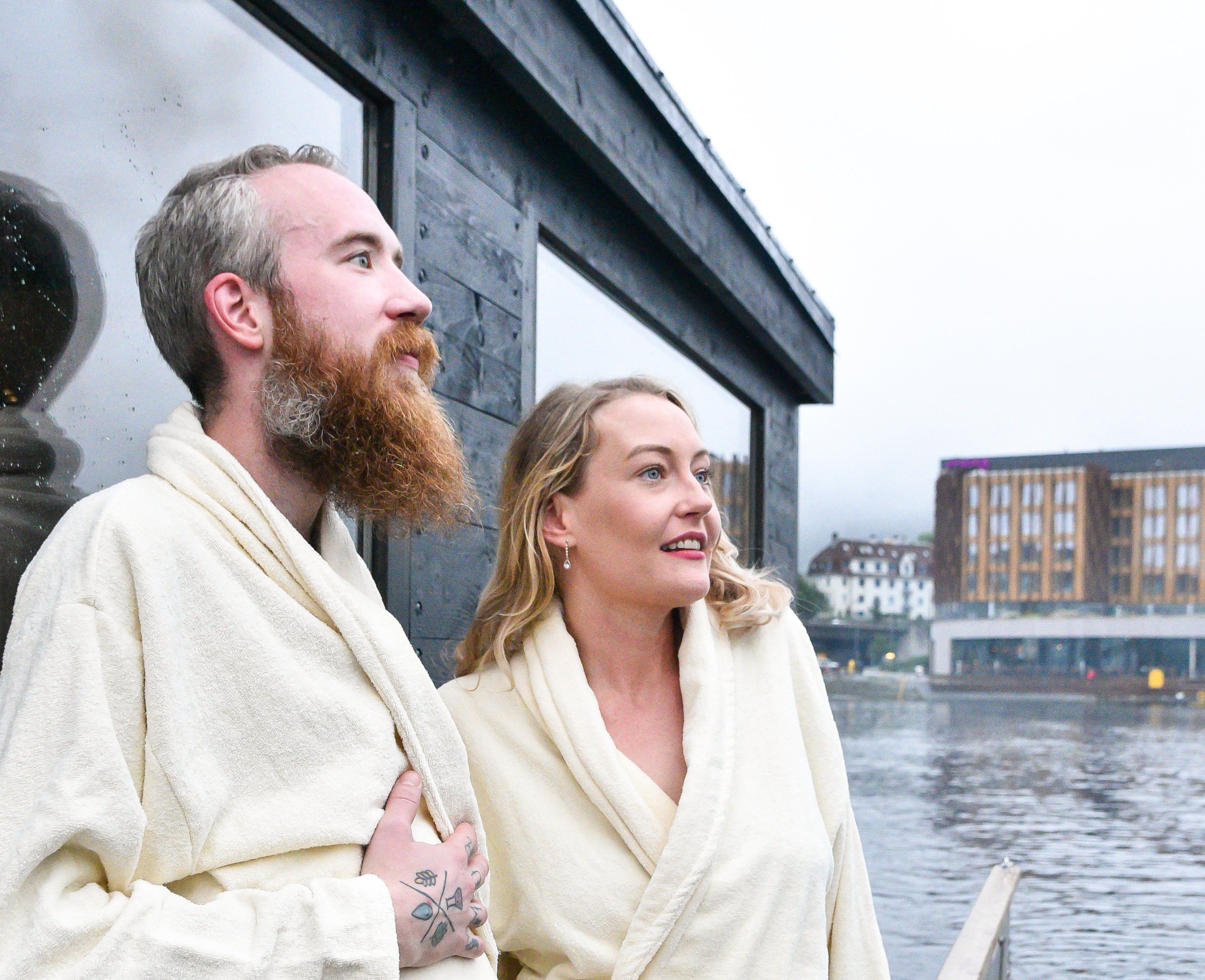
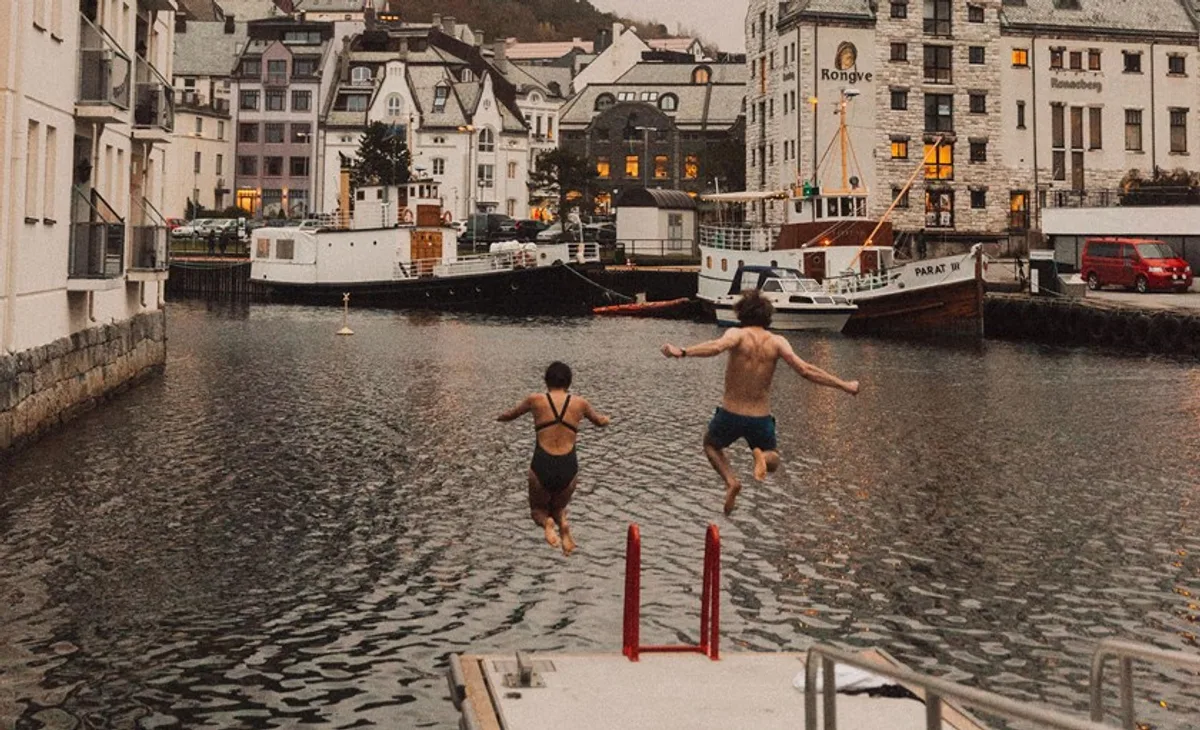
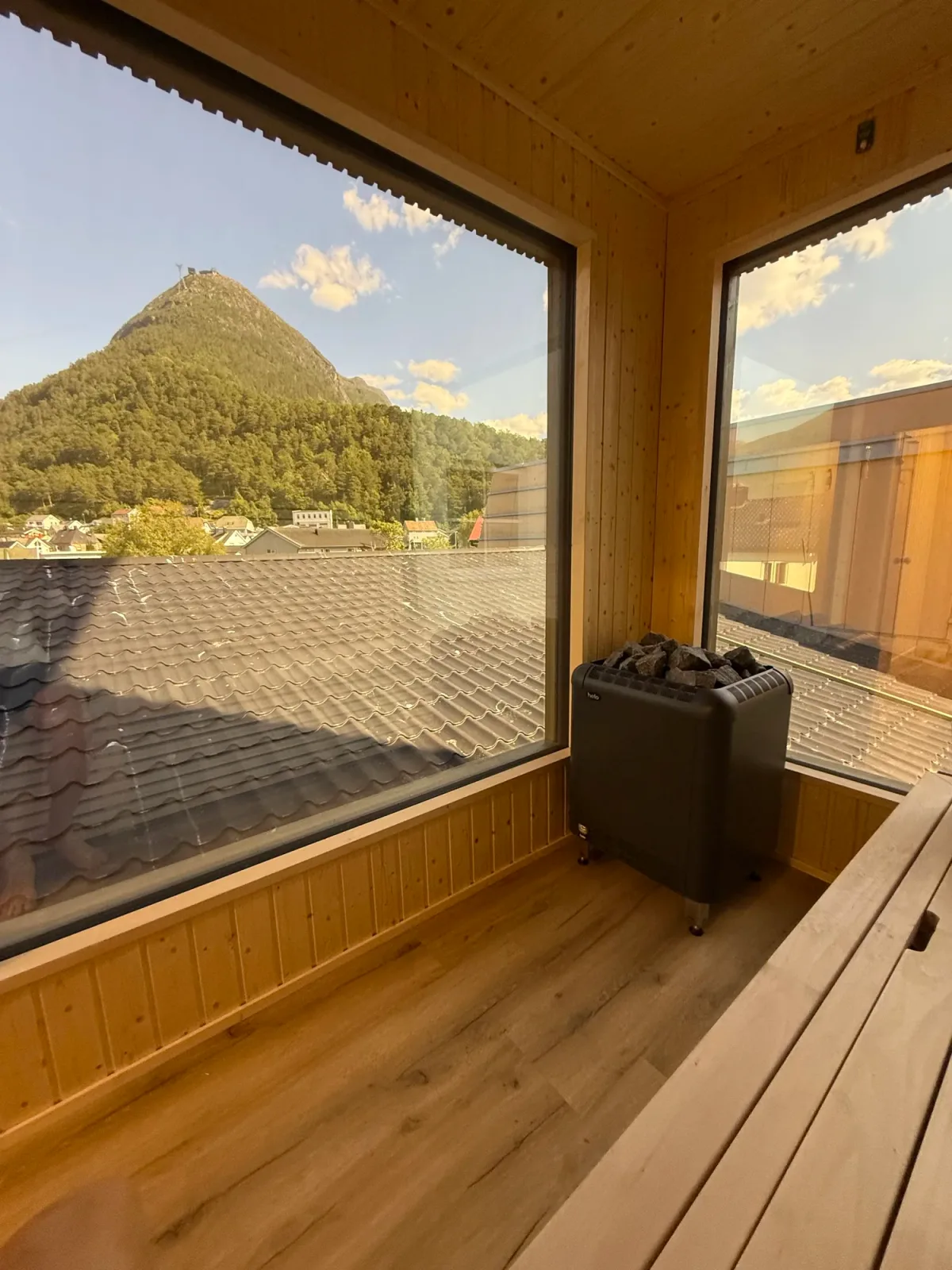
The scale of the Sognefjord system means its sauna options are spread across a wide geography, each with its own character and setting.
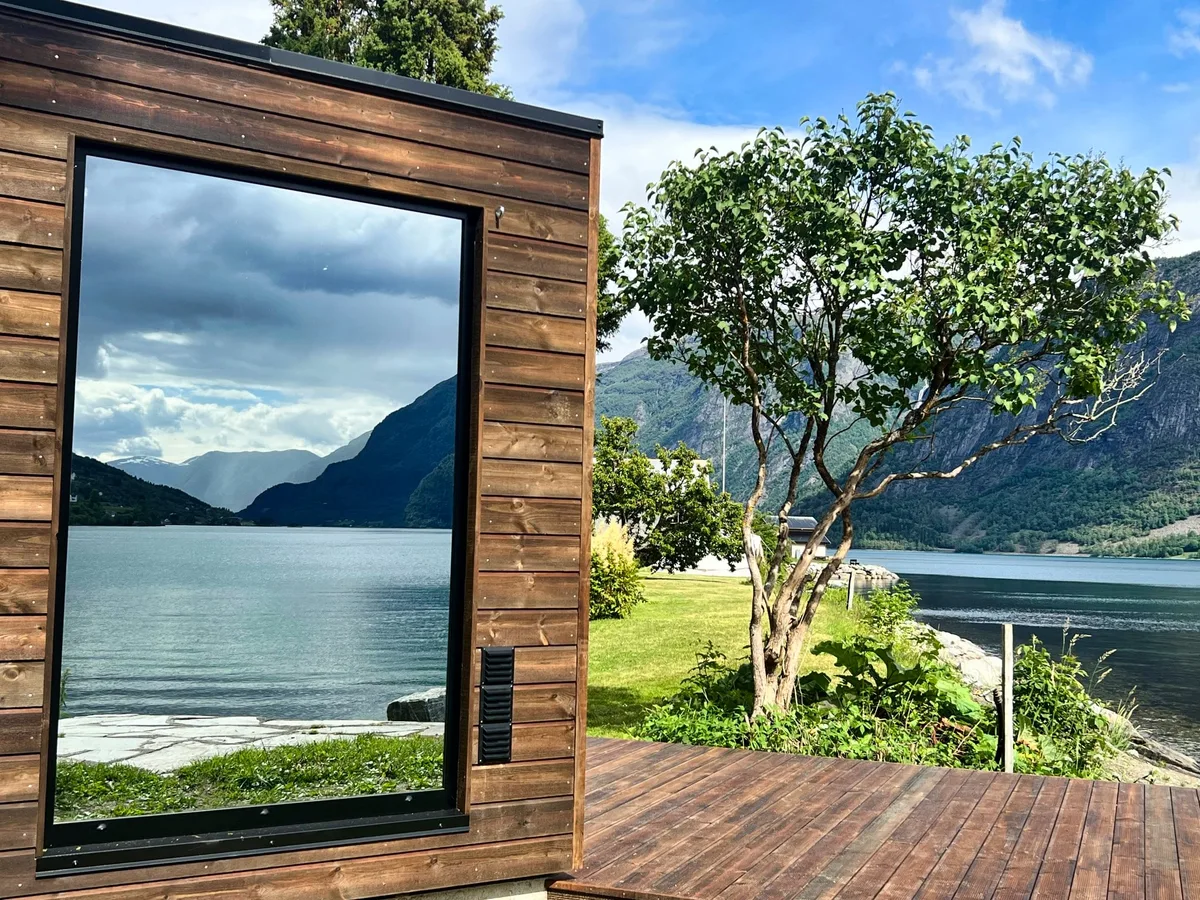
At the innermost end of the Lustrafjord, Fjordglimt Sauna Luster offers bathing in one of the most peacefully situated stretches of the entire Sognefjord system — far from the main tourist flows, surrounded by orchards and reflective water. Luster Fjord Spa provides a more comprehensive spa experience in the same area, combining sauna with other treatments in a setting that takes full advantage of the fjord environment.
In Lærdal, AUGA Bad Lærdal is a purpose-built bathing facility that pairs naturally with a visit to the historic wooden town — a long afternoon exploring the 18th-century streets followed by a proper fjordside sauna is the ideal Lærdal day.
Undredal’s sauna offering, Undredal Sauna, brings the bathing experience to one of the most extraordinary communities on the fjord. Given the village’s remote character and tiny population, it is a genuinely special place to bathe — the combination of the stave church, the goat cheese, the ferry crossing, and the sauna adds up to a day that feels completely unlike anything else on the Sognefjord.
At the Aurlandsfjord end of the system, Fjordsauna Aurland provides direct fjord bathing with views up and down the Aurland valley — one of the most dramatically located barrel saunas in Western Norway.
Getting Around the Sognefjord
The Sognefjord is served by a combination of road, ferry, and express boat. The E16 runs along the northern shore from Bergen to Flåm and Lærdal; Route 55 continues along the southern shore and eventually climbs to the Sognefjellsvegen across the Jotunheimen plateau. The Lærdal Tunnel (24.5 km, the world’s longest road tunnel) connects the inner fjord to Oslo.
Express boats link Bergen with the main fjord communities daily, taking around 5 hours to reach Flåm. Local ferries cross the fjord at several points. The Flåmsbana connects to the Bergen Railway at Myrdal.
Travelling the full length of the Sognefjord — from the coast at Balestrand to the innermost arm at Luster — and back by a different route takes a minimum of three days to do properly. Allow a week to include Jotunheimen, the glacier, and the sauna stops.
When to Visit
The Sognefjord is accessible year-round, but the mountain roads (including Sognefjellsvegen and the Aurland Snow Road) are closed by snow from October to May. The fjord itself is at its most dramatic in spring when waterfalls are swollen with snowmelt and the orchards of Hardanger and Luster are in blossom. Summer offers the longest days and the warmest fjord swimming. Autumn brings turning foliage and noticeably fewer visitors — September and October are consistently underrated months on the Sognefjord.