Things to Do in Senja — Norway's Most Dramatic Island & Wild Saunas
Senja: Norway's second-largest island with mountains meeting ocean, the Segla peak, midnight sun, Northern Lights, whale watching, and wild Arctic saunas.
Norway has no shortage of dramatic islands. But Senja, the country’s second-largest, occupies a particular position in Norwegian geography — and increasingly in the imagination of travellers who have run out of superlatives for Lofoten and are looking for the next discovery. Locals describe it as “Norway in miniature”: a compact landscape where mountains rise straight from the sea, fishing villages cling to narrow inlets, and the light in winter and summer alike is unlike anything you will find further south. It is three hours from Tromsø. It remains genuinely, blissfully, difficult to find overcrowded.
Senja’s Iconic Landscapes
Segla — The Island’s Most Photographed Peak
Segla is a 639-metre peak in the municipality of Torsken, shaped by erosion into a profile that rises sheer from the water in a near-perfect pyramid. Photographs of it have circulated so widely online that it has become one of the defining images of Arctic Norway — and yet the hiking trail to its summit takes only around 1.5 to 2 hours from the road, making it accessible to fit walkers without specialist equipment. The view from the top stretches across the Senjahopen, the outer coast, and on clear days to other island groups far to the north.
Tungeneset Rest Stop
Tungeneset is a roadside viewpoint on the wild outer coast of Senja that has become one of the most photographed spots in Northern Norway. A short wooden boardwalk leads to a raised platform above the sea; from it, the jagged teeth of mountain peaks behind Senja’s western coast are reflected in a sheltered bay below. The photo is taken in every season and every light condition, and they are all worth taking.
Bergsbotn Viewpoint
Bergsbotn sits at the end of a branch road off the coastal route, on a cliff above the Bergsfjord. A cantilevered steel platform hangs over the void, looking out over a landscape of islands and inlets that on a clear day resembles a Japanese woodblock print. The platform itself is an architectural object; the view from it is one of the best on the island.
Mefjordvær & Husøy
Two fishing villages on Senja’s outer coast deserve more time than most visitors give them. Mefjordvær is a working community at the mouth of the Mefjord — a deep, narrow cut into the island’s western side — with traditional red-painted fishermen’s houses (rorbuer) that can be rented and a community life that has changed only gradually over decades. Husøy, connected to the main island by a short bridge, is built almost entirely on a small rocky islet — there is barely enough flat ground for the houses, and the village’s relationship with the surrounding sea is total and unhesitating.
Outdoor Activities on Senja
Hiking
Senja is an increasingly established hiking destination, and its trail network covers the full range from easy coastal walks to serious alpine routes. In addition to Segla, the Hesten peak (reachable from Torsken) and the Ørnfløya trail offer challenging routes with outstanding coastal views. Most of Senja’s hiking is done from the coastal road, making it easy to drive between trailheads over a multi-day visit.
Whale Watching
The waters around Senja and the neighbouring Andfjord are part of Norway’s premier whale-watching area. Orca (killer whales) follow herring into the fjords in winter — typically October through January — and humpback whales are frequently sighted in the same period. Several operators based in Tromsø run day trips to the Senja and Andøya area. Minke whales are present in summer. This is genuine Arctic wildlife watching rather than a theme-park experience: sightings are not guaranteed, but when they happen they are extraordinary.
Midnight Sun & Northern Lights
Senja lies well above the Arctic Circle and experiences the midnight sun from around 20 May to 23 July. The light in the weeks either side of that period — golden, low, and never quite fading — is among the most extraordinary natural phenomena available to travellers anywhere. In winter (roughly November to February), the Northern Lights appear regularly on clear nights; Senja’s low light pollution and varied coastal landscape make it an excellent location for aurora photography.
Fishing
Senja’s deep fjords and nutrient-rich coastal waters produce exceptional fishing — cod, halibut, wolffish, and coalfish are the main species. Several fishing camps and rorbuer on the island offer guided sea fishing with boats. The combination of dramatic scenery and serious fishing is what brings many visitors back repeatedly.
Sauna Experiences on and Near Senja
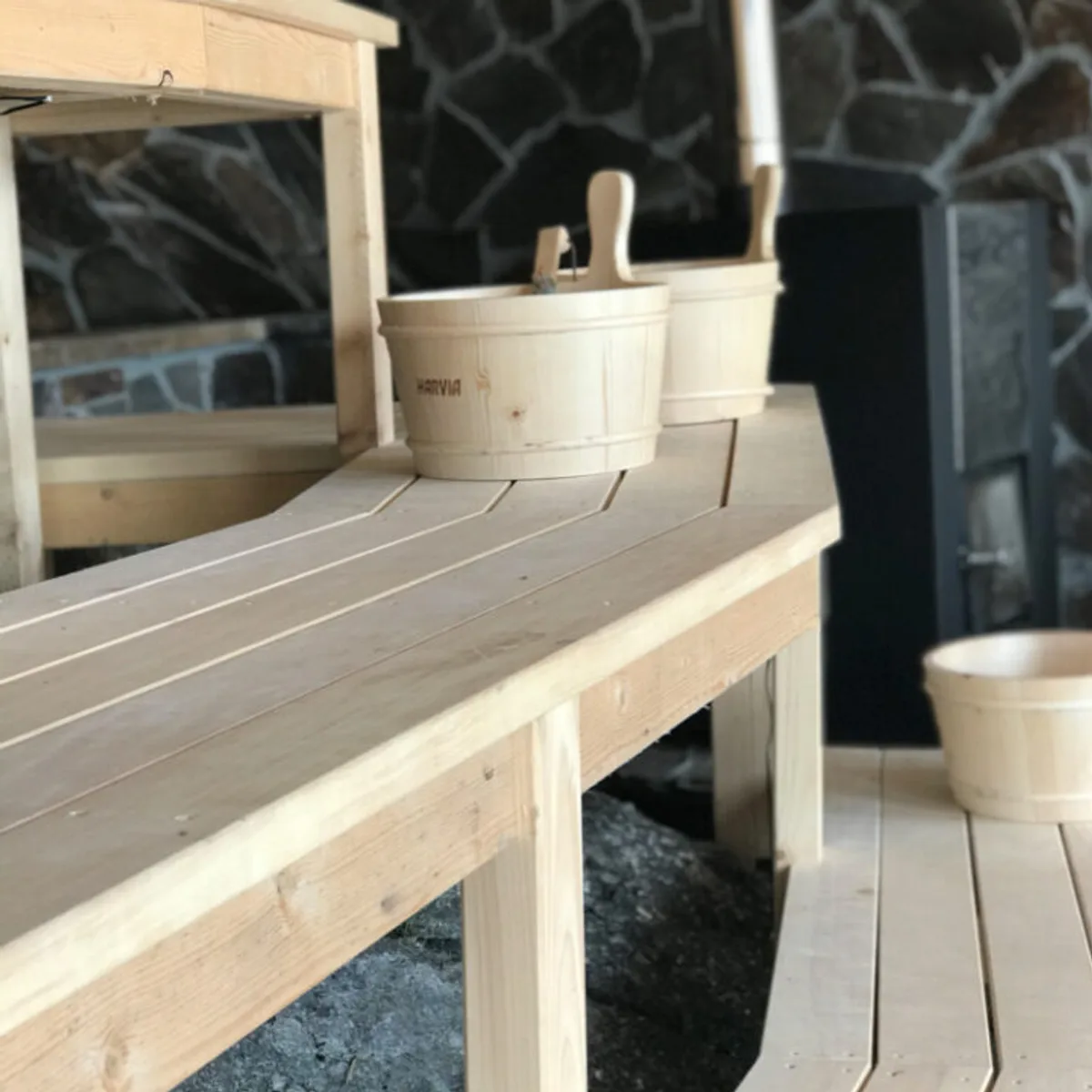
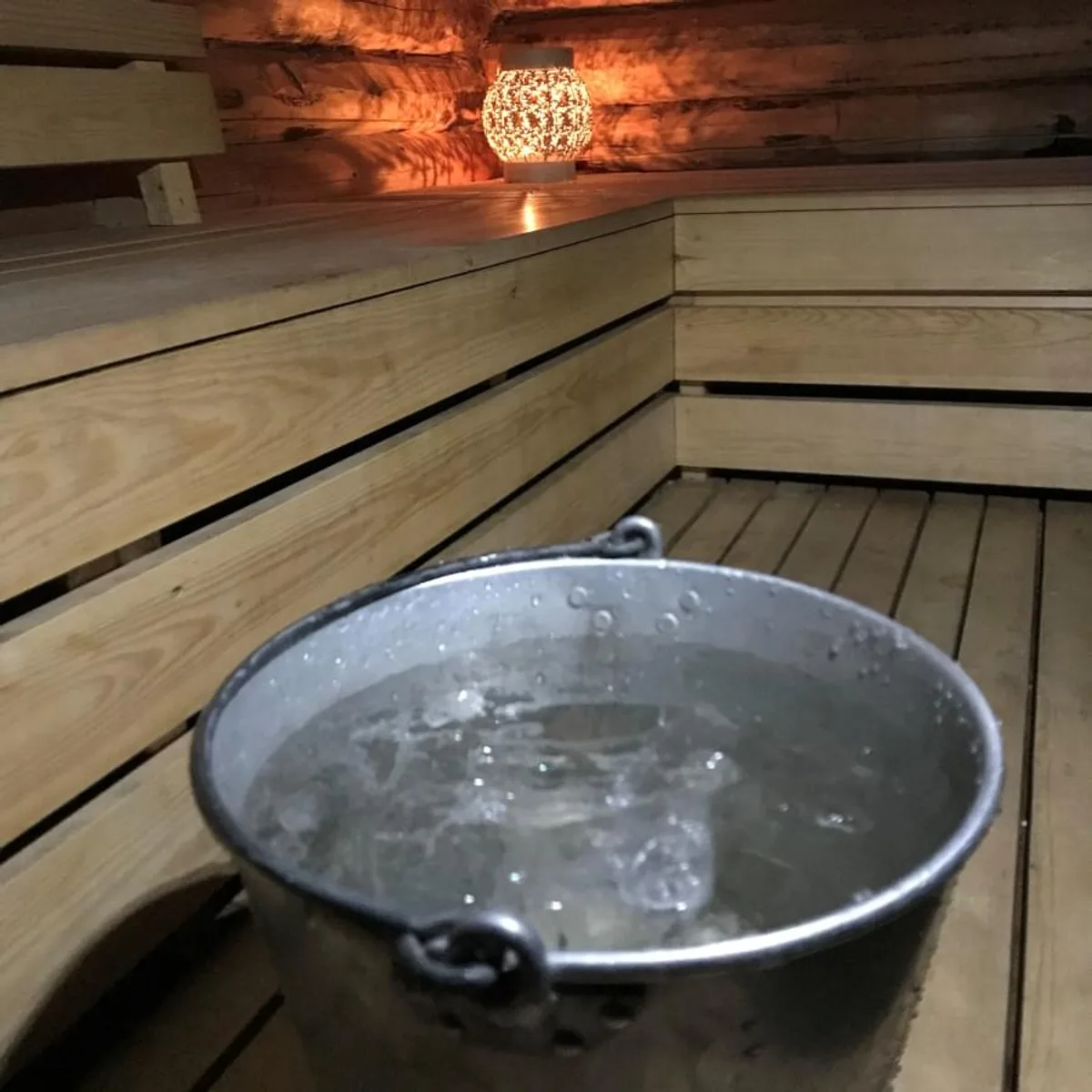
The wild, elemental character of Senja makes the sauna tradition feel particularly fitting here — wood smoke and cold Arctic water in a landscape where the sea and the mountains meet on equal terms.
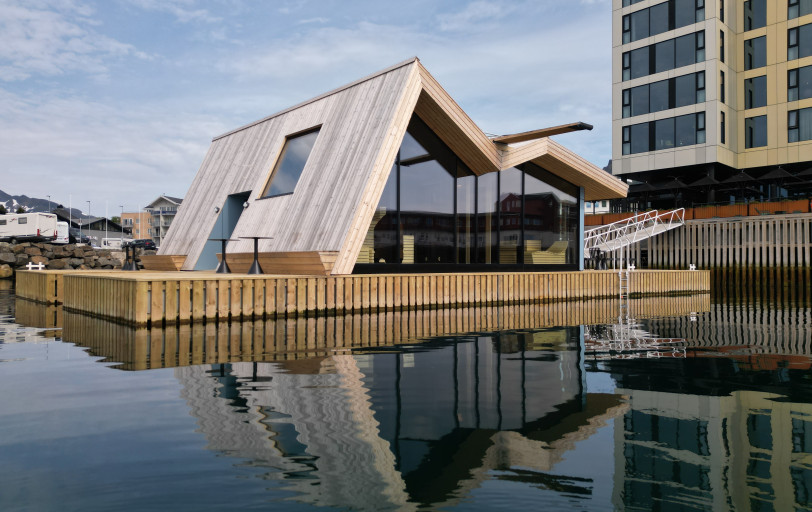
Senja by Heart Sauna is the island’s standout sauna experience, designed to complement the surrounding landscape with a bathing culture that feels entirely native to this coast. It captures what makes Senja distinctive — the combination of remoteness, natural beauty, and genuine hospitality that distinguishes the best Norwegian sauna experiences from mere facilities.
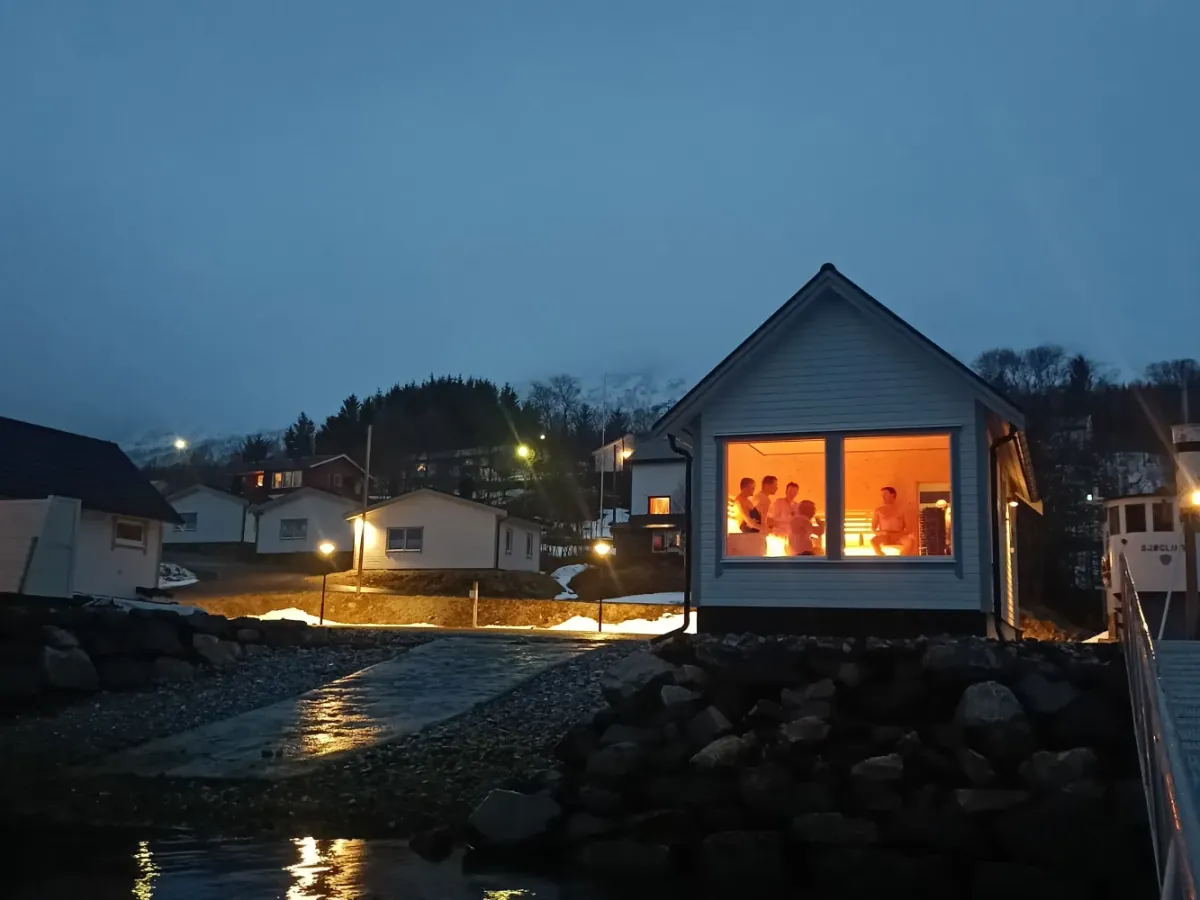
About 30 minutes by road, Malangen Fjord Sauna offers sauna bathing on the Malangen fjord between Senja and Tromsø — a sheltered stretch of water with its own mountain backdrop and an atmosphere notably different from the outer-coast wildness of Senja itself. It’s a natural extension of a Senja visit for travellers based in the Tromsø area.
For those combining Senja with the wider Troms landscape, Manndalen Sjøbuer in the Lyngen area (around 90 minutes from central Senja) provides another quality sauna option in the fjord landscape that extends eastward along the coast toward the Finnish border.
Getting to Senja
Senja is connected to the Norwegian mainland by bridge and tunnel via Finnsnes, which lies on the E6 coastal highway. From Tromsø the drive to western Senja is approximately 3 hours. The island has no airport; the nearest are Tromsø and Bardufoss.
The Norwegian Scenic Route Senja runs around the outer coast of the island — one of 18 national scenic routes in Norway, and one of the most consistently dramatic. Allow a full day to drive it slowly, stopping at Tungeneset, Bergsbotn, Mefjordvær, and the trailheads for Segla and Hesten. The route is open year-round, though winter driving requires winter tyres and attention in icy conditions.
When to Visit
Senja rewards different visits in different seasons. Summer (June–August) brings the midnight sun, warm enough temperatures for hiking in t-shirts, and the full opening of all facilities. Winter (November–February) offers the Northern Lights, whale watching, and the deep blue twilight of the Arctic polar night. Autumn (September–October) is arguably the most atmospheric: the fells turn rust and gold, the crowds are gone, and the days are still long enough for serious hiking. Spring (April–May) sees the last of the skiing on the peaks and the first wildflowers on the lower slopes.
Whatever season you choose, allow at least three days on the island. Senja is not a place that rewards rushing.