Saunas with Cold Plunge in Norway — The Best Heat-Cold Contrast Experiences
Discover Norway's best saunas with cold plunge access — from Arctic fjord dips to dedicated cold pools. The definitive guide to heat-cold contrast in Norway.
Ask any Norwegian what comes after the sauna and they will look at you as though the answer is self-evident. You go in the water. Cold water. The ritual of heat followed by cold plunge is not a refinement of the Norwegian sauna experience — it is the core of it.
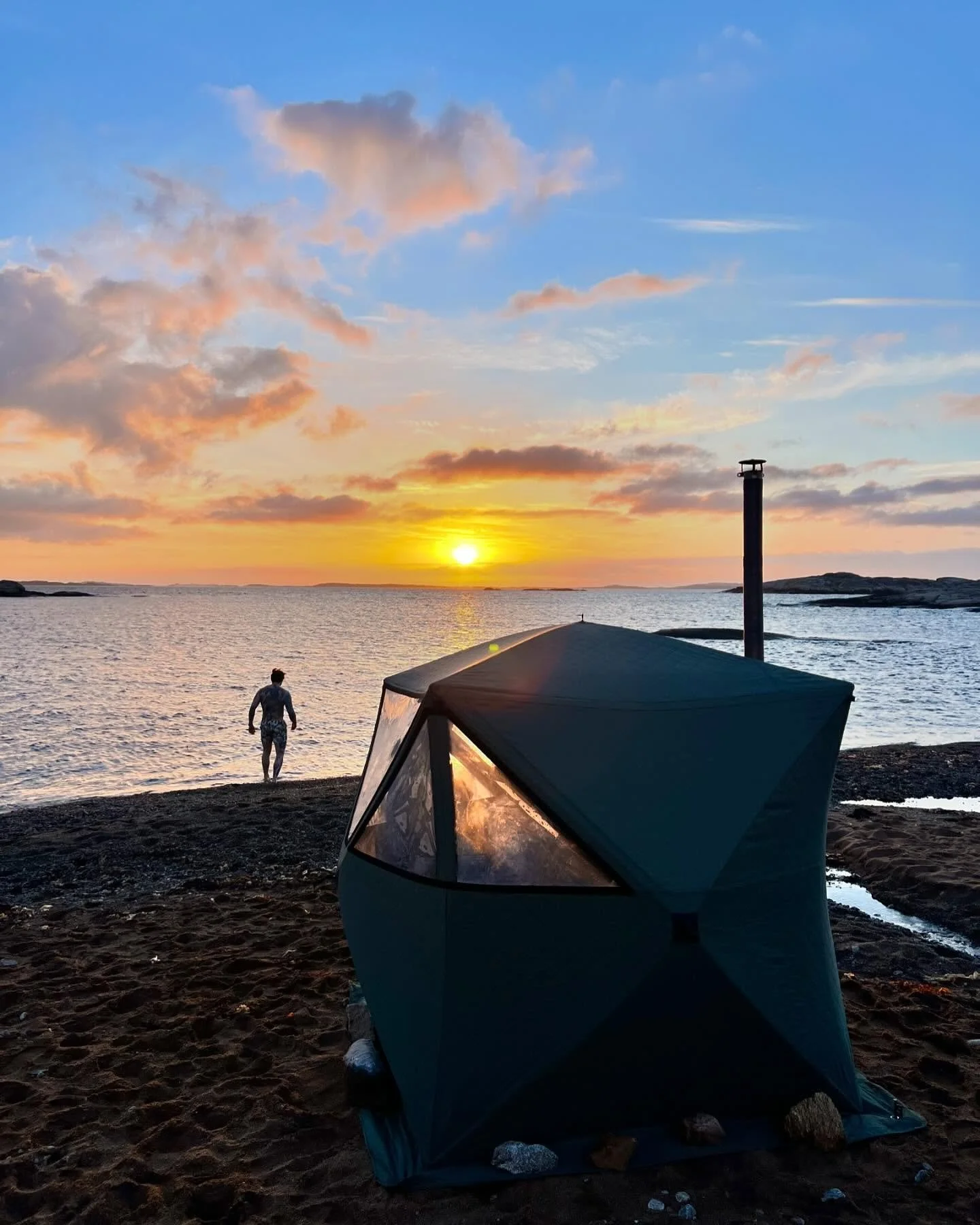
This practice has deep roots across Nordic culture, but Norway’s geography makes it particularly vivid. The country has 50,000 kilometres of coastline, more than 450,000 lakes, and rivers running through virtually every valley. Cold water is never distant. Add one of Europe’s most robustly maintained sauna traditions and you have the conditions for sauna and cold plunge Norway as it was always meant to be done: outside, elemental, and bracingly real.
The physiological logic is straightforward. Heat dilates blood vessels, relaxes muscles, and raises the core temperature. Cold reverses this rapidly — vessels constrict, the heart rate surges on exit, and the body floods with noradrenaline and endorphins. The result, after one or more cycles of heat and cold, is a sustained warmth and mental clarity that practitioners struggle to compare to anything else. But knowing the mechanism only partially explains why the practice is so compelling. The rest is the experience itself: the gasp, the cold moving against your skin, and the extraordinary calm on the other side.
This guide covers the full spectrum of cold plunge options in Norway — ocean and fjord dips at floating saunas, purpose-built cold plunge pools at wellness centres, inland lake and river experiences, and the Arctic fringe where the practice reaches its most intense form.
Ocean and Fjord Dips
Norway’s coastal saunas offer the most authentic form of heat-cold contrast — the kind with salt water, boat wakes, and open sky. For most Norwegians, stepping off a sauna deck directly into the fjord is not a novelty. It is simply what you do.
Arctic Sauna Narvik is a floating wood-fired sauna moored at Pier 2 in Narvik harbour, open daily from 09:00 to 23:00. The plunge here is multi-format: there is a hatch inside the sauna cabin that opens directly into the fjord water below, or you can jump from the main deck or climb the ladder from the rooftop terrace. The views across the harbour and the Ofotfjord mountains are exceptional. Cold water entry from inside the sauna — lowering yourself through the floor hatch into the fjord — is a particularly effective way to manage the shock, as it is gradual and controlled. Rated 4.5 stars.
Allmenningen Bybad Sauna in Haugesund brings the urban waterfront sauna concept to Smedasundet, the narrow strait running through the city centre. This wood-fired sauna seats up to ten people and sits directly on the water at the Høvleriet cultural hub. Between rounds, guests step from the heat into the sea. The combination of a bracing saltwater dip with the social atmosphere of Høvleriet’s food and drinks makes this an experience that extends well beyond the sauna cabin itself.
Blaud Sauna floats in Kristiansand’s guest harbour at Strandpromenaden, with views toward the Odderøya peninsula and the old wooden houses of Posebyen. Rated 4.8 stars by guests, Blaud offers both shared sessions (from 240 NOK) and private bookings for groups. Kristiansand’s southern position means fjord water here is warmer than further north — still cold enough to deliver the full contrast effect, but a gentler introduction for those trying their first ocean plunge.
Bade-Olena Sauna in Skudeneshavn on Karmøy is one of Norway’s most historically resonant sauna spots. The floating bathhouse, opened in 2021, honours Olena Gitlesen who ran the town’s first bathhouse from 1873. The setting — a small-boat harbour ringed by white wooden houses — is as close to a living postcard of coastal Norway as you will find. Sessions last one hour, with direct access to the harbour basin for cold swims. At 150 NOK per person, it is also among the most affordable contrasting experiences in the country.
BookSauna Ask, a wood-fired floating sauna moored at Hundvåg in Stavanger, offers direct ocean-dip access on the west coast. The sauna is self-service in spirit — you arrive, warm up, and when the heat becomes too much, you go over the side. The fjord here is open and clean, and the wood fire gives the heat a softness and scent that electric saunas cannot replicate.
Arna Sauna sits at Øyrane Torg in Indre Arna, just outside Bergen, where a community sports club built a wood-fired sauna for the neighbourhood in 2024. The sauna accommodates twelve people and faces directly onto the fjord. This is genuinely self-service — guests heat the sauna themselves — which gives the experience a satisfying hands-on quality. Rated 4.7 stars. A short train ride from Bergen city centre makes it very accessible.
AUGA Bad Lærdal takes a different approach on the Sognefjord: a Lithuanian-built barrel sauna, heated by a sauna master with locally sourced firewood, set within an artisan outdoor space made of driftwood and reclaimed timber. Between rounds, guests wade into the Lærdal fjord with mountain views on every side. This is sauna and cold plunge as craft, not commerce — unhurried, grounded, and built with care for the landscape around it.
Ahpi Flytende Badstue in Skjervøy, northern Troms, sits at the intersection of the sea and the sea-Sami cultural heritage of the region. The floating sauna opens at 06:00 daily — early-morning sessions here, when the fjord is still and the mountains rise sharply from the water, are among the most atmospheric cold-plunge experiences in northern Norway. Rated a perfect 5.0 stars.
Dedicated Cold Plunge Pools
Not every sauna requires a fjord outside the door. Several Norwegian wellness centres have invested in purpose-built cold plunge facilities that deliver contrast therapy in a controlled, comfortable environment. These are particularly well-suited to cold plunge beginners or visitors who want to explore the practice without the variability of open water.
BKB Sauna at Møhlenpris in Bergen is one of Norway’s most characterful urban sauna setups, born from a coffee roastery’s impulse to offer warmth to Bergen’s frequently wet population. The sauna for eight includes a cold water tub on-site, with the beach — and the North Sea itself — just 100 metres away if you want to graduate to the real thing. Drop-in from 159 NOK. After your session, fresh-roasted coffee waits inside.
Bergen Flyt takes a more clinical approach to contrast therapy. This central Bergen wellness centre — rated 4.6 stars — combines infrared sauna with a dedicated cold plunge tub and flotation therapy. The cold plunge here is integrated into a considered wellness circuit: heat opens the pores and increases circulation, the cold plunge contracts and stimulates, and the float tank provides the recovery phase. It is contrast therapy as a complete system rather than a spontaneous ritual.
Aquarama Spa in Kristiansand is a full-scale modern spa complex with multiple saunas, steam rooms, and dedicated cold plunge pools alongside warm relaxation pools. Rated 4.3 stars by over 2,300 visitors, this is Norway’s south coast’s most comprehensive indoor wellness facility. Both gender-separated and mixed sauna areas are available, making it a flexible option for different visitor needs.
Ankerskogen Spa in Hamar provides contrast therapy in a forest-facing spa setting, part of one of Norway’s largest swimming halls. The cold plunge here follows rounds in a traditional Finnish sauna with panoramic views of the surrounding woodland. Entry at 350 NOK includes coffee, tea, and newspapers — the Norwegian approach to wellness as an unhurried social ritual rather than an efficient workout.
Lake and River Cold Plunge
Inland Norway offers cold immersion of a different character. Lake water fed by snowmelt has a stillness and clarity that ocean water does not. River water adds current — cold moving against your body from every direction at once.
Ælvebadstua floats on the Drammen River, right in the centre of Drammen, offering the unusual experience of cold river dips in an urban setting. The river is clean and fast-moving, and the contrast between the wood-fired sauna and the current-cooled water is a genuine inland version of the fjord experience. Rated 4.9 stars by guests. At 200–400 NOK, it is a genuinely good-value contrast session in a city that deserves more sauna visitors.
Aurora Sauna Risør sits above Sandnesfjorden on the Skagerrak coast, offering waterfront sauna access and an unusual feature: artificial aurora borealis lights inside the cabin, turning each session into something slightly theatrical. Cold plunge access is direct to the fjord, and the surrounding archipelago of Risør — a classic white wooden Norwegian coastal town — provides the context for one of southern Norway’s most scenic sauna outings.
Arctic Cold Plunge Experiences
At the northern extreme of Norway’s sauna culture, cold plunge becomes something qualitatively different from what it is further south. The water is near freezing year-round. In winter, the air temperature may be 20 degrees below zero. Sea smoke rises off the fjord as the water, warmer than the air above it, evaporates into the cold. The contrast between a wood-fired sauna at 80°C and an Arctic plunge at 1–2°C is not merely invigorating — it is profound.
Arctic Sauna Adventure in Tromsø operates one of Norway’s most distinctive cold plunge experiences. A portable wood-fired sauna is transported by electric vehicle to a pristine fjord setting, assembled in ten minutes, and heated to 60°C. Guests warm up inside while surrounded by mountains and sea, then plunge into genuine Arctic fjord water. The tour includes warm drinks, a guide, and a visit to a waterfront café to conclude. Maximum seven guests, four hours total — intimate by design. This is not a wellness centre visit. It is an Arctic outdoor adventure.
Ahpi Flytende Badstue in Skjervøy, mentioned above in the ocean-dip section, qualifies as an Arctic experience in winter. Skjervøy lies at 70 degrees north, and between November and March the plunge from the floating sauna into the harbour is in water that hovers just above freezing. Combined with the silence of an Arctic morning and the surrounding landscape of fjords and vertical rock faces, this is as elemental a contrast experience as is available in Norway.
For more depth on the Arctic end of the spectrum, arctic sauna experiences in Norway covers Finnmark, Tromsø, Svalbard, and the Lofoten archipelago in detail — the full range of Norway’s northernmost sauna culture.
How to Do It: A Beginner’s Guide
If you have never combined sauna and cold plunge before, the practice can seem intimidating from the outside. The reality, for most first-timers, is that the anticipation is more demanding than the experience itself.
Start with the sauna. Spend 8–15 minutes in the sauna, breathing slowly and allowing the heat to fully penetrate. You should be genuinely warm — not just surface-warm, but warm through — before you approach the water.
Breathe before you enter. The most challenging moment of a cold plunge is the instant of entry, when the cold shock response triggers an involuntary gasp. Prepare for this by taking several slow, deliberate breaths before you go in. This gives you a controlled breathing rhythm to maintain through the shock.
Enter deliberately. Whether you jump or lower yourself in, do it with commitment. Hesitating at the edge prolongs the anticipation without reducing the cold. Once you are in, stay still for a moment, let the shock pass, and breathe.
Keep early immersions short. Thirty to sixty seconds is entirely sufficient for your first few plunges. The contrast benefit comes from the transition between heat and cold, not from extended immersion time. Duration can increase naturally as your tolerance builds over sessions.
Do multiple rounds. The full benefit of contrast therapy comes from cycling through heat and cold two or three times. Each subsequent round, the nervous system response is a little more calibrated and the aftermath a little more sustained.
Always return to warmth. Cold immersion without a proper warm-up phase afterward leaves you cold, exhausted, and unconvinced. The sauna is the second half of the treatment — as essential as the plunge itself.
Never plunge alone. Cold shock responses can, in rare circumstances, cause muscle cramps or cardiac events in susceptible individuals. Always plunge with others present. Every reputable Norwegian sauna operator builds this expectation into their setup.
For a fuller exploration of Norwegian sauna culture and the social norms around bathing, our culture guide provides the background for understanding why contrast therapy is practiced the way it is.
The Health Benefits
The science behind heat-cold contrast is well-established and increasingly well-documented. Understanding the mechanisms makes the practice feel less like masochism and more like what it actually is: a powerful physiological intervention.
Cardiovascular conditioning. Each cycle of heat and cold exercises the vascular system — dilating and then rapidly constricting blood vessels, training the cardiovascular system in a manner comparable to moderate aerobic exercise.
Noradrenaline release. Cold water immersion triggers a significant spike in noradrenaline, a neurotransmitter associated with focus, mood elevation, and reduced anxiety. Studies have documented increases of 200–300% from a brief cold plunge.
Reduced inflammation. Cold immersion has well-documented anti-inflammatory effects. Athletes have used cold water immersion for post-exercise recovery for decades; the same mechanism is at work in the sauna contrast cycle.
Improved sleep. Regular contrast therapy practitioners consistently report improved sleep quality, likely related to the normalization of circadian rhythms via the core body temperature manipulation that saunas and cold water produce.
Mental resilience. Perhaps the most practically valuable benefit is harder to measure. The repeated experience of choosing discomfort, managing the shock, and emerging comfortable on the other side builds a psychological confidence that practitioners describe as transferable to other areas of life.
For more guidance on Norway’s bathing culture and norms at different types of venues, sauna etiquette Norway covers the unwritten rules and practical expectations that make Norwegian sauna visits smooth and enjoyable.
Plan Your Visit
Norway’s 529 listed saunas include options for every kind of cold plunge preference — from the most extreme Arctic ice bath to a gentle dedicated plunge pool in a warm city wellness centre. The full sauna and cold plunge Norway guide provides additional recommendations, and Norwegian sauna culture gives the cultural context that makes the practice fully legible.
Wherever in Norway you find yourself, cold water is close. The sauna is the invitation to enter it.
Frequently Asked Questions
Is cold plunging after sauna safe for beginners?
Yes, with the right approach. Start with shorter immersions of 30–60 seconds and avoid the coldest conditions until you have some experience. Control your breathing before and during the plunge to manage the cold shock response. Never plunge alone, and always warm up fully in the sauna afterward. Most Norwegian sauna operators welcome beginners and can guide you through your first contrast session.
What's the difference between a cold plunge pool and ocean dip?
A dedicated cold plunge pool is temperature-controlled, typically maintained between 8–15°C, and allows you to ease in at your own pace. An ocean or fjord dip is natural, uncontrolled, and seasonal — water can drop to 0–2°C in winter and rise to 16–18°C in summer. Many Norwegian sauna enthusiasts consider the natural ocean or river plunge more authentic and more effective, but both deliver the cardiovascular and mood benefits of heat-cold contrast.
When is the best time of year for sauna cold plunging in Norway?
Every season offers something different. Summer (July–August) gives you warmer water around 16–18°C on the coast — ideal for beginners. Autumn brings that first real bite of cold and dramatic landscapes. Winter is the peak experience for devotees: water near 0°C, sea smoke rising off the fjord, and the full intensity of the contrast. Spring melt adds river and lake options. Year-round, Norway delivers cold water — the question is only how much you want.