Saunas with Food & Drinks in Norway — The Best Full-Experience Wellness Days
Discover Norwegian saunas with food and drink — from grand hotel dining to floating sauna boats with catering. Plan the ultimate full-day wellness experience.
In Norway, a sauna is rarely just an hour in a hot room. The traditional approach is to make a day of it — arriving early, taking your time moving between heat and cold, socialising in the rest periods, and finishing the ritual with food and drink. This pattern is embedded in Norwegian sauna culture: the meal or the coffee after the sweat is not an afterthought, it is part of the point.
That tradition has evolved dramatically in recent years. Norway now has saunas attached to fine-dining restaurants, floating sauna boats that serve catering packages on the water, mountain lodge saunas with farm-to-table kitchens, and harbour-front saunas within easy walking distance of some of the country’s best seafood restaurants. Whether you want a full hotel spa day ending with a three-course dinner, or an informal afternoon in a wood-fired cabin followed by freshly roasted coffee, Norway has you covered.
This guide covers the best Norwegian saunas where food and drink are part of the experience — and how to plan the kind of full wellness day that Norwegians have been perfecting for generations.
Hotel Spa Dining
The most complete food-and-sauna packages in Norway are found at the major hotel spas, where the restaurant and the wellness facilities share the same roof. These are the places to come for a true full-day experience with no need to venture further.
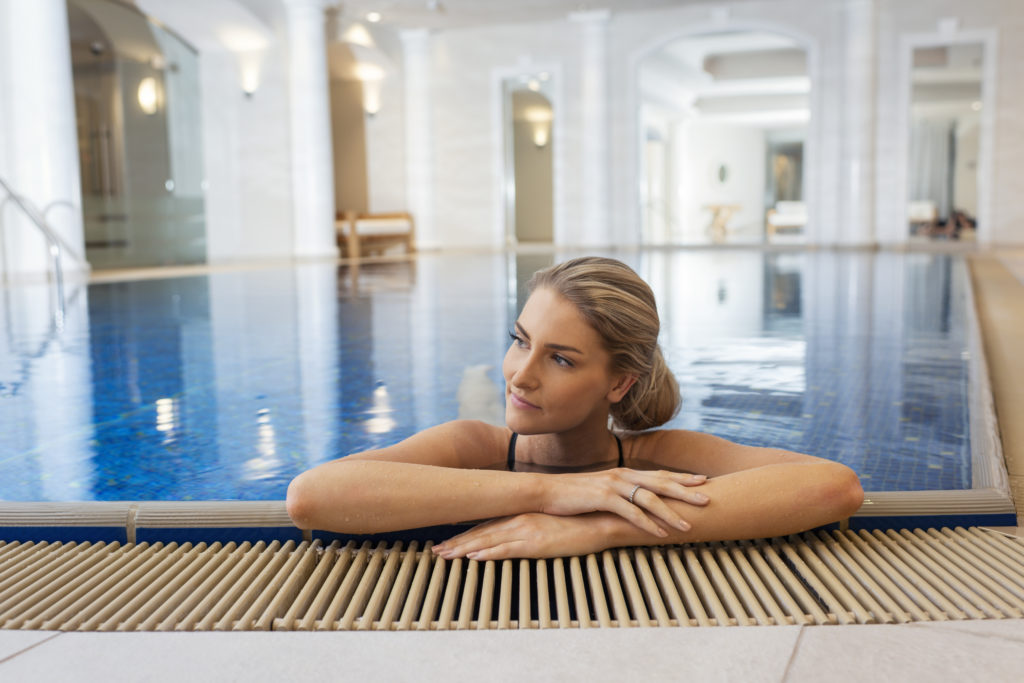
Britannia Spa at the Britannia Hotel in Trondheim is the benchmark. Set across 1,400 square metres inside one of Norway’s grandest Victorian-era hotels, the spa comprises a Finnish sauna, steam room, infrared cabin, cold plunge pool, mineral pool, and a 12.5-metre fitness pool — all wrapped in an interior that reflects the hotel’s five-star ambition. The Britannia’s food and beverage offering is among the finest in Trondheim, with a restaurant, bar, and cafe options that make it easy to build a full day around the spa. Use the morning and early afternoon for the thermal suite; take a long, unhurried lunch in between; return for a late afternoon session. It is a deeply satisfying rhythm in one of Norway’s most beautiful city hotels.
Farris Bad in Larvik is another benchmark. Built partially over the Larvik Fjord, it is one of the largest spa facilities in the Nordics, with a 2,500 sqm wellness area fed by a natural mineral spring drawn from 55 metres underground. Multiple saunas with world-class sauna masters, hot tubs overlooking the fjord, steam rooms, and a mineral pool make this a genuinely full-day destination. The hotel’s 176 rooms all have ocean views, and the on-site restaurant and bar complete the package. Farris Bad is about 90 minutes from Oslo, and the journey is well worth it. The spa is also open to day visitors who are not staying in the hotel.
Hotel Ullensvang in Lofthus on the Hardangerfjord may offer the most spectacular eating-and-sauna combination in Norway. The spa looks out across the Sørfjord to the Folgefonna glacier on the opposite shore — a view so extraordinary that you will find yourself lingering by the window as much as using the facilities. The hotel’s restaurant draws on the extraordinary larder of the Hardanger region: cherries, apples, and pears from the surrounding orchards; lamb from the mountain farms; and freshwater fish from the fjord system. A dinner here after a day in the spa — when the late light catches the glacier and the orchards are in bloom — is one of the finest food-and-wellness experiences you can have in Norway. Hotel Ullensvang is also home to indoor and outdoor pools, jacuzzis, and an open-air bath area, with wellness packages available throughout the year.
For those exploring the luxury sauna spas Norway has to offer, these three hotel spas represent the top tier of the food-and-bathing combination.
Sauna Boats and Floating Experiences with Catering
Norway’s tradition of floating saunas has produced a category of experience that is genuinely world-class: taking to the water in a heated cabin, alternating between the sauna and a plunge overboard, and doing all of this with food and drink close at hand. The social element is particularly strong on sauna boats — the intimacy of a small group on the water, with no distractions, has a way of turning strangers into friends.
Fjordtokt departs from Lysaker on the Oslo fjord and offers guided sauna cruises through the inner fjord with the Oslo skyline as a backdrop. The wood-fired sauna heats to a proper Norwegian temperature, and the experience alternates between sessions inside and jumps into the fjord water. Food and drink packages are available to complement the cruise — priced from 600 to 1,200 NOK per person — making this an ideal choice for a group celebration or a memorable evening on the water.
Hummeren Hotel Badstu in Tananger harbour, fifteen minutes from Stavanger, takes a slightly different approach. The floating wood-fired sauna — which fits 12 to 15 people and can be booked privately for groups — sits in the harbour with views across the basin. After your session, the hotel’s own restaurant, with its seafood-focused menu, is right there. The combination of a wood-fired sauna in the harbour and a proper fish dinner at the hotel makes this one of the most satisfying full-experience options on the west coast.
BKB Sauna at Møhlenpris in Bergen offers a different flavour of the food-and-sauna experience: a coffee roastery sauna where the reward after your session is a cup of freshly roasted coffee from Bergen Kaffebrenneri. The outdoor sauna accommodates eight people, with a cold tub, cold shower, and a beach 100 metres away for those who prefer a North Sea dip. Book the first morning slot and you are treated to a free batch brew. It is an informal, social, genuinely Bergensian experience — and the coffee is exceptional.
FjordSauna Flam floats on the Aurlandsfjord, a branch of the UNESCO-listed Sognefjord, and is arguably one of the most spectacularly located saunas in the world. Panoramic windows frame cliffs, waterfalls, and emerald water. Food and drink are available, and the private booking option — priced up to 2,990 NOK — is ideal for a group who want exclusive access to this extraordinary setting. Combine it with a ride on the Flåmsbana railway for a full-day programme in the heart of western Norway.
Mountain Lodge Saunas with Kitchen
Away from the coast, Norway’s mountain lodges have their own tradition of combining sauna culture with serious cooking. The settings are wilder, the food is typically rooted in the local landscape, and the pace is slower — which is exactly the point.
Hemmingodden Sauna — a short distance around the headland in the same village of Ballstad — offers a similar combination. The sauna is built directly in front of Hemmingodden Lodge, with views across the harbour to the Lofoten mountains. After a session in the sauna and a plunge in the icy water, the HEIM restaurant at the lodge offers quality dining that matches the drama of the surroundings. Private bookings are available for 2,000 NOK (or 1,400 NOK for lodge guests), and the combination of fishing-village atmosphere, mountain backdrop, and food makes this a destination that repays the journey to Lofoten.
Bygdin Høifieldshotel near Beitostølen is something else entirely: a historic mountain hotel at the edge of Jotunheimen, with a remarkable mobile wood-fired sauna built from solid local timber. The 13 sqm cabin has floor-to-ceiling panoramic windows looking out over the mountain landscape, and at seven to eight tonnes, it is mounted on wheels so a tractor can move it to the most scenic spot depending on the season. After an hour in the sauna, the hotel’s kitchen and restaurant provide the restoration. It is a three-and-a-half hour drive from Oslo, but the Jotunheimen setting — and the possibility of combining it with Norway’s most famous mountain hikes, including Besseggen — makes it a genuinely rewarding full-day destination.
Hovden Fjellbad in the Setesdal highlands is the social hub of one of southern Norway’s premier ski resorts in winter and a mountain hiking destination in summer. Finnish saunas, steam rooms, cold plunge pools, and warm pools with mountain views make it a complete spa facility. Food is available on site, and the family-friendly approach means it works equally well for a couples’ wellness day or a family break. Advance booking is essential during ski season.
Heit Telemark takes the food-and-sauna combination in the most literal direction possible: a floating dock sauna on Lake Norsjø at Lien Gård, a working farm that produces fruit, berries, and honey. After your sauna session and a dip in the clear lake, visit the farm shop for local products and combine it with a cider tasting from the farm’s own production. It is a uniquely Telemark experience — informal, agricultural, and surprisingly moving in its simplicity.
Waterfront Saunas with Food Nearby
Not every great sauna-and-food combination is under one roof. Norway’s coastal sauna culture has developed organically around fishing harbours and waterfront communities, and some of the best eating happens a short walk from the sauna cabin rather than inside the same building.
Hardangerbadet in Øystese sits right on the Hardangerfjord and combines a 25-metre pool, sauna, steam rooms, and a water park with a cafe on site. The village of Øystese itself — home to the Kabuso art centre and some fine local restaurants — is an easy stroll from the facility. A morning in the pool and sauna, lunch at the cafe, and an afternoon exploring the fjord village adds up to a well-rounded day in the Hardanger region, about an hour from Bergen.
Arctic Sauna Adventure in Tromsø ends each session at Bryggejentene, a waterfront haven above Ersfjord where guests can wind down with warm drinks after their fjord-side sauna and Arctic sea dip. The four-hour experience includes coffee, tea, hot chocolate, and snacks as part of the package. It is a small-group experience — a maximum of seven guests in a Tesla or Mercedes — which lends it an intimacy unusual in the adventure tourism market.
The social principle here is the same across all these venues: the food and drink are not just sustenance, they are the part of the day that you remember most clearly. Sitting on a terrace above a fjord with a bowl of fish soup and a cold glass of juice after two hours of alternating heat and cold — that is the Norwegian sauna experience distilled to its essence.
What to Eat and Drink Around Sauna
Understanding the traditional Norwegian approach to food and drink around the sauna helps you get the most from these experiences.
Hydration first. The Norwegian sauna tradition is not about endurance — it is about balance. Drink water before you go in, and rehydrate immediately after each session. Still water, diluted juice, or herbal tea are the traditional choices; alcohol is generally reserved for after the final session if at all, not during.
Light eating before, substantial eating after. Going into a sauna on a full stomach is uncomfortable. The traditional pattern is a light snack or nothing before, followed by a proper meal once the bathing is complete. Norwegian post-sauna food tends towards the restorative: warm soup, open-faced sandwiches on dark rye with smoked salmon or cured meats, boiled shrimp, scrambled eggs, or a simple plate of cheese and fruit. These are foods that replenish without overwhelming.
Seafood dominates the coastal tradition. At waterfront and harbour saunas, the post-sauna meal is almost always centred on local seafood. Shrimp from the fjord, cod or pollock from the day’s catch, smoked mackerel, or gravlax — these are the flavours that Norwegians associate with the end of a good bathing session by the sea.
Coffee is the national ritual. Whether it is the freshly roasted batch brew at BKB in Bergen or the coffee service at a mountain lodge after the morning sauna, coffee is the drink that Norwegians reach for first when they emerge from the heat. It is warming, social, and — in Norway — taken seriously.
Berry juice and warm drinks in winter. During the cold months, a warm cup of cloudberry juice, sea-buckthorn drink, or rose-hip tea between sauna rounds has a restorative quality that is hard to overstate. Several mountain saunas and lodge experiences include these as part of their offering.
Planning a Full Sauna Day
The following sample itinerary shows how a full wellness day at a hotel spa in Norway might flow. Adapt it to whichever venue you choose.
09:00 — Arrival and first session. Check in to the spa, change, and spend 20 to 25 minutes in the Finnish sauna. Follow with a two to three minute cold plunge or cold shower. Rest for 15 minutes in the relaxation room.
10:00 — Second session and mineral pool. Return to the sauna for a second round, then spend time in the mineral pool or thermal bath. This is the part of the morning when the body begins to genuinely relax rather than simply react.
11:30 — Coffee break. A long coffee break in the spa lounge or cafe: freshly brewed coffee or tea, a piece of cake or a light open sandwich. No hurry.
13:00 — Third sauna session. A longer, more meditative session — 30 minutes if you have built up the heat tolerance. Follow with a cold dip.
14:30 — Lunch. A proper meal at the hotel restaurant or on-site cafe. Seafood if available, a warm main course, plenty of water. This is the heart of the day.
16:00 — Final session and steam room. A gentler closing session, perhaps ending with the steam room rather than the dry sauna, and a final plunge. Allow time to simply lie in the relaxation room afterwards.
18:00 — Depart or dinner. At the hotel spa venues, a dinner reservation extending the experience into the evening makes sense. At coastal or floating saunas, this is the time to find a nearby restaurant.
For planning a couples’ experience or a private group booking, private sauna booking Norway has the most relevant options across different regions and price points.
Related Guides
- Luxury sauna spas Norway — the finest hotel spa and wellness experiences in the country
- Norwegian sauna culture — the history, traditions, and etiquette behind Norway’s bathing culture
- Private sauna booking Norway — exclusive and group sauna hire across Norway
Frequently Asked Questions
Can you eat and drink during a sauna session in Norway?
Food is generally not permitted inside the sauna cabin itself, but almost all Norwegian saunas with food-and-drink amenities have a bar, cafe, lounge, or restaurant on site where you eat between sessions. The traditional pattern is to alternate between sauna, cold dip, and relaxation — and eating and drinking fit naturally into the rest periods.
What is the traditional Norwegian food to eat after a sauna?
Traditional post-sauna eating in Norway centres on simple, restorative foods — open-faced sandwiches with smoked fish or cured meats, shrimp, fruit, and plenty of water or juice to rehydrate. At coastal and hotel saunas you will often find a strong emphasis on local seafood. Warm berry juice, herbal tea, and coffee are classic drinks for the cooling-down phase.
Do you need to book food in advance at Norwegian saunas?
At hotel spas like Britannia, Farris Bad, and Hotel Ullensvang, the restaurant operates independently from the spa and you can usually book dinner separately. At sauna boats and floating experiences such as Fjordtokt, food and drink packages are typically arranged at the time of booking. Standalone saunas like BKB in Bergen have a coffee bar attached — no advance booking required for drinks.