Chasing the Northern Lights in Norway — Sauna Experiences Under the Aurora
Combine two of Norway's greatest experiences: watching the Northern Lights dance overhead while warming up in a traditional wood-fired sauna. Here's how.
Close your eyes for a moment. Imagine stepping out of a steaming wood-fired sauna into the Arctic night air. Above you, curtains of green and violet light ripple silently across the sky. Below your feet, the fjord is dark and mirror-still. You take a breath — sharp, cold, electric — and walk straight into the water.
This is Norway at its most extraordinary. The combination of the Northern Lights and the traditional sauna is not a marketing gimmick. It is one of the most profound sensory experiences you can have on earth, and Norway is the best place in the world to do it.
Best Destinations for Northern Lights + Sauna
The aurora borealis is visible throughout northern Norway, but some destinations have paired it with exceptional sauna experiences.
Tromsø is Norway’s unofficial aurora capital. It sits at 70° north, well inside the auroral zone, and has a developed infrastructure for Northern Lights tourism. Arctic Sauna Adventure operates here, offering guided sauna sessions timed around aurora forecasts. Their guides monitor space weather apps and adjust the evening schedule when a geomagnetic storm is incoming — something few operators elsewhere offer.
Lofoten combines dramatic mountain scenery with some of Norway’s most photographed aurora displays. Aurora Sauna Lofoten is named, appropriately, for the phenomenon — and its waterside location means you can watch the lights reflecting off the sea while you warm up between cold swims.
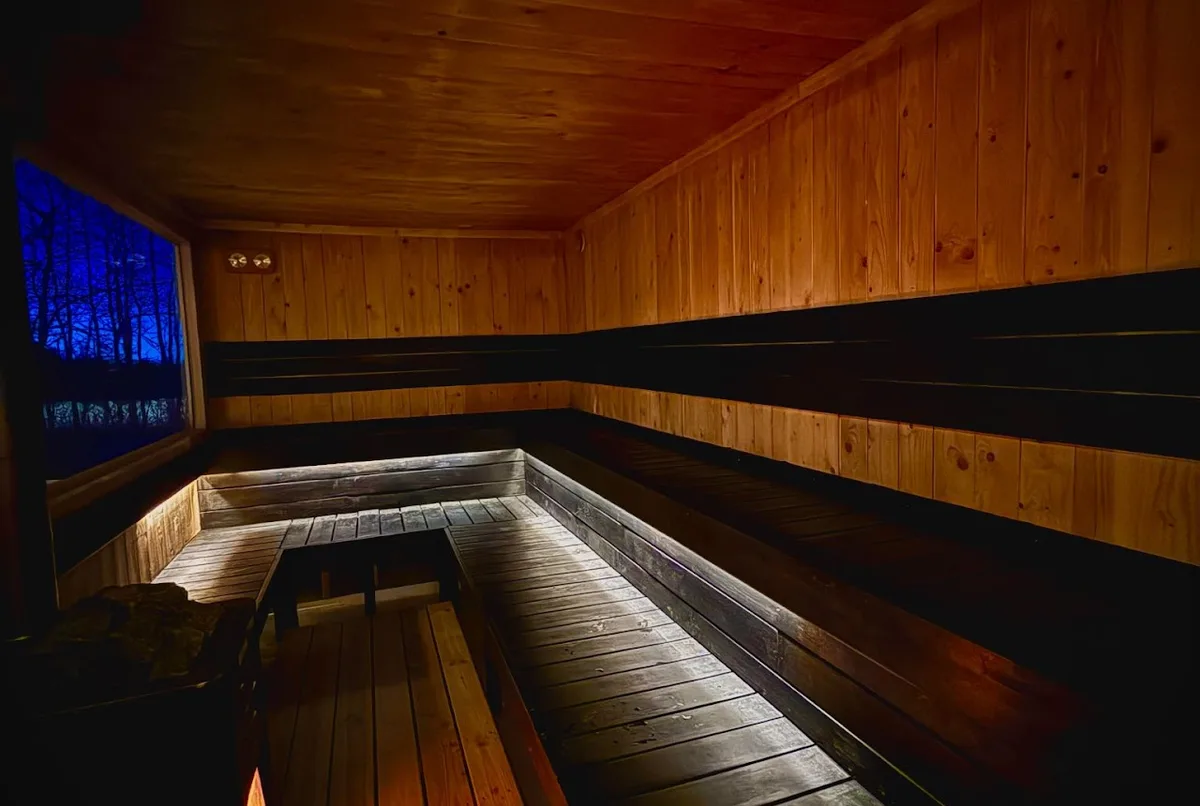
Further north, Northlight Sauna is purpose-built for the aurora experience, with large glass panels in the sauna roof so you can watch the sky without stepping outside.
At the very edge of Norway’s mainland, Arctic Sauna Ice Bathing operates near Skarsvåg — one of the northernmost communities in the world. The darkness here is profound, and when the aurora comes, there is nothing between you and it.
On the Barents Sea coast, Barents Sauna Camp in Bugøynes sits on a small fishing village peninsula with unobstructed views to the north — the direction auroras typically appear. This is old Kven and Norwegian fishing territory, and the sauna culture here feels rooted and authentic.
For something utterly remote, SvalBad Svalbard on Svalbard takes the concept to its logical extreme. At 78° north, Svalbard is inside the polar night zone from November to January, meaning 24 hours of darkness — and 24 hours of potential aurora viewing.
Closer to Tromsø, Malangen Fjord Sauna and Lyngentourist Sauna both offer fjord-side sauna experiences in areas with excellent aurora visibility and relatively easy access from Tromsø Airport.
When to See the Northern Lights in Norway
The Northern Lights are visible in northern Norway from late September through late March. This window is defined by the requirement for darkness — the midnight sun rules out summer sightings entirely north of the Arctic Circle.
The peak months are October, November, February, and March, when nights are long, cloud cover tends to be lower than the December–January period, and the geomagnetic activity that drives the aurora is statistically higher around the equinoxes.
For the most reliable experience, plan at least five nights in one location. The aurora is capricious — it can appear for three hours on a Tuesday and then disappear for four nights. Give yourself time.
The KP index (a measure of geomagnetic activity) is the number you want to track. A KP of 3 or above is typically sufficient to see the lights from Tromsø. Several free apps — including Space Weather Live and My Aurora Forecast — send push notifications when activity spikes.
What Makes Sauna Under the Aurora Special
The sauna and the aurora are a perfect pairing for reasons that go beyond the aesthetic.
Watching the Northern Lights typically involves standing still in sub-zero temperatures for extended periods. This is cold work. The sauna solves this problem elegantly: you heat up for fifteen or twenty minutes, then step outside to scan the sky, then return to warm up again. You can sustain an aurora watch for hours without getting dangerously cold.
The contrast between the sauna’s heat and the Arctic cold also heightens every sensation. After fifteen minutes at 80°C, your skin is hypersensitive. The cold air hits differently. The stars look sharper. The colours of the aurora — which the eye processes as cool greens and blues — feel vivid against skin that is flushed and warm.
There is also something ceremonially right about the combination. The sauna is Norway’s oldest wellness tradition. The aurora is its oldest natural spectacle. Together, they feel like an experience the landscape designed.
How to Book Northern Lights Sauna Packages
Most aurora sauna experiences in Norway are bookable in advance online, and demand in the October–March season is high. For dedicated operators like Arctic Sauna Adventure and Aurora Sauna Lofoten, weekend slots in December and February can sell out weeks ahead.
When booking, look for operators who:
- Monitor aurora forecasts and communicate conditions to guests
- Offer flexible cancellation if weather is poor
- Provide a wood-fired rather than electric sauna (the experience is significantly different)
- Have direct water access for cold plunging
For SvalBad Svalbard, bookings typically need to be made well in advance given Svalbard’s limited visitor infrastructure. Factor in flights from Tromsø or Oslo and consider combining a Svalbard sauna visit with a snowmobile or dog-sled excursion.
For the most spontaneous experience, Barents Sauna Camp in Bugøynes is a small-scale, locally run operation that often has availability mid-week — and the lack of crowds makes the experience feel more intimate.
Photography Tips for Aurora + Sauna
Photographing the aurora from a sauna setting offers unique compositional opportunities. Here is what works:
Camera settings: Start with ISO 1600–3200, f/2.8, and a shutter speed of 8–15 seconds. Adjust based on aurora brightness — a strong display can be captured at ISO 800 with a 5-second exposure, while faint auroras may need ISO 6400 and 20+ seconds.
Include the sauna: Frame the sauna building in the foreground with the aurora overhead. The warm orange glow from the sauna window against the cold green sky creates a compelling contrast that communicates the experience instantly.
Tripod is non-negotiable: Even a slight movement at these shutter speeds will blur the stars. A carbon-fibre tripod is worth carrying.
Battery drain: Cold kills batteries fast. Keep spare batteries inside your jacket, close to your body, and swap them when the primary is at 20%.
Timing: The hour after the sauna session ends and guests have left is often ideal — you have the sauna building to yourself as a prop, and the scene is quieter.
The combination of Northern Lights and Norwegian sauna is one of those rare travel experiences that exceeds expectation consistently. Plan carefully, choose a reputable operator, give yourself multiple nights, and you will leave with photographs and memories that last a lifetime.