The Best Saunas in Lofoten — Wild Arctic Bathing in the World's Most Dramatic Archipelago
Discover the best saunas in Lofoten — from floating wood-fired cabins in Svolvær to rorbu saunas at Reinefjord. The ultimate guide to Lofoten sauna experiences.
The Lofoten archipelago rises from the Norwegian Sea in one of nature’s most improbable arrangements: a 160-kilometre chain of islands where granite peaks soar 1,000 metres directly from the water, ancient fishing villages cling to the shoreline, and the light changes by the hour from silver to gold to the spectral green of the aurora. It is, by any measure, one of the most dramatic landscapes on earth. And it is also, for those who know where to look, one of the finest destinations in Norway for a sauna.
Sauna culture here is not an import. It is woven into the fabric of a place that has always asked its people to reckon with the cold, to find warmth where they can, and to take the contrast between heat and icy water not as a challenge but as a pleasure. When you step out of a wood-fired cabin at Hamnøy and lower yourself into Reinefjord, surrounded by mountains that seem to lean in from all sides, you are participating in something that goes much deeper than wellness tourism. For more on the broader arctic sauna experiences Norway has to offer, our dedicated guide covers the full picture from Lofoten to Svalbard.
Rorbu Saunas — Bathing in a Fisherman’s Cabin
The rorbu — the traditional Norwegian fisherman’s cabin, built on stilts over the water — is Lofoten’s most iconic architectural form. For centuries, these red-painted wooden structures housed the fishermen who came from all over Norway for the winter cod season. Today, many have been converted into accommodation, and the best of them come with a sauna.
Eliassen Rorbuer Sauna sits on the tiny island of Hamnøy, one of the most photographed locations anywhere in Norway. The two panoramic saunas each hold up to six people and look out over Reinefjord — a scene of steep mountain slopes soaring over a thousand metres above dark water, with the vast sea visible beyond. Sessions run at 17:00 and 20:00, with drop-in availability when space permits, at 200–250 NOK per person. The cooling option is the fjord itself, steps away. From late May through mid-July, the midnight sun hangs over those peaks through the evening hours, bathing every session in an extraordinary golden light.
Nusfjord Arctic Resort takes the rorbu context and elevates it into something that feels genuinely world-class. The outdoor Nordic Spa here was designed by students from the Oslo School of Architecture and Design — a contemporary Scandinavian structure set against the working heritage of one of Norway’s best-preserved fishing villages, which is a member of Small Luxury Hotels of the World. Inside, the aesthetic turns rustic: wood, stone, aromatic oils scenting the sauna air. Outside, a wood-fired sauna, two traditional hot tubs, and an outdoor shower occupy a quiet spot behind the historic cod liver refinery, with views of mountains, sea, and — in the right season — northern lights or midnight sun overhead. Sauna access is included for resort guests.
Waterfront and Floating Saunas
The most distinctly Lofoten way to take a sauna is from a structure that floats on, or sits directly above, the archipelago’s extraordinary waters. Svolvær, the main town, has two of these.
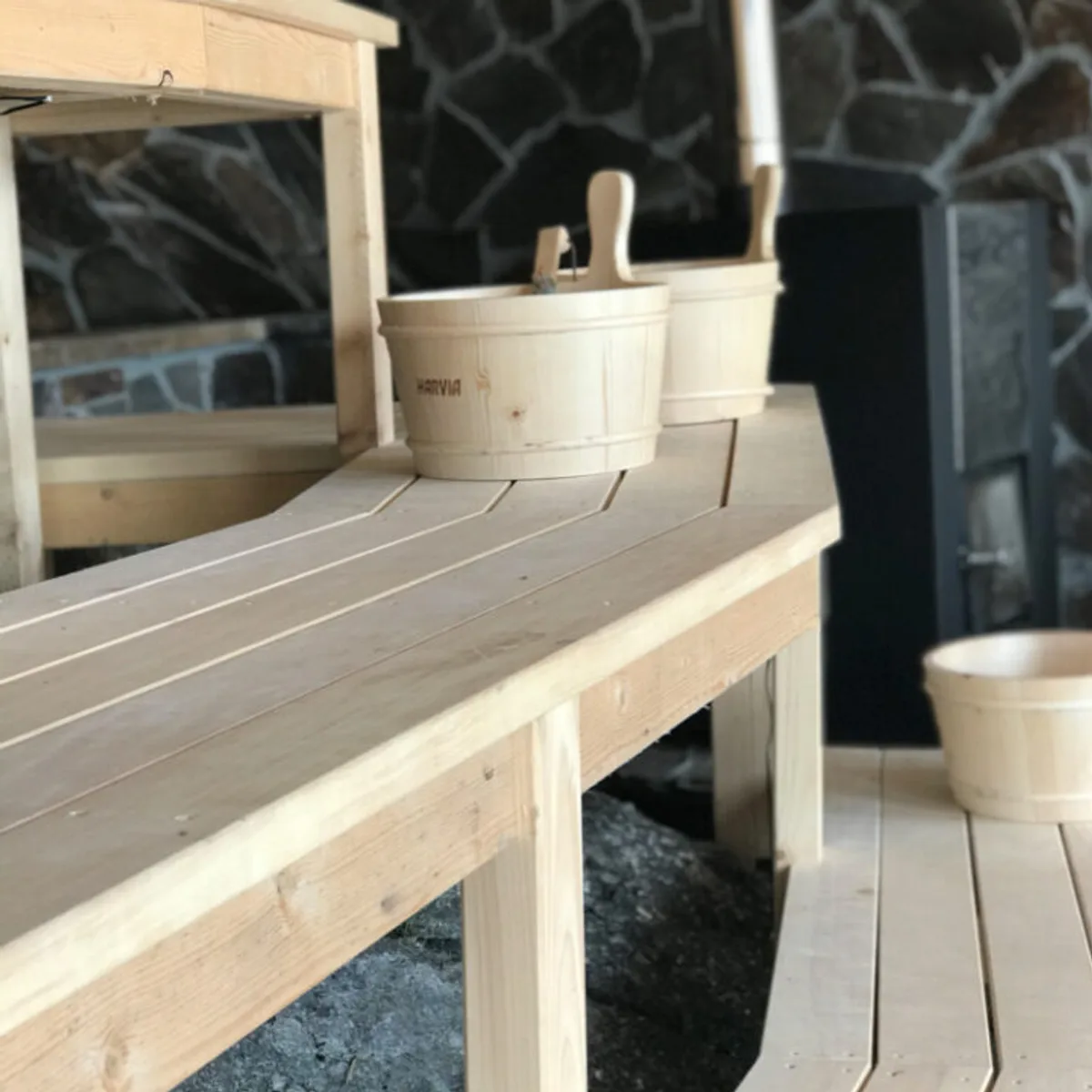
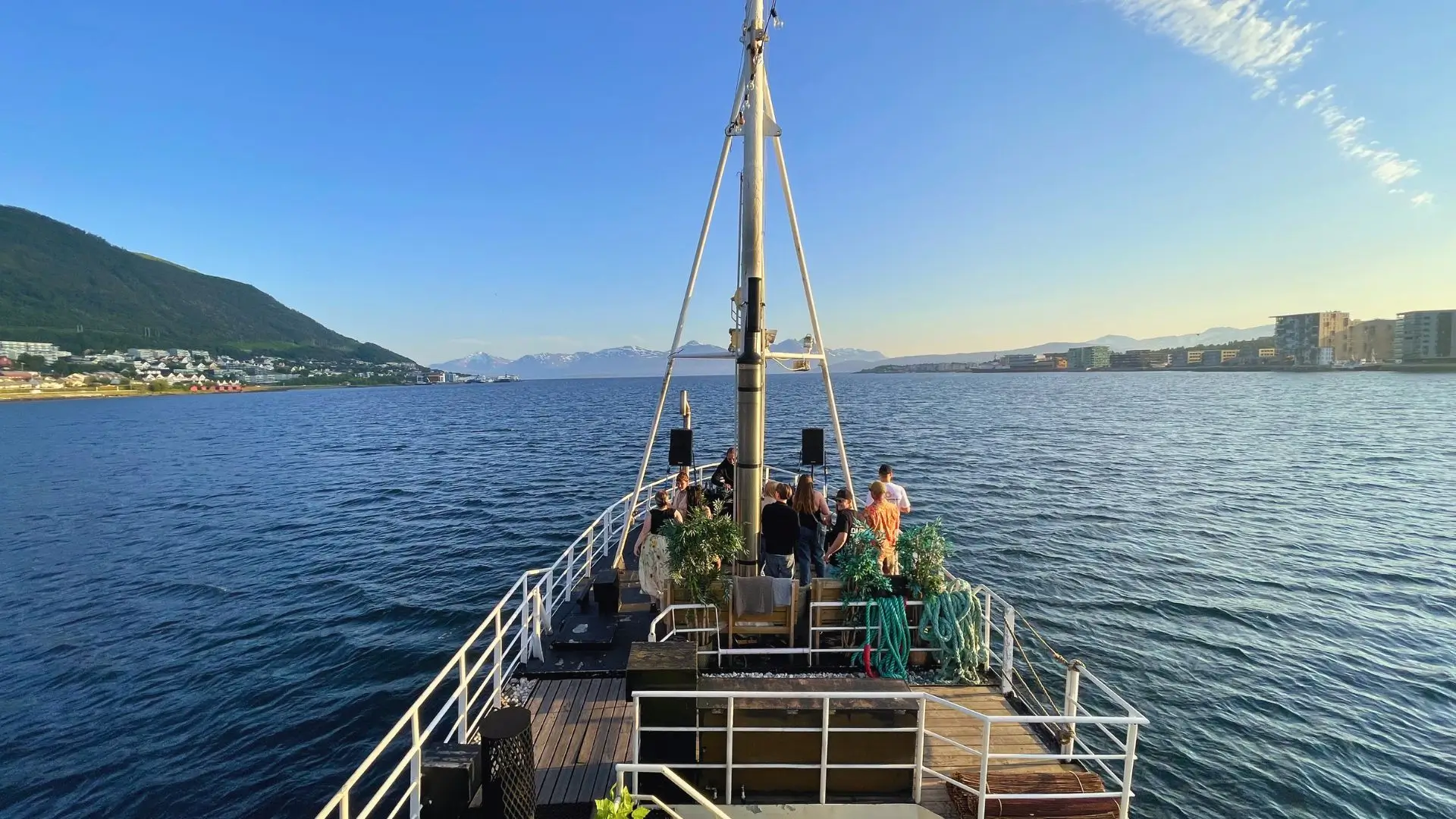
Lofoten Sauna Svinøya is moored at Svinøya in Svolvær harbour, where the view takes in the Svolvær Goat mountain and surrounding peaks with an immediacy that feels almost theatrical. The sauna is wood-fired, creating the rich, enveloping heat that comes from nothing else. Open daily from 09:00 to 21:00, it offers both individual sessions from 195 NOK and private bookings up to 3,000 NOK. After a round inside, the step onto the deck and into the Norwegian Sea is a shock to the nervous system that leaves you feeling, as bathers reliably report, utterly alive. With 835 Google reviews and a 4.6 rating, it is consistently Lofoten’s most visited sauna — and it earns that standing.
Lyst Lofoten Sauna floats nearby at Lamholmen, also in Svolvær harbour, open from 07:00 to 01:00 daily. The name means both desire and light in Norwegian — a fitting choice for a sauna where the light conditions are part of the spectacle. In winter, there is a realistic chance of seeing the northern lights from the deck between rounds. Sessions start from 250 NOK. Swimwear is required, and advance booking is recommended.
At Flakstad, Lofoten Beach Camp Sauna brings a different kind of waterfront experience: the sauna sits near one of the most photographed beaches in northern Norway, where white sand and turquoise Arctic water are framed by granite peaks on every side. The routine here — heat, run across the sand, plunge — is simple, and the setting makes it unforgettable.
Mountain and Wilderness Saunas
Away from the villages, Lofoten’s sauna scene extends into landscapes that feel genuinely remote even in summer.
Hov Sauna on Gimsøya is the archipelago’s most rewarding hidden option. Gimsøya is one of the quieter Lofoten islands, and the outdoor sauna here sits above a stretch of white sand beach with turquoise water so clear it looks impossible in these latitudes. The mountains rise directly behind. Cooling off means walking to the water and wading in — no pool, no steps, just sand and sea. With a 4.9 Google rating from regular visitors, this is Lofoten bathing at its most untamed and most honest.
Hemmingodden Sauna in Ballstad sits in front of Hemmingodden Lodge, overlooking the harbour of one of Lofoten’s oldest and largest operational fishing villages. The sauna watches fishing boats coming and going, and at low tide the seabed shifts and rearranges in a constantly changing foreground against the mountain backdrop. Private bookings run at 2,000 NOK for two hours (1,400 NOK for lodge guests), or 285 NOK per person per hour (225 NOK for guests). The lodge’s HEIM restaurant provides excellent food to complete the experience. The 4.6 rating from 161 reviews speaks to a sauna that does exactly what it promises in one of Lofoten’s most authentic locations.
Luxury Lodge Saunas
For visitors who want the Lofoten landscape without compromising on comfort, two properties stand out.
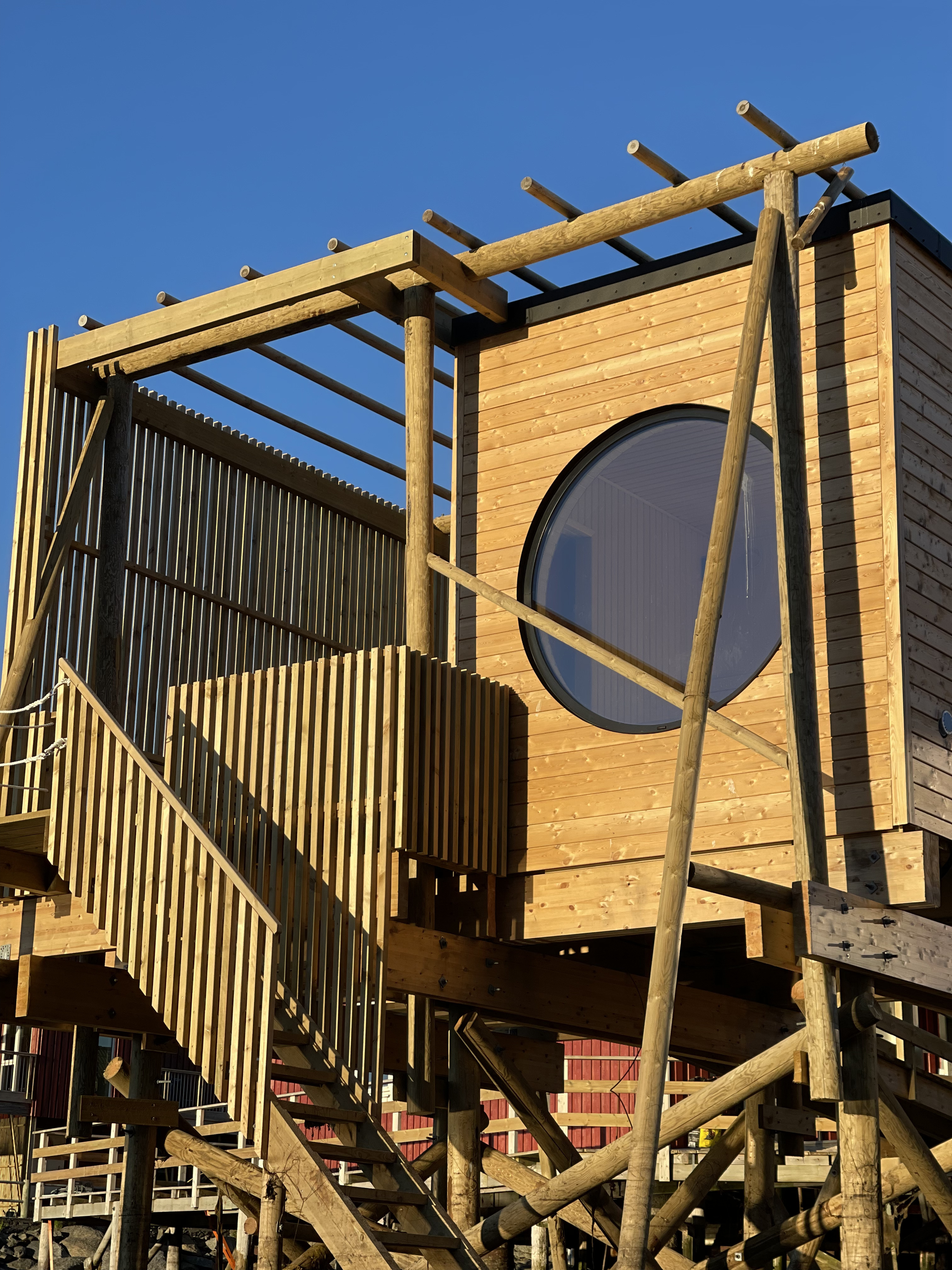
Hattvika Lodge in Ballstad is a collection of beautifully restored fishermen’s cabins dating to the late 1800s, and its waterfront sauna is among the most celebrated features of the property. Built over the water, the Finnish sauna offers views across the harbour and out to the surrounding peaks. The routine here is something guests remember: heat up in the sauna, then jump off the dock directly into the cold Arctic waters below. The lodge operates two saunas and a jacuzzi, available as an add-on to accommodation. It is run by Guri — a sixth-generation Ballstad local — and her partner Kristian, and that sense of genuine connection to place permeates every aspect of a stay.
Catogarden Sauna in Reine brings wood-fired heat to what is frequently described as the most beautiful village in Norway. The wood-fired stove builds slowly to a satisfying intensity, scenting the air with the particular warmth that only burning wood produces. Steps from the sauna, the fjord waters offer a cold dip against a backdrop — red fishing cabins, dark water, near-vertical peaks — that has graced travel magazines and bucket lists around the world. Reine is a destination in its own right; the sauna simply adds another reason to linger.
For a full spa experience, Lofotspa Nyvagar in Kabelvåg offers multiple saunas, cold plunge pools, and premium treatments in a modern facility at the Nyvagar Rorbuhotell complex. The indoor setting makes it weather-proof — no small consideration given Lofoten’s famously changeable climate. Premium pricing reflects high-quality facilities and service. Advance booking is essential.
Northern Lights Sauna Season: October to March
Lofoten sits at approximately 68° North — well above the Arctic Circle — which means the northern lights season is long and the potential is real. From October through March, the polar night progressively deepens, and with it comes the best conditions for aurora sightings: dark skies, clear nights (when the weather cooperates), and the extraordinary contrast of warm sauna light against a black sky that could, at any moment, start to move.
The practical rhythm is simple but addictive. You take a round in the sauna — 15 to 20 minutes at 80 to 90°C — then step outside onto the deck, wrapped in cold air and the deep silence of a Lofoten winter night. You look up. If the sky is clear and the solar activity is running, you might see a green arc begin to form above the mountain ridges and then fold and spiral into something that no photograph quite captures. Then you go back inside and heat up again.
The saunas that work best for this are those with open outdoor platforms and unobstructed northern skies. Lofoten Sauna Svinøya and Lyst Lofoten Sauna in Svolvær both offer this possibility from their harbour positions. Hemmingodden Sauna in Ballstad, with its broad view across the harbour, is another strong option.
Manage expectations, but not overly so: February and March offer good aurora statistics, increasing daylight between storms, and the dramatic snow-covered landscape. These months represent, for many experienced visitors, the ideal window for a northern lights sauna Norway experience.
Midnight Sun Sauna Season: May to July
The counterpart to the polar night is the midnight sun, and it is no less extraordinary. From late May through mid-July, the sun does not set over Lofoten. The light changes in quality through the night hours — from the gold of late afternoon to the deep amber of what should be dusk, without ever actually becoming dark — but it does not disappear. A sauna session at 11pm, or at 2am, takes place in full daylight.
The effect on the sauna experience is hard to describe to anyone who has not encountered it. The mountains that ring Reinefjord are lit in warm orange at midnight. The water around the Svinøya sauna shimmers gold. The cold plunge, taken at an hour when every instinct says it should be dark and the world should be asleep, becomes something almost hallucinatory in the best sense.
Summer water temperatures in the fjords around Lofoten reach 14–17°C — cold by most standards, but noticeably more accessible than winter, making this a good season for sauna first-timers. Eliassen Rorbuer Sauna specifically notes the midnight sun experience as one of the defining features of an evening session between late May and mid-July.
This is also peak hiking season. Combine a morning on the Reinebringen ridge or the Munkebu hut trail with an evening sauna session and you have a Lofoten day that covers every dimension the islands offer.
Getting There and Practical Tips
Getting to Lofoten. The E10 highway runs the length of the archipelago and connects it to the mainland via a series of bridges and tunnels. The main airport is Harstad/Narvik (EVE), with direct flights from Oslo, Bergen, and several European cities. Svolvær also has a small airport (SVJ) with domestic connections. Ferries run from Bodø to Moskenes (four hours) and from Bodø to Svolvær. Renting a car is strongly recommended — it is the only practical way to reach saunas across the different islands.
Book ahead. Lofoten has become one of Norway’s most visited destinations, and sauna capacity is limited. For summer months (June–August), book two to four weeks in advance. For northern lights season, particularly February and March, similar lead times apply. Some experiences, especially private bookings at lodge saunas, should be arranged when you book accommodation.
Dress for the transitions. The walk from sauna to water in a Lofoten winter can mean stepping into -5°C or colder. Most operators provide robes, but bring warm footwear and a hat. The contrast is part of the experience, but you do not want to be uncomfortably cold before you have had time to appreciate the sky.
Swimwear requirements vary. Check before you visit: floating saunas in Svolvær typically require swimwear, while private lodge saunas may be swimsuit-optional. The individual sauna listings cover this.
Combine with outdoor activities. The sauna makes most sense as part of a broader Lofoten day. Hike, kayak, fish, or simply drive the E10 and stop at viewpoints, then end the day in the heat and cold. The juxtaposition of physical exhaustion and sauna recovery is one of the best feelings the archipelago offers.
For a full picture of what Lofoten offers beyond the sauna, our guide to things to do in Lofoten covers the landscape, outdoor activities, and practicalities in depth. If you are planning a broader Arctic Norway itinerary, arctic sauna experiences Norway maps the country’s best sauna destinations from Lofoten to Svalbard. The northern lights dimension of Lofoten bathing is explored in detail in northern lights sauna Norway. And for visitors who want to extend the island sauna experience beyond Lofoten, sauna on Norwegian islands covers the full archipelago circuit.
Frequently Asked Questions
What is the best sauna in Lofoten for a first-time visitor?
Lofoten Sauna Svinøya in Svolvær is the most accessible starting point — centrally located, open daily, and offering both individual sessions and private bookings. Eliassen Rorbuer in Hamnøy is the most iconic setting, with panoramic views over Reinefjord from one of Norway's most photographed locations.
Can you see the northern lights from a sauna in Lofoten?
Yes. Lofoten sits well above the Arctic Circle at around 68° North, meaning northern lights season runs from October through March. Saunas with open decks — including Lofoten Sauna Svinøya, Lyst Lofoten Sauna, and Hemmingodden — all offer the possibility of aurora viewing between rounds, weather and solar activity permitting.
What time of year is best for a Lofoten sauna trip?
Both seasons offer something extraordinary. October to March brings the northern lights, polar night atmosphere, and intense cold contrast. Late May through July offers the midnight sun — bathing in a sauna at 2am in full golden light is one of the most surreal experiences available in Norway. February and March are often the best compromise, combining good aurora chances with improving light.