The Best Floating Saunas in Norway — Fjord, Harbour & Lake
An editorial guide to Norway's best floating saunas — from Oslo and Bergen harbours to Lofoten, Lake Mjøsa and the Arctic. Picks across all five regions.
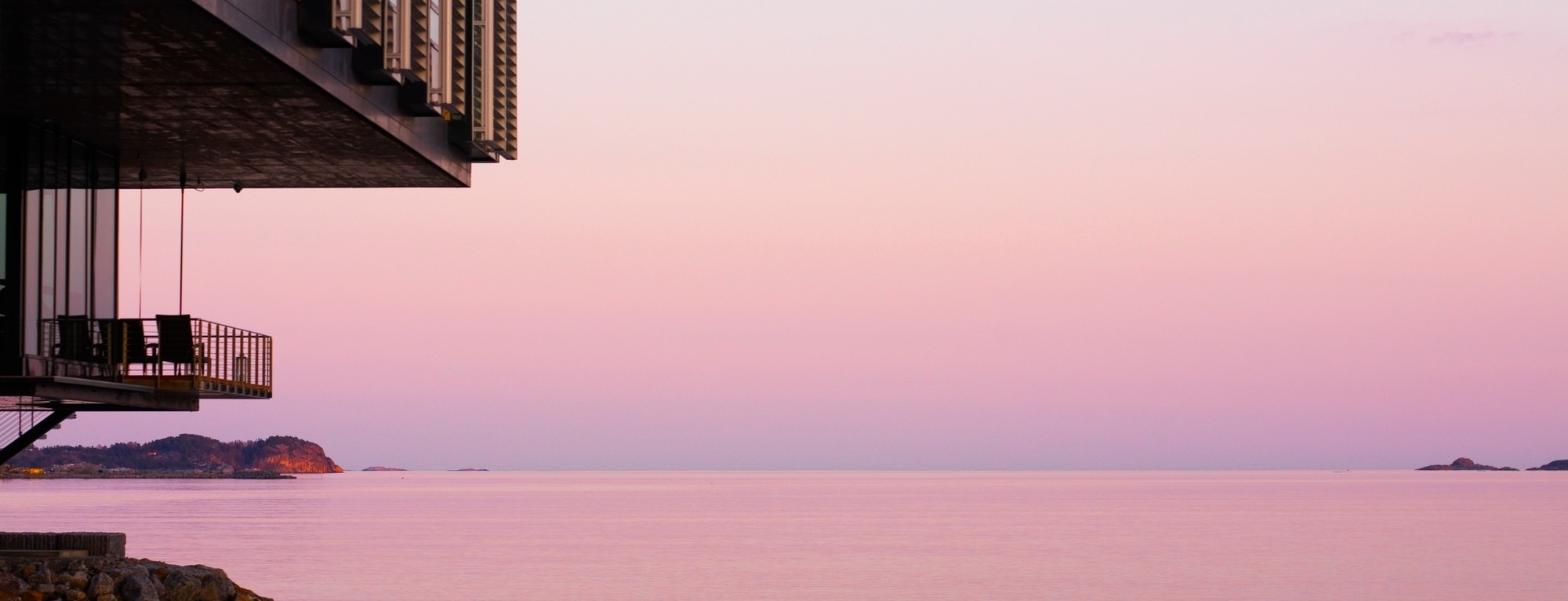
There are a few experiences that feel uniquely Norwegian when you try them for the first time, and stepping out of a hot wood-fired sauna directly into a cold fjord — from a wooden raft moored in a harbour, with the city skyline or a mountain wall rising opposite — is high on that list. The floating sauna sits at the intersection of two old Norwegian preoccupations: the bathing tradition that goes back to the Viking-age “badstue”, and the working relationship with the sea that has shaped life along this coastline for a thousand years.
In the past decade, the floating sauna has gone from oddity to small national phenomenon. The first prominent examples appeared in Oslo and Bergen harbours; today every coastal city of any size has at least one, and many fjord villages, lake towns and Arctic islands have built their own. Some are architect-designed glass cubes; others are hand-built barrel saunas on pontoons; a few are converted ferries, fishing boats or rescue vessels. They share an essential format — heat in a wooden cabin, cold water a metre away, and a deck on which to recover.
This guide covers the most distinctive floating saunas in Norway across all five regions. It is not a ranking by reviews — it is a curated read for anyone planning a visit and trying to understand what is out there.
In Brief
- Norway has roughly 150 active floating saunas, distributed across all five regions.
- Oslo, Bergen and Stavanger have the densest urban harbour scenes; Lofoten, Tromsø and the Sognefjord lead the rural and fjord side.
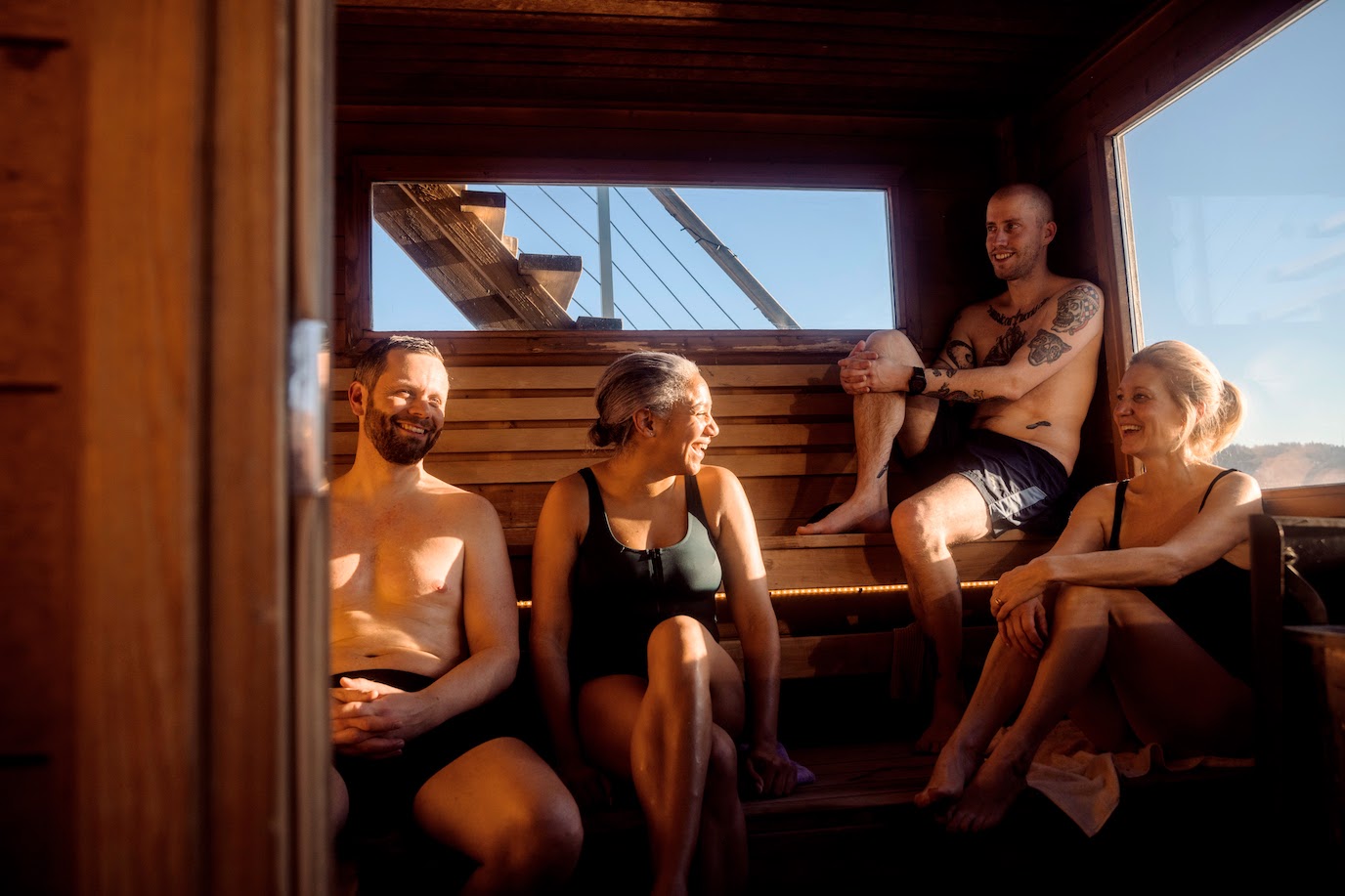
- Most operate year-round, on session-based bookings of about two hours, mixed-gender, with swimwear required.
- The cold plunge is the point. Whether you are dipping into 18°C summer water or sub-zero winter sea is part of the character.
What Is a Floating Sauna?
A floating sauna is a sauna built on top of a buoyant structure — typically a pontoon, a raft of timber and barrels, a barge, or a converted boat — so that the bath sits on the water rather than beside it. The defining feature is the immediacy of the cold plunge: you walk from the hot room across a small deck, down a ladder, and into the water below.
In Norwegian the word is “flytende badstue” (floating bathhouse), or simply “saunabåt” (sauna boat) when the structure is a vessel rather than a moored raft. The two terms are used loosely, and many operators describe themselves with either label. A few are genuinely mobile and sail to a different cove or fjord arm during a session; most are moored permanently in one location.
The tradition is not ancient. Norwegian sauna culture itself is centuries old, but the modern floating sauna is a product of the 2010s — born partly from the urban harbour redevelopments in Oslo and Bergen, partly from the broader Nordic revival of bathing culture, and partly from the simple insight that the best place to put a sauna in a country defined by water is on the water itself.
Western Norway — The Heart of the Floating Sauna Scene
Western Norway, with its deep fjords and rain-washed coastal cities, has the largest concentration of floating saunas in the country. Bergen, Stavanger and the fjord villages between them anchor the scene.
Laugaren at Georgernes Verft is Bergen’s best-known community floating sauna — a wood-fired raft run by the volunteer-organised Bergen Laugarlag, sitting in front of USF Verftet on the harbour. Affordable drop-in sessions and a strong civic ethos have made it a local favourite.
City Sauna Bergen is one of the most flexible operators in the city, offering shared sessions and full private hire from the central harbour with views across the bay. With a 4.9-star Google rating it is among the highest rated floating saunas in Norway.
Heit Bergen is a wood-fired floating sauna in central Bergen, with a sister location at Måseskjæret on the other side of the harbour. Both run year-round and are well set up for cold-plunging directly into the sea.
Up the Sognefjord, FjordSauna Flåm and FjordSauna Aurland place the bath on a UNESCO-listed branch of the fjord, with mountain walls rising directly out of the water on either side. Few floating saunas in the world have a more dramatic setting.
Hardanger Flytebadstu in Ulvik on the Hardangerfjord brings the same fjord drama to a quieter setting, in one of Norway’s classic orchard valleys.
Kinn Damp in Florø sits on the open coast at the western edge of the country, where the Atlantic begins; the cold plunge here is unambiguously into ocean water. Sjøbris Sauna in Ørsta and Lidasanden flytende badstu in Stryn extend the network into the Sunnmøre and Nordfjord regions, both well-regarded by local bathers.
Pulpit Sauna in Jørpeland is moored at the foot of the famous Preikestolen hike — an apt combination of two of Norway’s defining outdoor experiences. Os Sauna just south of Bergen and Dampen Sauna Fjaerland at the head of a Sognefjord arm round out the western options for travellers building a fjord itinerary.
In Stavanger, where the floating sauna market is particularly competitive, Damp Sauna Storhaug operates a cluster of small saunas at the Storhaug waterfront. BookSauna Otto is one of the highest-rated floating saunas in the city.
For Ålesund visitors, SVAI Sauna Molja offers a floating sauna in the Art Nouveau city’s harbour — convenient for cruise passengers and walkable from the centre.
For more on the regional context, see our companion guide to the best wood-fired saunas in Norway, since many of the floating saunas above are heated by wood rather than electricity.
Eastern Norway — Oslofjord and the Lake Country
Eastern Norway covers the Oslofjord, the lake systems of Innlandet and the long coast running south from the capital towards Telemark. Floating saunas here range from urban harbour saunas to lake ferries.
KOK Oslo is the capital’s most established floating sauna operator, with wood-fired sauna boats moored in the central Oslo harbour. The combination of Opera House views, Akershus Fortress on the headland and a cold plunge into the inner Oslofjord is a difficult itinerary item to beat.
Bademaschinen is one of the more architecturally distinctive floating saunas in Norway — a glass-sided structure on the Oslo waterfront with panoramic views of the harbour. Oslo Badstuforening and Fjordtokt Båt & Badstu extend the city’s options, with Fjordtokt offering a combined sail-and-sauna trip out onto the fjord rather than a stationary moor.
South of the capital, Son Spa Sauna Rafts operates floating rafts in the harbour village of Son — popular as a day trip from Oslo and a busy spot through the warmer months.
Along the Vestfold and Telemark coast, Holmestrand Fjordbadstu, Sjøbadet Badstue in Tønsberg, FLYT Stavern in Larvik, and Kragerø Badstuforening all sit on the inner Oslofjord and Skagerrak coast — quieter alternatives to the capital harbour, with a more local feel and consistently strong ratings. Hvaler Badstuforening operates in the Hvaler archipelago near the Swedish border, in one of the country’s most intricate coastal landscapes.
Inland, the floating sauna concept reaches the lake country. Badstufergen is a converted ferry sauna near Lillehammer on Lake Mjøsa, Norway’s largest lake. KOK Mjosa operates further south on the same lake at Hamar, where the open water resembles an inland sea. Flyt Fjordsauna at Jevnaker on Randsfjorden bridges the eastern lake belt with a wood-fired raft on open water.
Central Norway — Trondheim and the Trøndelag Coast
Central Norway’s floating sauna scene is smaller but well-placed. Most options cluster around Trondheim and the Trøndelag coast.
Stu Brattøra is moored on the Trondheimsfjord in the Brattøra district — directly behind the central station and within easy walking distance of cruise terminals and the city centre. The location makes it one of the most convenient floating saunas in the country for visitors arriving by train or ship.
Damp Trondja is part of the national Damp fleet of small floating sauna boats and is moored in the central Trondheim harbour, a short walk from Stu Brattøra.
Further along the coast, Kristiansund Floating Sauna and Havna Sjøbad in Namsos extend the floating sauna concept into smaller fishing-harbour towns where the bath sits among working boats rather than tourist infrastructure.
Northern Norway — Arctic Floating Saunas
The further north you go, the more elemental the floating sauna experience becomes. Cold-water dips become genuinely cold, the surrounding light becomes the defining feature of the session — midnight sun in summer, polar night and possible aurora in winter — and the floating sauna takes on a different character entirely.
Lofoten Sauna Svinoya in Svolvær is among the best-known floating saunas in Northern Norway. Moored among the historic rorbuer (fishing cabins) of Svinøya, with the Svolværgeita peak rising on the horizon, it is the archetypal Lofoten floating sauna experience.
Kleksen Saunaboat sits on the Ofotfjord near Narvik. It is a wood-fired sauna boat with capacity for around twelve, and one of the highest Google ratings of any floating sauna in the country.
In Tromsø, Vulkana is a converted vessel offering a wood-fired sauna onboard — genuinely mobile, capable of sailing during the session — and Pust operates a floating sauna in the central harbour. Both are well-positioned for combining the bath with whale-watching, dog-sledding or aurora trips through the winter months.
Varanger Brygge in Bugøynes and Varanger View in Vardø carry the floating sauna concept all the way to Norway’s eastern Arctic coast — among the most remote operating saunas in the country, in a region where most visitors come for the spring king-crab safaris and winter aurora season.
SvalBad Svalbard in Longyearbyen brings the floating sauna concept to the Svalbard archipelago itself. A floating sauna at 78° north is rare enough to warrant the trip on its own.
Áhpi Flytende Badstue operates in Skjervøy, deep into Troms county above the Arctic Circle.
For a fuller picture of Arctic bathing, see our guide to the best saunas in Northern Norway and the northern lights sauna guide.
Southern Norway — The Sørlandet Coast
Southern Norway — the Sørlandet — has a long tradition of summer coastal life, and the floating sauna has fitted naturally into its archipelago of small white-painted harbour towns.
Damp Kata in Arendal and the related Damp Fevik outside Grimstad are part of the national Damp fleet, offering small wood-fired sauna boats on calm Skagerrak inlets. Damp Fevik holds a perfect five-star Google rating.
Blaud Sauna in Kristiansand is a floating sauna in Norway’s southernmost city, with capacity for around ten.
Badstubåten Pysen in Mandal and Homborsauna in Grimstad complete a coastal route that pairs naturally with the typical Sørlandet summer holiday — boat, beach, and bath.
How to Choose the Right Floating Sauna for You
A few questions clarify the choice quickly.
Are you in a city or out in nature? Urban floating saunas — KOK Oslo, City Sauna Bergen, Stu Brattøra, the Stavanger fleets — are easy to reach, often book in 1–2 hour slots, and trade dramatic scenery for convenience and frequency. Rural and fjord saunas like FjordSauna Flåm, Hardanger Flytebadstu or Lofoten Sauna Svinoya offer the spectacular setting but require more travel.
Wood-fired or electric? Wood-fired floating saunas — KOK Oslo, Heit Bergen, Kleksen, Varanger Brygge, Dampen Sauna Fjaerland — produce a softer heat and a more traditional atmosphere, with the smell of birch smoke as part of the experience. Electric floating saunas offer faster, more consistent heat and are easier to schedule.
Drop-in or private? Some operators sell shared individual sessions with mixed groups. Others — particularly the Stavanger and Bergen fleets — are designed primarily for private group hire. Decide which suits the social side of your trip.
What kind of cold plunge? Inland lake saunas (Mjøsa, Randsfjorden) offer fresh-water plunges that are warmer in summer and freeze hard in winter. Coastal harbour and fjord saunas plunge into salt water, which never quite freezes and is bracing year-round. Arctic locations push the cold-water side of the experience to its extreme.
For couples and small private groups, our guide to private sauna booking in Norway covers the practicalities of hiring an entire sauna boat. For experiences explicitly built around the heat-cold ritual, see sauna and cold plunge in Norway.
Practical Tips
Book ahead. Almost every floating sauna in Norway uses an online booking system. Weekend evenings and summer slots in Oslo, Bergen, Tromsø and Lofoten can sell out weeks ahead. Midweek and shoulder-season sessions are often available with little notice.
Bring the basics. Swimsuit, towel, water bottle, flip-flops or sandals for the deck, and a warm change of clothes for after. A small dry bag for your phone and key is useful but most operators provide minimal locker space — leave anything you don’t need on shore.
Plan for two hours. Most sessions are scheduled around a two-hour block. That allows for two or three rounds of heat and plunge, time to recover on the deck, and unhurried conversation. A single 20-minute round is not the format.
Hydrate. Floating saunas often run hotter than indoor electric saunas, especially when wood-fired with full löyly. Drink water before, during and after.
Respect the safety guidance. Each operator has their own rules on cold-plunge protocols, swimming distance from the boat, and footwear. Follow them. Norwegian saunas operate on trust, and that trust depends on guests using equipment as intended.
Pick your season. Summer brings warm water, long evenings and (in the north) the midnight sun. Autumn offers calm light and fewer crowds. Winter is the most dramatic — steam in freezing air, ice forming on the deck, and the possibility of aurora overhead in the north. Spring sees the saunas warming back up alongside the landscape.
Combine with other Norwegian experiences. A floating sauna in Flåm pairs with the Flåmsbana railway. One in Tromsø pairs with whale-watching or aurora chasing. One at Pulpit Sauna in Jørpeland sits at the start of the Preikestolen hike. The bath does not have to be the only thing you do that day.
The floating sauna is one of those Norwegian inventions that, once you have tried it, becomes obvious in retrospect. Of course the best way to combine intense heat with cold water is to put the heat directly on the water. The country has now built an entire small culture around that idea, distributed across the coastline and lakes, and any visitor with a few hours and an appetite for the cold can step into it.
Frequently Asked Questions
What is a floating sauna?
A floating sauna is a sauna built on a pontoon, raft, barge or repurposed boat, moored on water so bathers can step directly from the heat into the sea, fjord, lake or river beside them.
Do I need to book floating saunas in advance?
Almost always yes. Floating saunas operate on session-based bookings and weekend, sunset and summer slots in Oslo, Bergen, Stavanger, Tromsø and Lofoten typically sell out days or weeks in advance.
Are floating saunas open in winter?
Yes. Most operators run year-round, and many regulars consider winter the best season — the steam, the cold plunge and the contrast are all more dramatic when the air is below freezing.
Do you need to swim to use a floating sauna?
No. Most floating saunas have a ladder rather than a deep dive, and you can choose to dip just to your shoulders, sit on the bottom rung, or stay on deck. The cold plunge is encouraged but not required.
Are floating saunas mixed-gender, and do you wear a swimsuit?
Floating saunas in Norway are virtually always mixed-gender and swimwear is mandatory. Bring a swimsuit, a towel, and flip-flops for the deck.
What is the difference between a floating sauna and a sauna boat?
A floating sauna usually stays moored at one spot, while a sauna boat can be sailed or motored between locations during the session. Both are common in Norway, and the line between them is often blurred.